KYOTO HISTORIA ─ 794–2026
A capital that burned and rose again for 1,200 years.
A court haunted by vengeful ghosts, a city razed by civil war, samurai police in the 1860s — and a comeback after losing the capital. Walk Kyoto again with the local knowledge and insider angles the guidebooks skip.
Open the twelve roomsEveryone thinks of Kyoto as the city where old things survived. Locals will tell you the opposite: Kyoto is a city that burned down again and again, and was rebuilt every time. Almost nothing built in the Heian period still stands. The Ōnin War of the 1460s and the great fire of 1864 each reduced most of the town to ash.
Yet the memory of the capital never disappeared. It survives in street names, in the way addresses are written, in festival dates, even in a summer habit of not eating cucumbers. Kyoto's history is stored less in buildings than in everyday customs. This site unpicks those customs one by one.
Labels used on this site: Factdocumented Likelyaccepted by most historians Legendtraditional story Urban legendrumour or local joke
Four keys to reading Kyoto
Carry these four and you won't get lost, whichever room you enter.
A basin full of water
Under a valley ringed by mountains lies a huge natural reservoir. Tofu, sake, silk dyeing — and the capital itself — all rest on this water.
Ghosts and prayers
Many of Kyoto's festivals and shrines began as ways to calm angry spirits. At the root of the celebration lies fear.
Burn, then rebuild
The Ōnin War, the Great Tenmei Fire, the "Don-don Fire" of 1864. Each time Kyoto burned, its townspeople rebuilt it.
Secretly loves the new
Japan's first neighbourhood schools, first hydro plant, first tram. A playing-card shop that became Nintendo. The "traditional" city keeps betting on the cutting edge.
What if the Emperor had never left?
How a royal "move" in 1869 leads, step by step, to Nintendo.
- 1869 — The Emperor goes to TokyoNo formal decree moving the capital was ever issued, but the Emperor and government settled in Tokyo. Courtiers and purveyors followed, and Kyoto's population plunged. Fact
- "Kyoto will fade like Nara"Alarmed, townspeople built primary schools with their own money, before any national law required it: 64 "Bangumi" schools, Japan's first district-based elementary schools. Fact
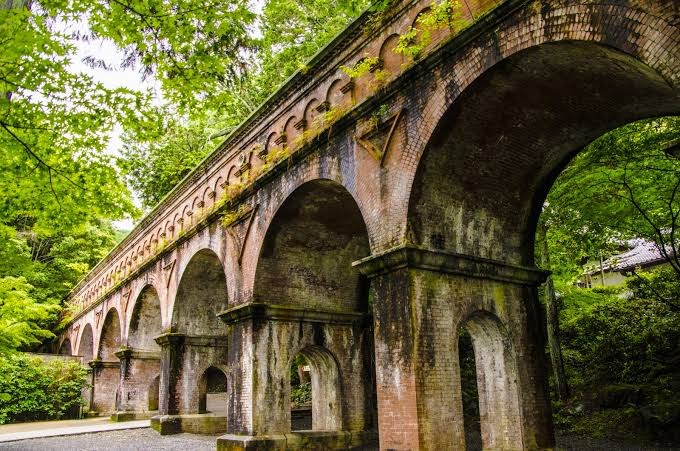
- Bring water from Lake BiwaNext came a canal tunnelled through the mountains from Lake Biwa. The designer was Tanabe Sakurō, an engineer fresh out of college in his early twenties. Fact
- 1891 — Japan's first commercial hydro plantCanal water drove the Keage Power Station. In 1895 its electricity ran Japan's first commercial electric tram. Fact
- Power and universities breed manufacturersShimadzu, and a hanafuda card shop called Nintendo. Kyoto firms went global without moving to Tokyo. Likely
- Losing the capital made Kyoto modernHad the Emperor stayed, the townspeople might never have fought so hard.
Twelve rooms
Enter through whichever door catches your eye. Each room ends with a passage to the next.
Basin & Hidden Water
A Lake Biwa–sized aquifer underfoot, why cycling north hurts, and a vanished giant lake.
Enter →ROOM 02Heian-kyō & Spirits
The grand avenue is today's Senbon-dōri. Why the western half died. Why the palace wall has a missing corner.
Enter →ROOM 03Ōnin War & Hideyoshi
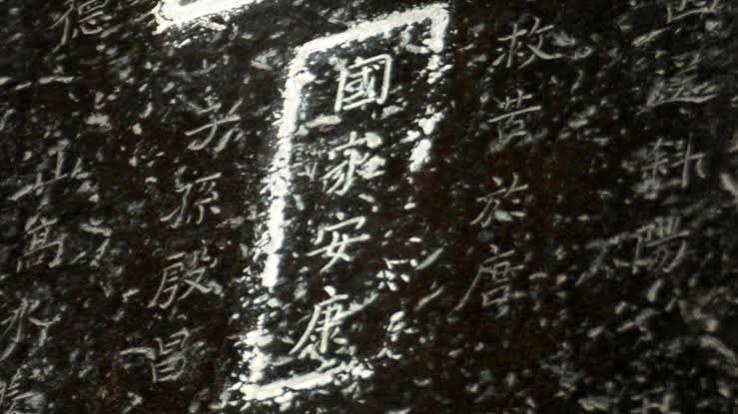
Nishijin is named after an army camp. Blame Hideyoshi for the 'eel-bed' houses. Eight characters on a bell doomed a dynasty.
Enter →ROOM 04Bakumatsu & Shinsengumi
Sword cuts in a lintel, a legendary raid site that's now a pub, and an inn that was quietly rebuilt.
Enter →ROOM 05The City Fights Back
Schools funded by townsfolk, and a canal to Lake Biwa designed by an engineer in his early twenties.
Enter →ROOM 06Nishijin & Kyoto Inc.
Three weavers sent to Lyon, the hanafuda shop that became Nintendo, and why Kyoto firms never move to Tokyo.
Enter →ROOM 07Gion Matsuri
A Trojan War tapestry on a float, and families who won't eat cucumbers in July.
Enter →ROOM 08Streets & Speech
The street-name song, addresses that say 'go up', and is the 'bubuzuke' insult real?
Enter →ROOM 09Food & Water
Kyoto is a bread town, 'obanzai' is a newer word than you think, and Fushimi sake runs on 'hidden water'.
Enter →ROOM 10Legends & the Otherworld
A well to the underworld, a ghost's candy shop, and survival rates from the Kiyomizu stage.
Enter →ROOM 11Kyoto & the World
Why Kyoto was struck off the atomic target list — and the 'honeymoon' myth. Rashomon becomes a global word.
Enter →ROOM 12Further Reading
One book before you go, one after — plus small museums worth the detour.
Enter →Where to start
First time in Kyoto
Pop culture & world links
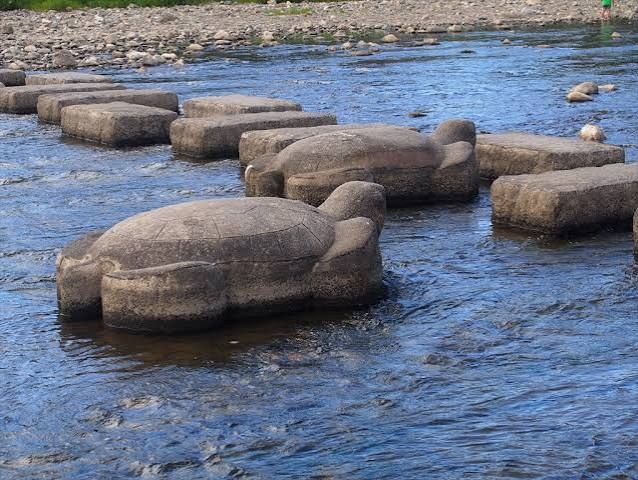
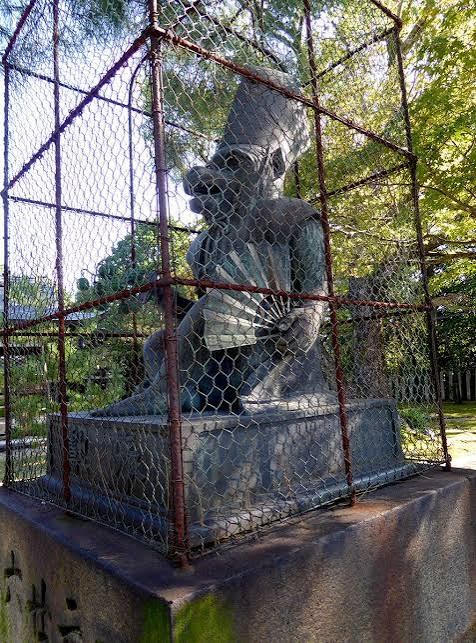
Kyoto in pictures
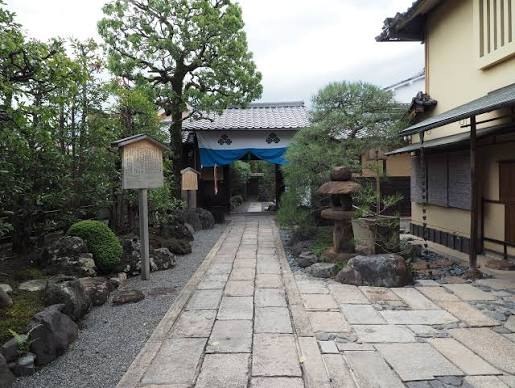
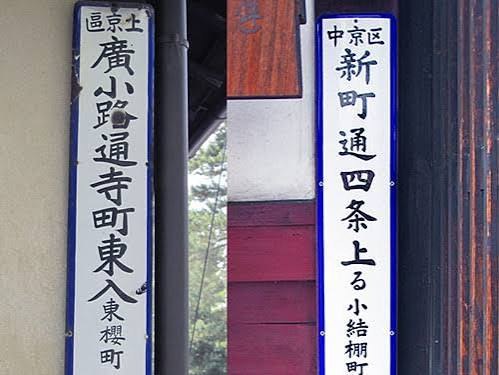
Not the famous facades, but the supporting cast where history peeks through.
Ten things every Kyotoite knows
Obvious to locals, unknown to most visitors.
- Agaru ("go up") means north; sagaru ("go down") means south. An address tells you which way to walk.
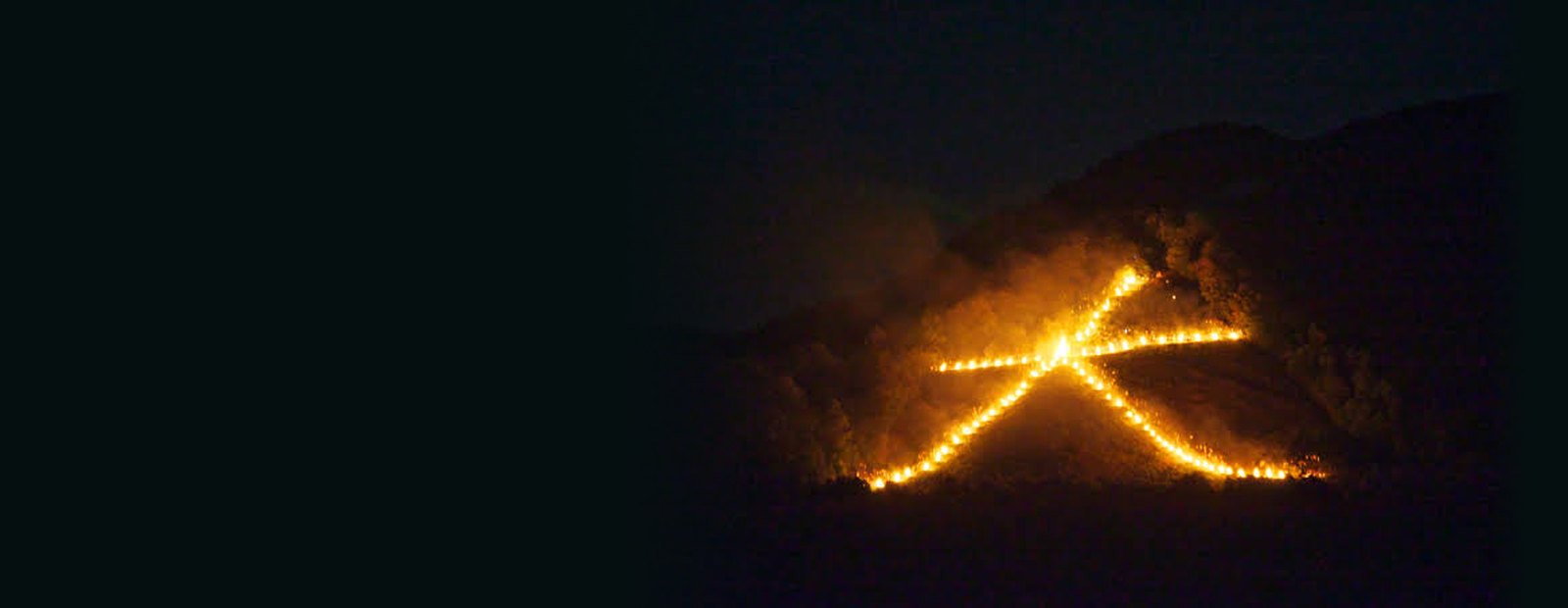
- Don't call the August bonfires "Daimonji-yaki". Locals say Gozan no Okuribi — fires that send ancestral spirits home.
- The Gion Festival lasts all of July. The famous float parade is just one of its peaks.
- Some families avoid cucumbers during the festival: a sliced cucumber resembles Yasaka Shrine's crest.
- Kyoto City spends more on bread than almost anywhere in Japan — consistently near the top of national surveys.
- Subway construction kept hitting archaeological sites. Dig anywhere in Kyoto and something turns up.
- The land rises to the north. Cycle north and you'll feel it in your legs.
- "Obanzai" (Kyoto home cooking) was rarely used in old Kyoto homes. People just said okazu, side dishes.
- Convenience-store and fast-food signs are toned down because of strict landscape rules.
- "I'll think about it" (kangaetokimasu) usually means no.
1,200 years at a glance
- 794Emperor Kanmu founds Heian-kyō. It remains the capital for more than a thousand years.
- 869A ritual to drive away plague — traditionally the origin of the Gion Festival.
- 1467–1477The Ōnin War. Eleven years of fighting burn most of the city.
- 1582The Honnō-ji Incident: Oda Nobunaga dies in Kyoto.
- 1591Toyotomi Hideyoshi builds the Odoi earthen wall and redraws the streets.
- 1614The Hōkō-ji bell incident, pretext for the Siege of Osaka.
- 1788The Great Tenmei Fire destroys most of the city, including the palace.
- 1863The Mibu Rōshigumi — later the Shinsengumi — is formed.
- 1864The Ikedaya Incident; the Kinmon Rebellion and the "Don-don Fire".
- 1869The Emperor moves to Tokyo. Townspeople open 64 Bangumi schools.
- 1890The Lake Biwa Canal opens; Keage hydro plant follows in 1891.
- 1895Japan's first commercial electric tram; Heian Shrine is founded.
- 1945Kyoto is removed from the atomic-bomb target list.
- 1994"Historic Monuments of Ancient Kyoto" become a World Heritage Site.
- 2026Accommodation tax raised to up to ¥10,000 a night to balance tourism and daily life.