Up closeFrom ragtag rōnin to the most feared police
In 1863, masterless samurai recruited in Edo arrived in Kyoto as the Rōshigumi, escorts for the shogun's visit. Their organiser, Kiyokawa Hachirō, promptly announced that their real aim was to "revere the Emperor, expel the barbarians" — and marched most of them back to Edo. Fact
Those who stayed were Kondō Isami, Hijikata Toshizō, Okita Sōji and others from a small fencing school in Tama, plus Serizawa Kamo's faction from Mito. Placed under the Aizu domain, they called themselves the Mibu Rōshigumi. After proving themselves in a coup that August, they received the name Shinsengumi, "Newly Selected Corps". Fact
Within a few years this mix of young men of every background became the police force pro-imperial radicals feared most. Kyoto was their entire stage.
Solving the mysterySword cuts in the lintel at Yagi-tei
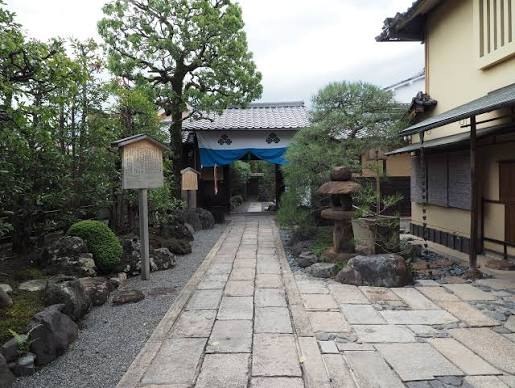
The house of Yagi Gennojō, a local notable in Mibu, became the corps' first headquarters. His descendants still live there and open it to visitors. Fact
In the ninth month of 1863, Serizawa Kamo, one of the corps' commanders, was assassinated in an inner room here by Hijikata and others — because of his violent behaviour, or at Aizu's wish, depending on whom you ask. Likely A sword cut said to date from that night remains in the lintel, and guides point it out on the tour. Legend
Butterfly effectThe Ikedaya Incident — one night that sped up history
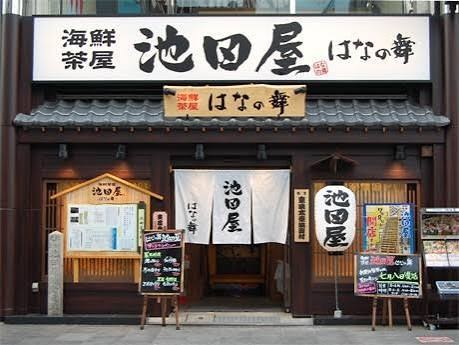
On the night of the 5th day of the 6th month, 1864, the Shinsengumi learned that anti-shogunate activists were meeting at the Ikedaya inn by Sanjō Kobashi bridge. Kondō and a handful of men stormed in; after brutal sword fighting, many activists were killed or captured. Fact
- Ikedaya Incident (1864)The Shinsengumi become famous overnight.
- Chōshū is enragedHaving lost many comrades, the Chōshū domain marches troops on Kyoto.
- Kinmon Rebellion (1864)Fierce fighting around the palace. Chōshū loses and is branded an enemy of the court.
- The "Don-don Fire"Flames spread across the city; nearly 30,000 houses — most of Kyoto — burn. Fact
Some say the Ikedaya raid delayed the Meiji Restoration by a year; others that it hastened it. Likely Either way, one night of swordplay pushed Chōshū into open revolt and burned Kyoto yet again.
Solving the mysteryThe "bullet holes" of Hamaguri Gate
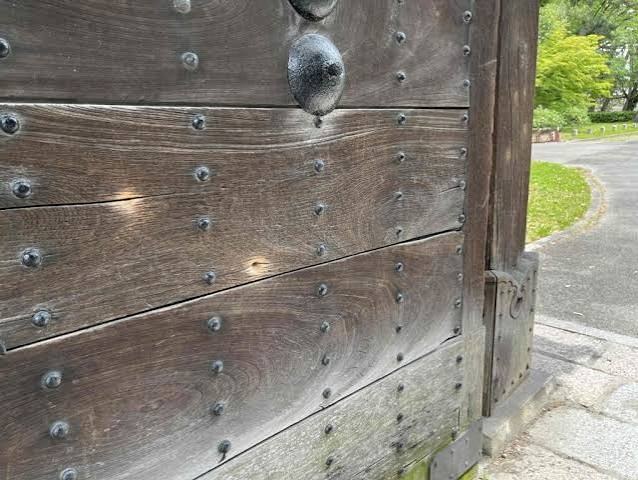
One scene of fierce fighting in the Kinmon Rebellion was Hamaguri Gomon on the west side of the Imperial Palace park. Marks said to be bullet holes remain in its pillars and doors, at a height you can touch. Legend
The name — "Clam Gate" — has a story too. Officially the Shinzaike Gate, it was normally kept shut. During the Great Tenmei Fire of 1788 it was opened for the first time, and people likened it to "a clam that opens only when it's grilled." Legend
Up closeThe houseguests Nishi Hongan-ji couldn't get rid of
As the corps grew, Mibu became too small. In 1865 they moved into a hall at Nishi Hongan-ji, the huge temple near Kyoto Station — partly, it's said, to keep an eye on a temple with ties to Chōshū. Likely
The temple was not amused. The men drilled with cannon in the precincts and behaved roughly, and the monks were at their wits' end. Legend In the end the temple reportedly paid for a new headquarters elsewhere just to get them out. Likely The Taikorō drum tower in the grounds dates from the time the corps was based here.
Solving the mysteryThe truth about the "code" and the blue coats
The Shinsengumi's famously strict code, the Kyokuchū Hatto — "Do not deviate from the way of the samurai," on pain of seppuku — became widely known in its five-article form through the early-Shōwa writer Shimozawa Kan; it's hard to confirm in that exact form from period sources. Likely That the corps enforced harsh discipline and ordered many members to commit seppuku, however, is fact. Fact
The pale-blue coats with white sawtooth "dandara" trim are iconic in manga and TV. They're said to echo the costumes of the 47 rōnin in kabuki Likely — and, according to a leading theory, they were so flashy and unpopular that they were worn only in the very early days. Likely
Solving the mysteryRyōma's death and the truth about Teradaya
On the 15th day of the 11th month, 1867, Sakamoto Ryōma — the rōnin who brokered the alliance that toppled the shogunate — was attacked with Nakaoka Shintarō at the Ōmiya soy-sauce shop in Kawaramachi and killed, reportedly on his own birthday. Likely A former member of the Kyoto Mimawarigumi, another shogunate police unit, later testified to taking part, so that unit is the leading suspect. Likely Theories blaming the Shinsengumi or a Satsuma plot still circulate, without proof. Urban legend
The Teradaya, a boatmen's inn in Fushimi, is where Ryōma was attacked in 1866 — famous for his lover Oryō leaping from her bath to warn him. The building has long displayed sword cuts, "bullet holes" and "the bath Oryō used".
In 2008, however, Kyoto City concluded from historical records that the original Teradaya burned in the Battle of Toba–Fushimi (1868) and the present building was built later. Fact The inn continues to open to visitors as a place associated with Ryōma. Keep that in mind when you look at the sword cuts.