Reading the landLearning addresses from a counting song
Kyoto children learn the street names through a nursery rhyme. The most famous one lists the east–west streets from north to south: Fact
Maru take ebisu ni oshi oike
Ane san rokkaku tako nishiki
Shi aya bu taka matsu man gojō
Setta chara-chara uonotana
Rokujō santetsu tōri-sugi
Shichijō koereba hachi kujō
Jūjō Tōji de todome sasu
"Maru" is Marutamachi, "take" Takeyamachi, "ebisu" Ebisugawa, "ni" Nijō, "oshi" Oshikōji, "oike" Oike… the first syllables strung together. The last line — "finish at Tōji" — ends the song at Tō-ji temple on the city's southern edge. There's another song for the north–south streets ("Tera goko fuya tomi yanagi sakai…").
Ask a local for directions and they may hum it under their breath, counting on their fingers: "Right, three streets down." Likely It's a sat-nav in the head, far older than any map app.
Solving the mystery"Go up, go down, enter east, enter west"
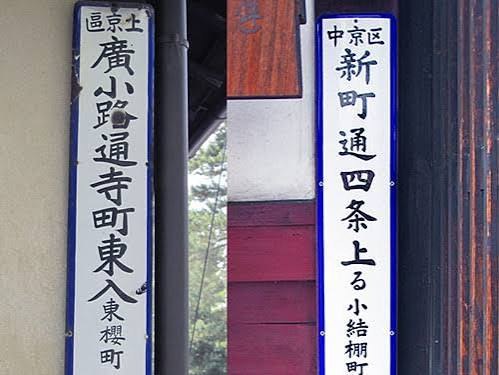
Kyoto addresses work differently. "Karasuma-dōri Oike agaru" means "from the intersection of Karasuma and Oike, go north (up) along Karasuma". North is agaru, south is sagaru, east is higashi-iru, west is nishi-iru. Fact
Know the intersection and you know exactly which way to walk — a brilliantly rational system for a grid city. There's a practical reason too: many neighbourhoods share the same official name, so without the street directions you couldn't pin down a location. Fact
Solving the mysteryDoes "Have some bubuzuke" really mean "Go home"?
The story goes that if a Kyotoite offers you bubuzuke (rice with tea poured over it), they're politely telling you to leave. It's the most famous example of Kyoto ikezu — passive-aggressive indirectness. Urban legend
In reality, finding someone who was actually shown the door this way is hard. The story spread largely through the classic rakugo comic tale "Kyō no Chazuke", and Kyoto people themselves often laugh that it's never happened to them. Likely
There are countless similar jokes: "Your child's piano playing has really come along!" (= it's loud); "What a nice watch you have" (= look at the time). Urban legend Most are exaggerated, but a way of saying no without saying no can be seen as a survival skill for people packed into a small city for over a thousand years. Likely
Up closeA little advanced Kyoto dialect
- -haru: a light honorific ending ("sensei ga kiharu", the teacher is coming). Kyotoites use it even for family members and occasionally animals or the weather — less "respect" than "softness". Fact
- hokkori: now used nationwide to mean "warm and cosy", but in Kyoto it traditionally meant "relieved and tired after finishing a job". Fact
- hannari: elegant, bright and gently showy — used of colours and kimono.
- oideyasu / okoshiyasu: both mean "welcome". People often say okoshiyasu is more polite, but it depends on the shop and the speaker. Urban legend
- ōkini: "thank you" — short for ōkini arigatō, "thank you greatly".
Solving the mysteryReading the face of a townhouse
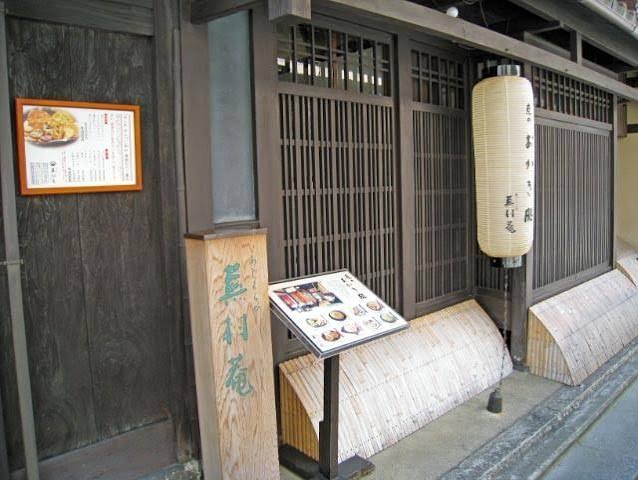
Every element of a machiya's street front has a meaning.
- Kōshi (lattices): you can see out, but not in — a privacy device. Their pattern differs by trade: "thread-shop lattice", "rice-shop lattice", "sake-shop lattice". It's said you could tell a house's business from its lattice. Fact
- Inu-yarai: curved bamboo fences along the base of the wall, guarding against rain splashes — and dogs. Fact
- Shōki-san: a little clay figure of the demon-queller Shōki on the eaves. It's said to deflect evil bounced over from a neighbour's demon-faced roof tile. Legend
- Mushiko-mado: low plastered windows with vertical slats on the upper floor.
On the front lineWhy the convenience stores are brown
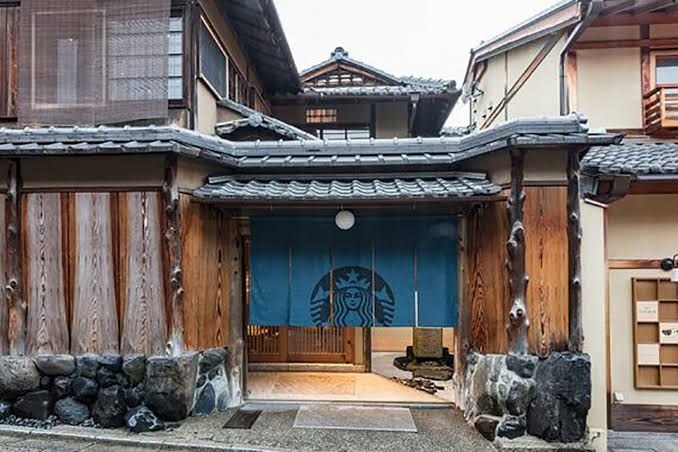
Visitors are often surprised that convenience-store and fast-food signs in Kyoto are muted. That's due to the city's New Landscape Policy, introduced in 2007. Fact It lowered building height limits and banned rooftop billboards and flashing signs — some of the strictest landscape rules in Japan. Fact
Behind it lies a history of "landscape wars" over Kyoto Tower (1964), the Kyoto Hotel and the Kyoto Station building. Fact Kyotoites have long argued between protecting the old and embracing the new. The brown signs are what that argument looks like on the street.