Home / The Shokawa Cherry Trees
07 — SHOKAWA
The Shokawa Cherries and the Miboro Dam
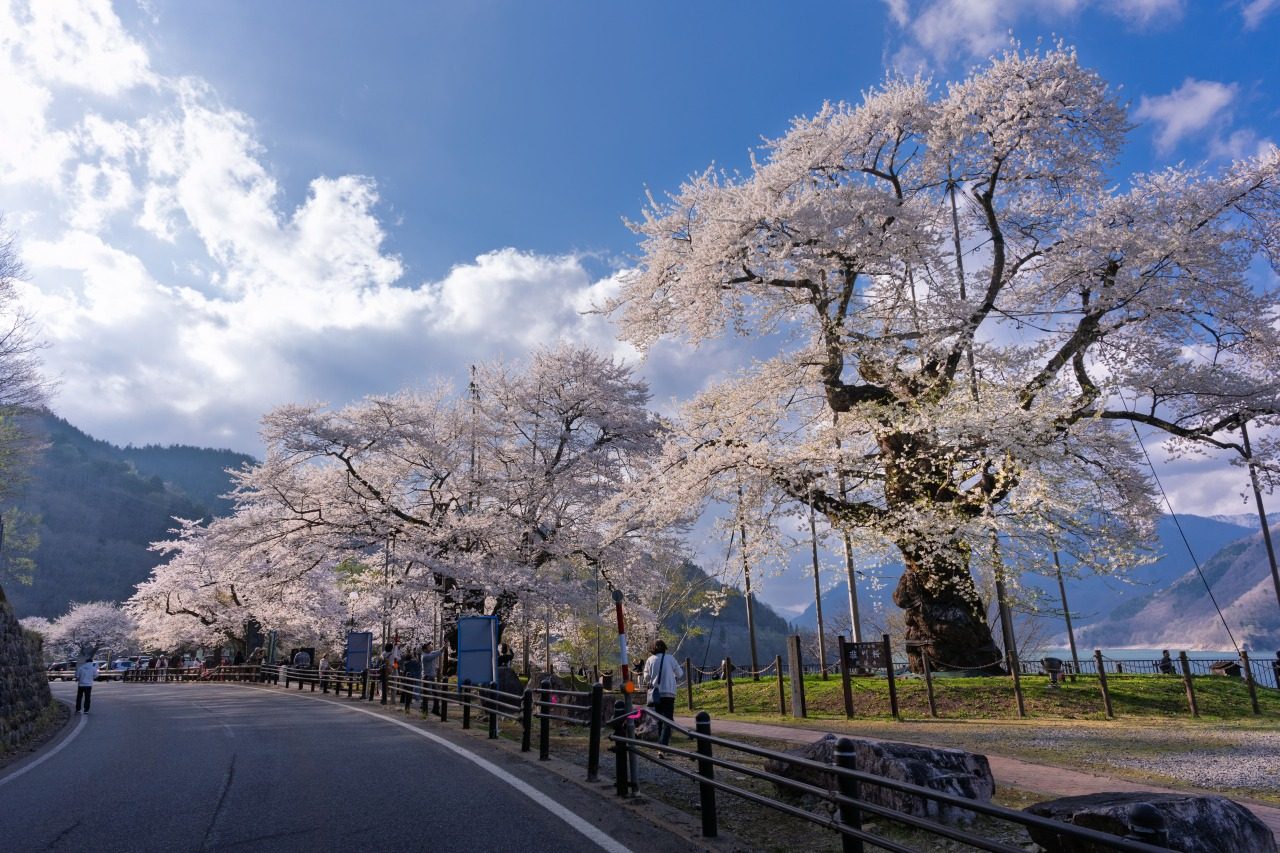
In spring, two great cherry trees bloom on the shore of the lake behind the Miboro Dam. These trees once stood at temples in a village that now lies at the bottom of the dam. Although people said "an old tree can't be moved", these cherries, about 450 years old, were transplanted to the lakeshore. This is the story of the people who lost their home villages, and of the people who set out to save the trees.
Labels: Factdocumented Likelysupported by most sources Legendoral tradition Urban legendlocal lore and rumour
A village to be drowned by a dam
FactPost-war Japan needed vast amounts of electricity for reconstruction and economic growth. Electric Power Development, a company set up under national policy, built the large Miboro Dam on the upper reaches of the Sho River in Hida. It is a rockfill dam, made by piling up rock and stone, and it was completed in 1961.
FactThe dam meant that hamlets of Shokawa Village (today's Shokawa-cho, Takayama) and part of Shirakawa Village would sink beneath the lake. The residents waged a fierce campaign of opposition, but in the end they accepted compensation and left their home villages.
"Can't these cherries be saved?"
FactAt Korin-ji and Shoren-ji, two temples in the doomed village, stood two great Edo-higan cherry trees. Takasaki Tatsunosuke, the first president of Electric Power Development, saw the trees when he visited the site and resolved to move them. He asked for the help of Sasabe Shintaro, well known as a researcher of cherry trees.
FactMoving old trees estimated to be about 450 years old was so difficult an undertaking that even experts said "it cannot possibly succeed". Their branches and roots were cut back hard, they were hauled up with heavy machinery, and in December 1960 the two trees were replanted on high ground overlooking the lake. The following spring the trees put out buds, and in time they flowered again. The two trees came to be known as the "Shokawa-zakura" (the Shokawa cherries).
The cherry road
FactOne person moved by the story of the Shokawa cherries was Sato Ryoji, a conductor on the Japanese National Railways bus route linking Nagoya and Kanazawa. Resolving to "link the Pacific and the Sea of Japan with cherry blossoms", Sato kept planting cherry saplings along the bus route. By the time illness struck him down, he is said to have planted some 2,000 trees.
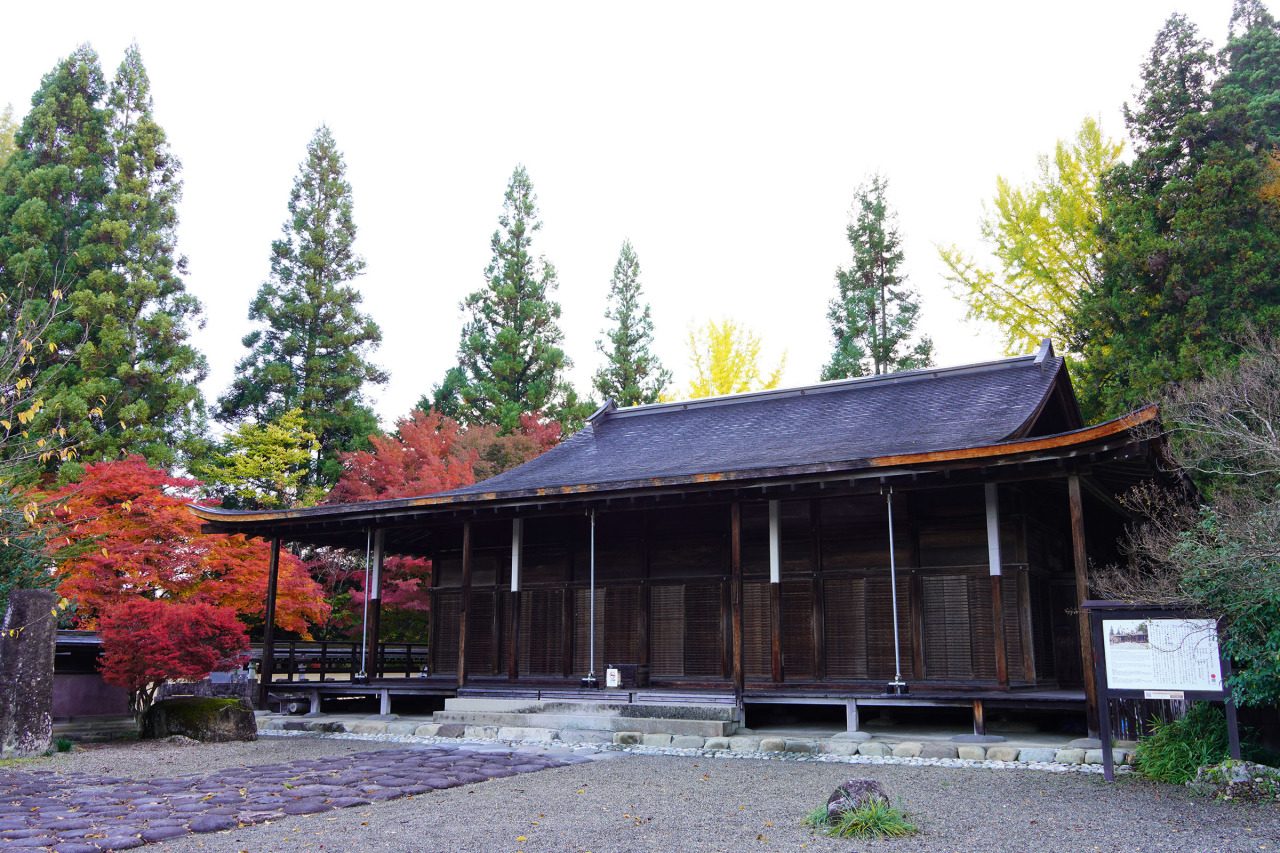
FactThe main hall of Shoren-ji did not sink beneath the lake either. Thought to have been built in the Muromachi period, it was moved to the foot of Shiroyama in Takayama, where it still stands today as a national Important Cultural Property (the Castle Town room).
Look here: memories of the village beneath the lake
The high ground where the Shokawa cherries bloom lies beside National Route 156. Beneath the trees stands a monument recording how they were moved. When the water level of the lake drops, the traces of the drowned village's roads and stone walls can sometimes be seen on the lakebed. In blossom season, former villagers and their descendants also come to visit the trees.
Main sources: J-POWER (Electric Power Development), "The Story of the Shokawa Cherries" / Hakushika Memorial Museum of Sake, "Mr Sasabe and the Shokawa Cherries" / Takayama City, "Main Hall of Shoren-ji" / nippon.com, "The Shokawa Cherries"