Home / Shirakawa-go and the Gassho Houses
06 — SHIRAKAWA-GO
Shirakawa-go and the Gassho Houses
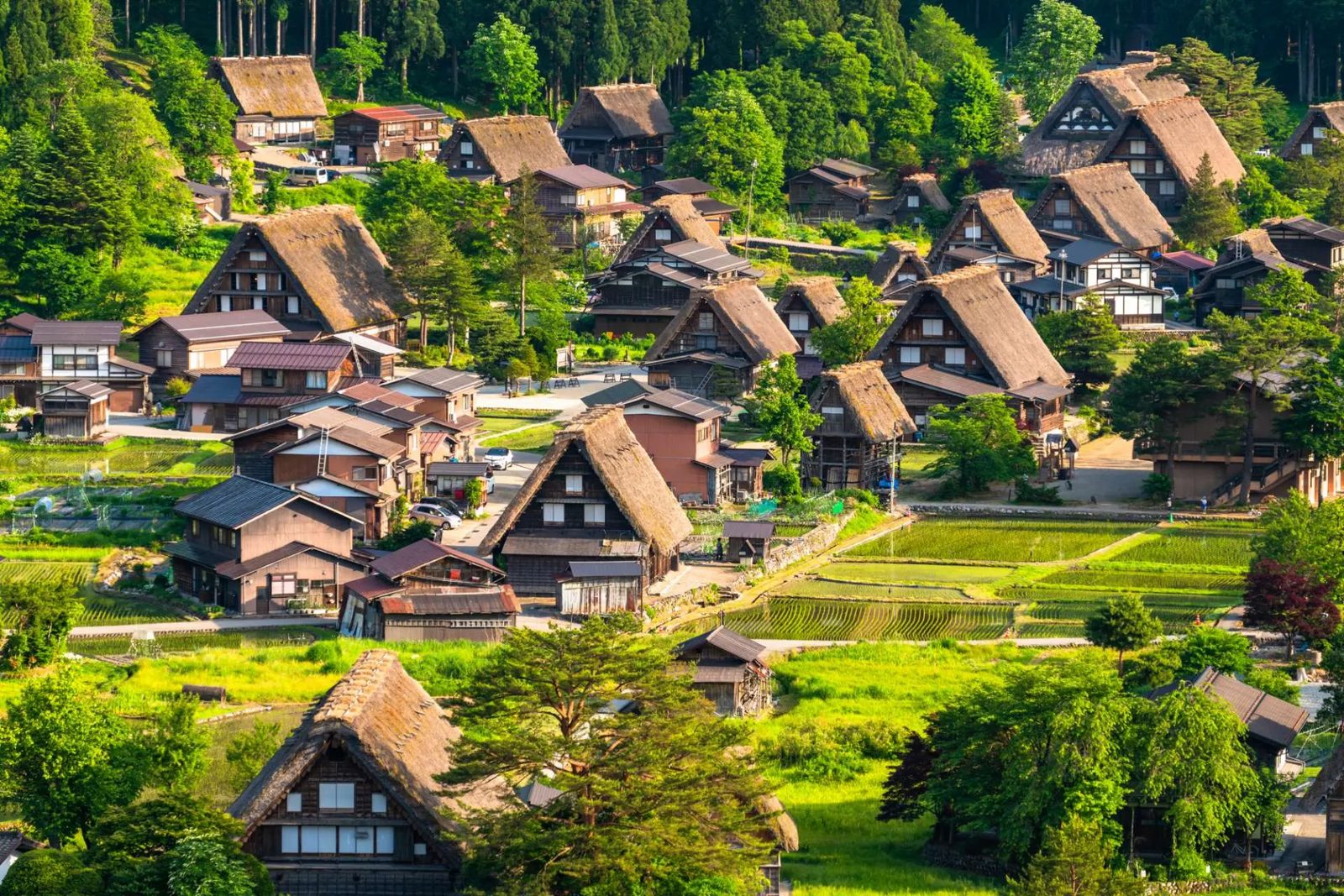
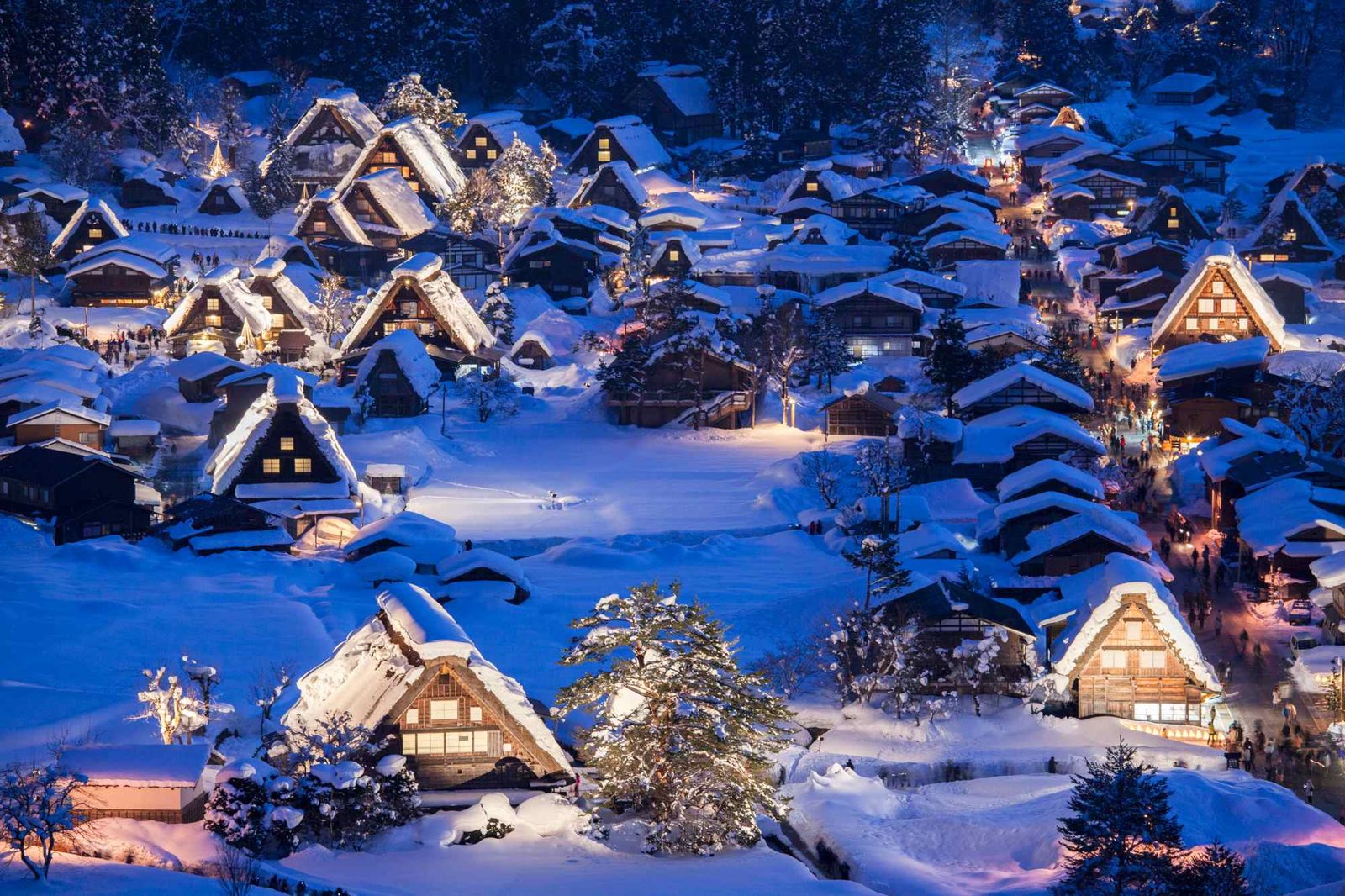
In the north-west of Hida, in the valley of the Sho River, lies a village of houses with steep thatched roofs like hands pressed together in prayer. These are the gassho-zukuri houses of Shirakawa-go. Their shape was not only about withstanding snow. In the attics, silkworms were raised; under the floors, the raw material for gunpowder was made.
Labels: Factdocumented Likelysupported by most sources Legendoral tradition Urban legendlocal lore and rumour
Roofs shaped like praying hands
FactGassho-zukuri houses have steeply pitched gable roofs thatched with miscanthus grass. They take their name from the resemblance of the roof to gassho, hands pressed palm to palm in prayer. The steep roofs shed the heavy snow that piles up in this region, keeping the houses from being crushed under its weight.
FactAlmost no nails are used in the log framework that holds up the roof. The timbers are lashed together with rope and with neso, twisted saplings of witch hazel. The supple, tied framework could give with the weight of snow and the force of the wind.
Silkworms in the attic, gunpowder under the floor
FactThe attic of a gassho house is a wide space divided into two to four levels. This is where sericulture, the raising of silkworms, took place. With light and air coming in through large windows in the gable ends (the triangular faces), and smoke and heat rising from the irori hearth below, the attic was well suited to raising silkworms.
FactUnder the floor, ensho (saltpetre), a raw material of gunpowder, was produced. Silkworm droppings, grass and soil were piled up in pits dug beneath the floor and left for years; the substances that seeped out were then boiled down to extract the saltpetre. For mountain villages that could not grow enough rice, raw silk and saltpetre were a precious source of cash income.
FactSurveys in the Meiji era recorded large families in parts of Shirakawa Village, with several dozen people living in a single house. The big gassho houses were places where large families both lived and worked.
Yui: the whole village turns out
FactThatched roofs have to be re-thatched every few decades. Re-thatching such a large roof is far too big a job for one household alone. So the villagers have re-thatched their roofs together, all hands turning out, through a system of mutual aid called "yui". Even today, on re-thatching days, crowds of people gather from inside and outside the village and finish one whole side of a roof in a single day.
FactFor a village of closely packed thatched houses, the greatest enemy is fire. Ogimachi is equipped with water cannons, and every autumn a drill is held in which they all shoot water into the air at once.
Kaerikumo Castle, lost in a single night
FactIn the Sengoku period, Shirakawa-go was ruled by the Uchigashima clan. In January 1586 (the 11th month of Tensho 13), a great earthquake struck central Japan (the Tensho earthquake). Mt Kaerikumo collapsed on a huge scale, and Kaerikumo Castle, the seat of Uchigashima Ujitoshi, was buried under earth and rock together with its castle town. A banquet is said to have been under way at the castle, and the lord's whole family perished. More than 300 houses are said to have been buried and more than 500 people killed.
FactWhere Kaerikumo Castle stood is still unknown. A monument to the castle site stands at Hokiwaki, beside the national highway. The tale of gold said to lie buried with the castle is told in the Legends room.
Look here: which way the roofs face
Looking down on Ogimachi from the observation point, you will notice that most of the gassho houses are built in line, with their gable ends (the triangular faces) pointing north and south. This is thought to be a way of letting the wind that blows along the valley slip past, and of letting sunlight fall evenly on the roofs so that the snow melts more easily.
Main sources: Agency for Cultural Affairs, Cultural Heritage Online, "Historic Villages of Shirakawa-go and Gokayama" / Shirakawa Village Office / Japan Tourism Agency, Multilingual Commentary Database, "Shirakawa-go Gassho-zukuri Village" / Gifu Prefecture, "The Tensho Earthquake and Kaerikumo Castle"