Home / Sarubobo and Hida Life
15 — DAILY LIFE
Sarubobo and Hida Life
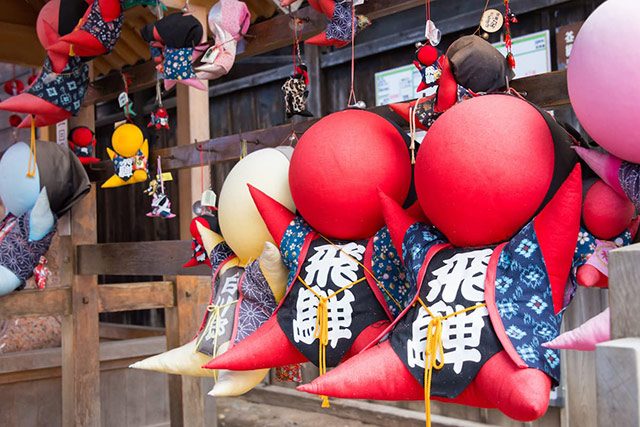
Walk the streets of Takayama and you will meet faceless red dolls everywhere. These are "sarubobo". Known today as souvenirs, the dolls were originally charms made in Hida homes to pray for children's safety. The bustle of the morning markets, the farmhouses of the mountain villages, and the ways people coped with the snowy season: let us take a look at life in Hida.
Labels: Factdocumented Likelysupported by most sources Legendoral tradition Urban legendlocal lore and rumour
Sarubobo: a baby monkey
Fact"Sarubobo" means "baby monkey" in the Hida dialect; "bobo" means a baby. The doll has a body made of red cloth, wears a black hood and apron, and stands with its arms and legs spread wide. In the past, grandmothers and mothers made them by hand for their children and grandchildren.
"Misfortune leaves" and "bonds are tied"
Because "saru" (monkey) sounds like "saru" (to leave), as in misfortune leaving, and "en" (another reading of the character for monkey) sounds like "en" meaning harmony or a good match, the doll has been treated as a charm against misfortune, for finding a partner and for safe childbirth. Red is said to be a colour that wards off illness and evil.
Why no face?
It is not clear why sarubobo have no face drawn on them. A common explanation is that the dolls reflect the feelings of their owners, looking as if they are smiling when you are happy and crying when you are sad.
Morning markets: the town's kitchen for 200 years
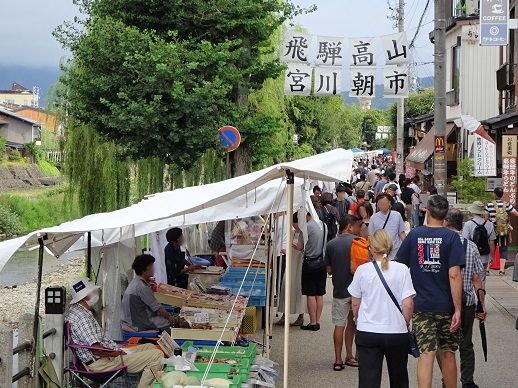
FactEvery morning in Takayama two markets are held: the Miyagawa Morning Market and the Jinya-mae Morning Market. The Miyagawa market dates from the late Edo period. It is said to have begun as a "mulberry market", where mulberry leaves for silkworm-raising were bought and sold in front of Takayama Betsuin temple, and in time vegetables and flowers came to be sold as well.
FactIn the Meiji era markets were held both morning and evening, and it came to be called the "morning market". In 1960 it moved to its present site along the bank of the Miya River. Farm women lay out vegetables, pickles and flowers from their own fields, and local people and travellers mingle. The Miyagawa Morning Market is sometimes counted among Japan's three great morning markets (the Tenryo room).
Hida Folk Village: passing on mountain-village life
FactHida no Sato (Hida Folk Village), on a hill west of the town of Takayama, is an open-air museum that opened in 1971. About 30 houses, including gassho-zukuri farmhouses (with steep thatched roofs shaped like hands joined in prayer), were moved here from all over Hida, recreating a mountain-village landscape around a pond. Four of them are National Important Cultural Properties.
FactInside the houses you can see the tools of winter life in a land shut in by snow: irori sunken hearths, straw craft and weaving looms. Through the long winters people spent their time indoors at handwork such as making straw sandals and twisting rope.
Look here: the grandmothers' pickles at the morning market
The pickled red turnips and shinazuke (pickles made from a mix of vegetables) you find at the morning market taste different from household to household. If you are offered a sample, do compare. Handmade sarubobo are sometimes on sale at the morning market too (the Food room).
Main sources: Hida-Takayama Miyagawa Morning Market Cooperative, "History of the Morning Market" / Hida-Takayama official tourism site / Takayama City, "Buildings of Hida no Sato" / Hida Folk Village Hida no Sato