Home / Kamioka: Mine and Cosmos
10 — KAMIOKA
Kamioka: Mine and Cosmos
Beneath the mountains of Kamioka, in the north of Hida City, long tunnels spread out like a net. This was once a mine that brought out zinc and lead. In the darkness 1,000 metres underground, a device that captures invisible particles arriving from space brought two Nobel Prizes in Physics.
Labels: Factdocumented Likelysupported by most sources Legendoral tradition Urban legendlocal lore and rumour
The greatest mine in the East
LegendThe Kamioka Mine is an old mine, said by tradition to have produced gold in the Yoro era of the Nara period.
FactIn the Edo period it produced silver and lead as a mine on shogunate land, and in the Meiji era Mitsui took over its management. Modern facilities were installed, and Kamioka grew into one of the leading mines in the East, chiefly for zinc and lead. The mountain town of Kamioka was busy with miners and their families. Ore mining ended in 2001.
Itai-itai disease
FactBehind the mine's prosperity, serious harm was also being done. Cadmium released from the mine flowed down the Jinzu River and damaged the fields and the bodies of people in the river basin in Toyama Prefecture. The disease, which makes bones brittle and causes severe pain, was called "Itai-itai disease" (itai means "it hurts"), and in 1968 it became the first pollution-related disease officially recognised by the national government. Measures were later taken at the source, and the soil of the river basin has been restored.
Kamiokande: watching the universe from underground
FactIn 1983 the University of Tokyo built an observation device called "Kamiokande" 1,000 metres underground in the Kamioka Mine: a tank holding a large volume of water, fitted with light sensors. A deep underground site was chosen so that the thick bedrock would block cosmic rays and other interference raining down on the surface. The original aim was to detect proton decay.
FactOn 23 February 1987, Kamiokande became the first in the world to capture neutrinos from a supernova explosion in the Large Magellanic Cloud. These particles had travelled some 160,000 light years and passed right through the Earth. For this achievement, Koshiba Masatoshi received the Nobel Prize in Physics in 2002.
FactIn 1996 its successor, "Super-Kamiokande", holding about 50,000 tonnes of pure water, began observations. In 1998 its observations led to the discovery of "neutrino oscillation", showing that neutrinos have mass, and in 2015 Kajita Takaaki received the Nobel Prize in Physics. Construction of an even larger detector, "Hyper-Kamiokande", is now under way.
Look here: Hida Cosmic Science Museum "Kamioka Lab"
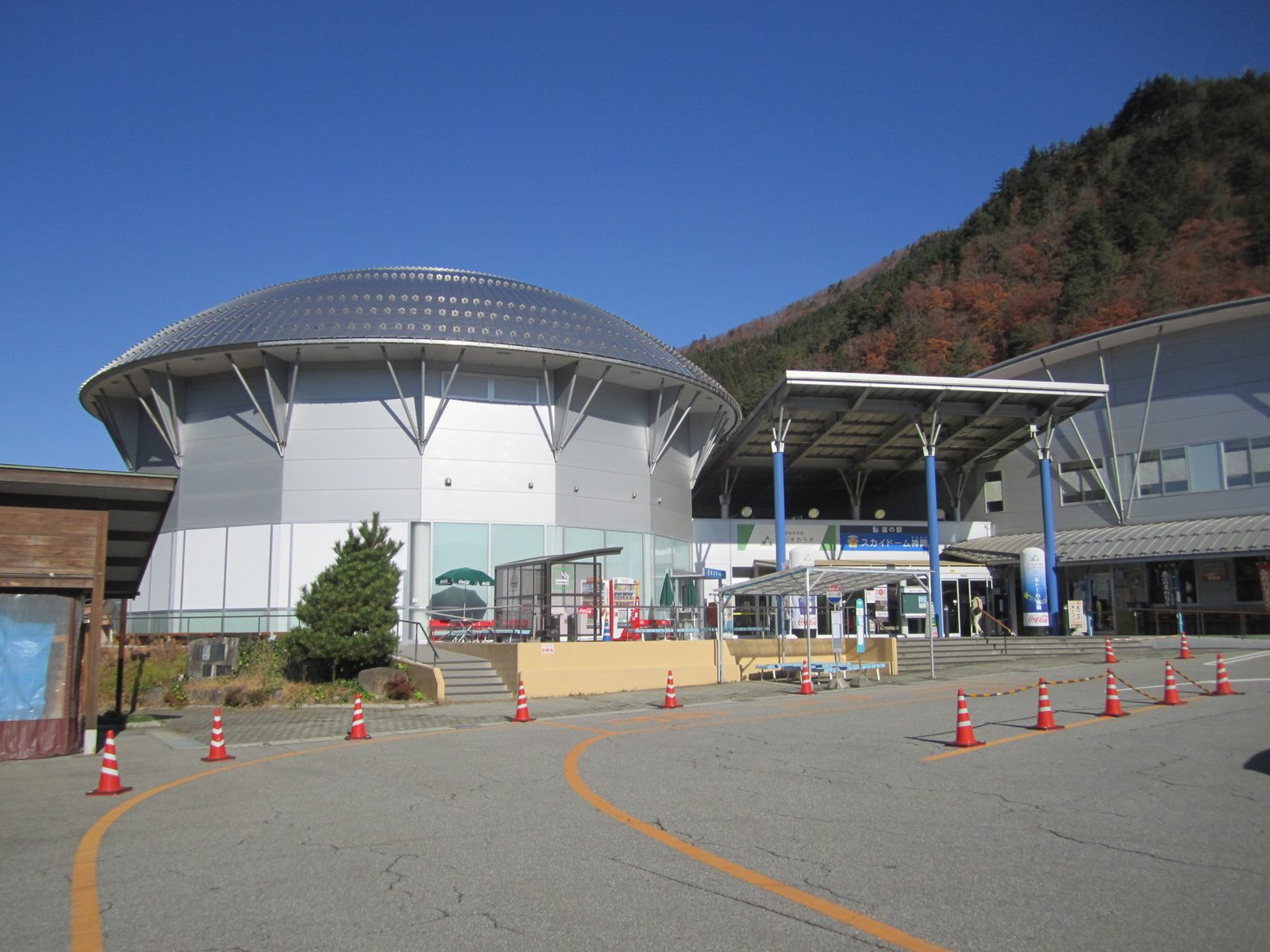
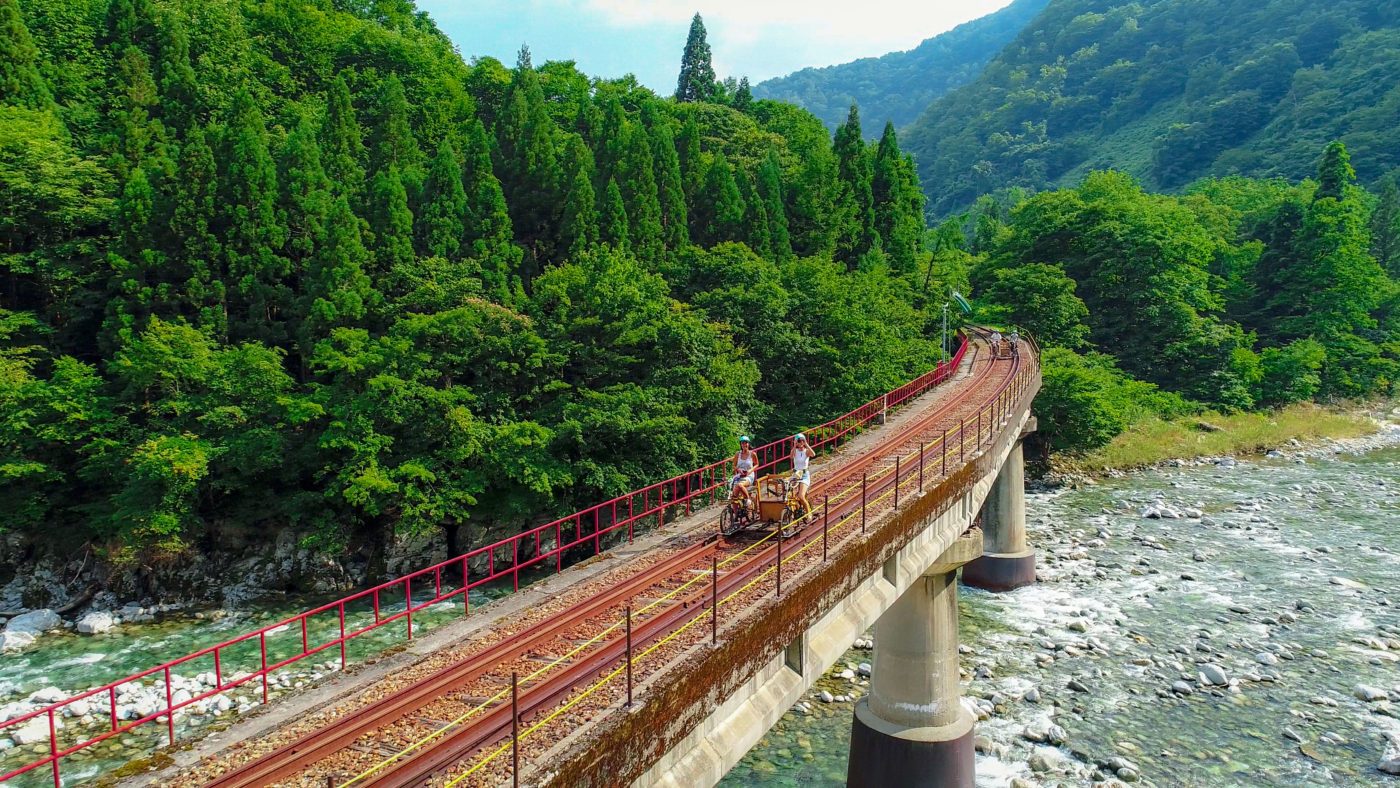
The observation facilities are not open to the public, but at the Hida Cosmic Science Museum "Kamioka Lab" in the centre of Kamioka you can experience the inside of Super-Kamiokande through life-size images, and see one of its light sensors on display. On the tracks of the disused Kamioka Railway you can also enjoy the "Rail Mountain Bike", riding bicycle-like vehicles along the rails.
Main sources: Kamioka Observatory, Institute for Cosmic Ray Research, University of Tokyo / Hida City, "Hida Cosmic Science Museum Kamioka Lab" / Ministry of the Environment, "Itai-itai Disease" / Toyama Prefectural Itai-itai Disease Museum