Home / Gero Onsen
09 — GERO
Gero Onsen
Where steam rises from the gorge of the Hida River, Gero Onsen has been praised since the Muromachi period as a famous hot spring on a par with Arima and Kusatsu. We trace the legend of a single white heron that showed people where the water was, the origin of the rather unusual place name "Gero", and how the railway changed this spa town.
Labels: Factdocumented Likelysupported by most sources Legendoral tradition Urban legendlocal lore and rumour
The spring a white heron revealed
FactGero Onsen is said to have begun in the 10th century, between the Engi and Tenryaku eras, when hot water welled up near the summit of Mt Yugamine, which rises to the east of the spa town. In 1265, however, the spring on the summit suddenly stopped.
LegendSoon afterwards, villagers noticed a single white heron alighting on the riverbed of the Hida River every day. Curious, they went closer and found hot water welling up there. The heron is said to have been an incarnation of Yakushi Nyorai, the Buddha of healing. The villagers found a statue of Yakushi Nyorai and enshrined it, and this is said to be the origin of today's Onsen-ji temple.
"Japan's three famous springs"
FactThe Muromachi-period monk Banri Shukyu wrote in his poetry and prose of the waters of Gero as a famous spring, alongside Arima (Hyogo Prefecture) and Kusatsu (Gunma Prefecture). The Edo-period Confucian scholar Hayashi Razan also named Kusatsu, Arima and Gero as famous springs in his writings. These three came to be known as "Japan's three famous springs".
FactThe water is a simple alkaline spring, silky smooth on the skin. The source temperatures are high, some of them above 80 degrees.
The place name "Gero"
FactIn the Nara period, "stations" where travellers changed horses were set at regular intervals along the roads linking the capital and the provinces. On the road from Mino Province to Hida Province there were stations called "Kami-tomari" (上留, the upper stop) and "Shimo-tomari" (下留, the lower stop). It is thought that "Shimo-tomari" came to be read "Geru", which then changed to "Gero", written with the characters 下呂.
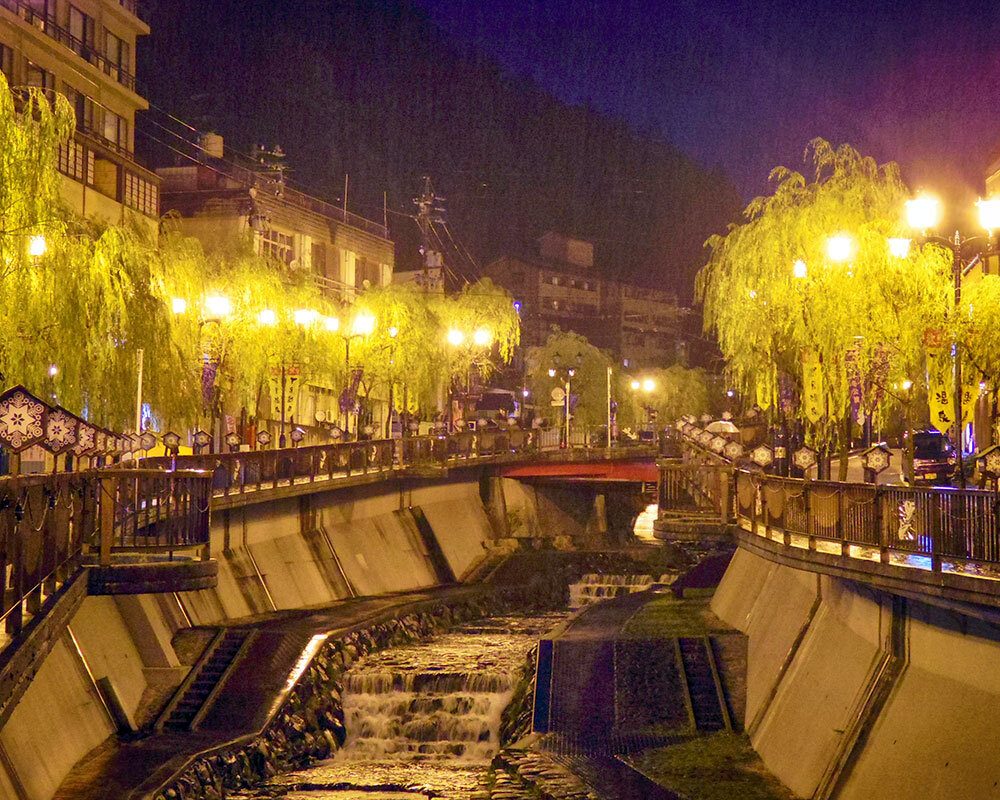
FactGero, once a mountain spa where people came to take the waters, changed greatly after Gero Station opened on the railway (today's Takayama Main Line) in 1930. Visitors seeking cures and sightseers came in large numbers from the Nagoya area, and a spa town grew up with inns lining both banks of the Hida River.
Look here: the stone steps of Onsen-ji and the Gassho Village
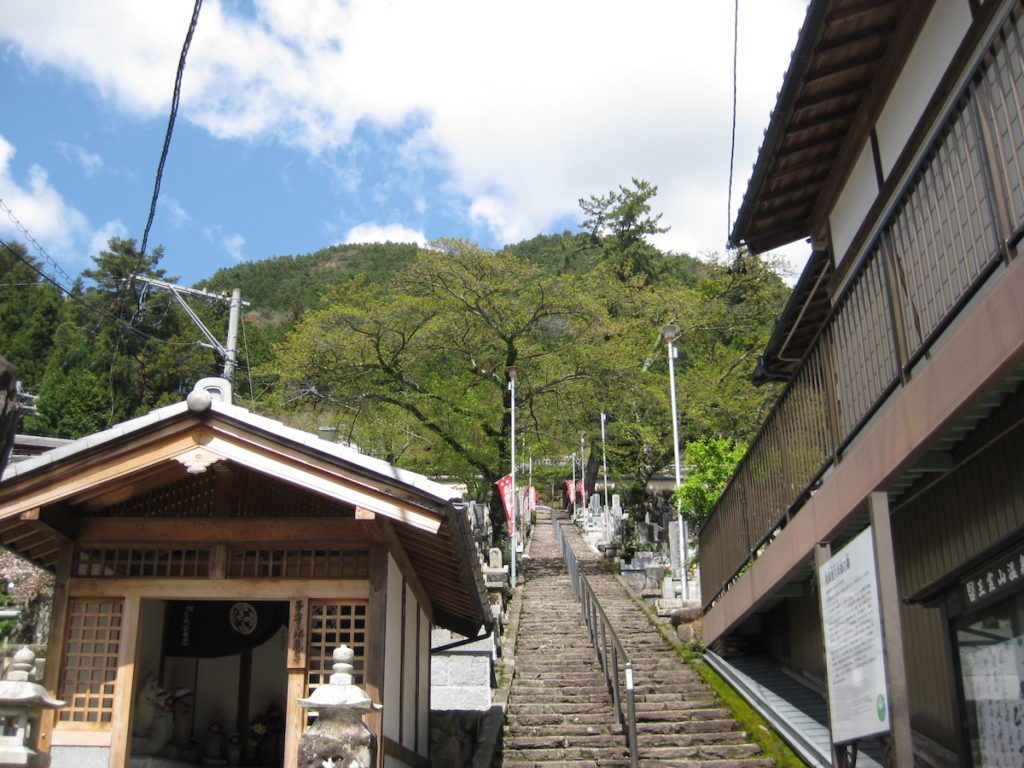
At the back of the spa town, at the top of a long flight of stone steps, stands Onsen-ji. From its grounds you can look out over the spa town along the Hida River, and at night the steps are lit with lanterns. At Gero Onsen Gassho Village, to the east of the spa town, gassho-zukuri farmhouses (with steep thatched roofs shaped like hands joined in prayer) moved from Shirakawa-go and elsewhere have been gathered together, conveying the life of Hida's mountain villages (the Shirakawa-go room).
Main sources: Gero City, "Introducing Gero Onsen" / Gero Onsen Tourism Association, "About Gero Onsen" / Onsen-ji