Home / Enku and Ryomen Sukuna
05 — FAITH
Enku and Ryomen Sukuna
At the start of the Edo period, a monk walked the length of Japan with a single hatchet, carving Buddhist statues as he went. His name was Enku. His statues, which make use of the raw splits in the wood just as they are, survive in great numbers in the mountain villages of Hida. And among the figures Enku carved in Hida is a strange being with two faces on a single body.
Labels: Factdocumented Likelysupported by most sources Legendoral tradition Urban legendlocal lore and rumour
A vow to carve 120,000 Buddhas
FactEnku (1632–1695) was a monk thought to have been born in Mino Province (today's southern Gifu Prefecture). Travelling for his religious training everywhere from Hokkaido to the Kinki region, he carved Buddhist statues wherever he went and left them with the people.
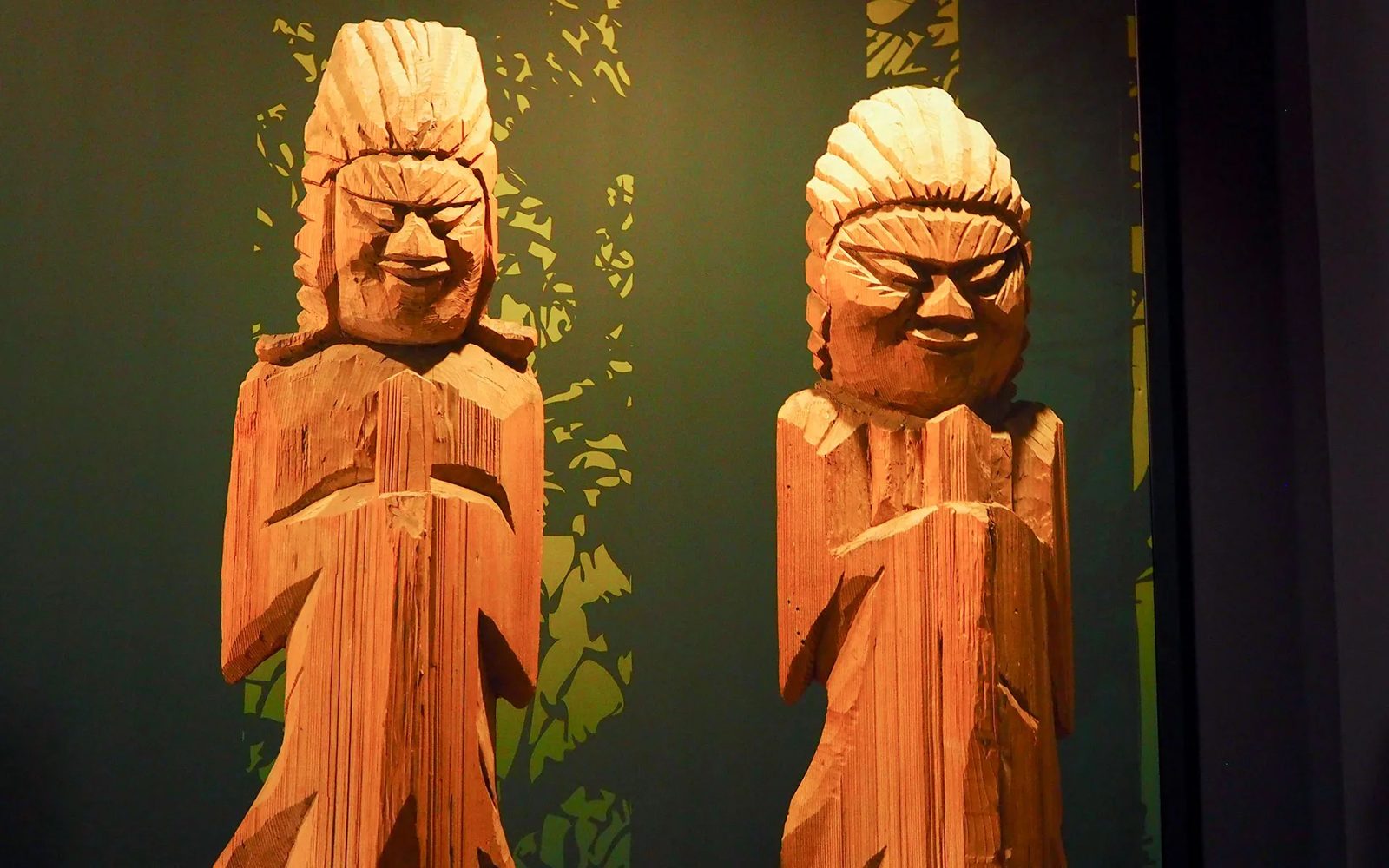
LikelyEnku is said to have vowed to carve 120,000 Buddhas in his lifetime. Just over 5,000 Enku Buddhas have been identified today. With faces left as the wood split and the rough marks of the hatchet still showing, they are also called natabori ("hatchet carvings"), and are known for their simple, powerful expressions.
Enku in Hida
FactEnku also stayed in Hida for long periods, leaving many Buddhas at temples and houses across the region, above all at Senko-ji in Nyukawa-cho, Takayama. The Enku Buddha Treasure Hall at Senko-ji holds a large number of statues he carved. Hida also has small Enku Buddhas that villagers are said to have given their children as toys.
Ryomen Sukuna: monster or hero?
FactThe Nihon Shoki (Chronicles of Japan), in its entry for the 65th year of Emperor Nintoku, records that there was in Hida a being called Ryomen Sukuna ("two-faced Sukuna"). He had two faces on one body, looking in opposite directions, and four arms and four legs. Because he wielded two bows and plundered the people, he was struck down by Naniwa no Neko Takefurukuma, a commander sent by the imperial court, or so the chronicle says.
A hero who protected Hida
In Hida, Ryomen Sukuna is no villain. In the founding legend of Senko-ji he is said to have founded the temple as an incarnation of the Guze Kannon (the saviour bodhisattva), and legends all over the region tell of him as a hero who helped the people, slaying a poisonous dragon and founding villages.
A local chieftain who defied the court
One view holds that Sukuna, cast as a "monster" in the court's records, reflects a powerful figure in Hida who refused to submit to the Yamato state. The same figure, it is thought, came to be portrayed in completely opposite ways by the victors and by the local people.
Look here: the Ryomen Sukuna statue at Senko-ji
Senko-ji holds a statue of Ryomen Sukuna carved by Enku. The two faces are shown side by side above the shoulders, in a powerful figure holding an axe. It is clear that he was carved not as a monster but as a dependable guardian deity. From the temple grounds high on the mountain, there are views across to the Northern Alps.
Main sources: Hida Senko-ji, "Enku Buddha Treasure Hall" / Gifu Prefecture, "Buddhist Statues by Enku (Senko-ji)" / Nihon Shoki, entry for the 65th year of Emperor Nintoku / Gifu Prefectural Museum