Home / Carving, Lacquer and Furniture
14 — CRAFTS
Carving, Lacquer and Furniture
In Hida, a land of wood, crafts grew up that make the most of the natural beauty of wood. Lacquer through which the grain shows, carving that uses the red and white of the wood without any paint, and chairs made of bent wood. The skills of the Hida takumi (master craftsmen) who built the capital 1,300 years ago live on, in changed form, in everyday life today.
Labels: Factdocumented Likelysupported by most sources Legendoral tradition Urban legendlocal lore and rumour
Hida Shunkei: lacquer that shows the grain
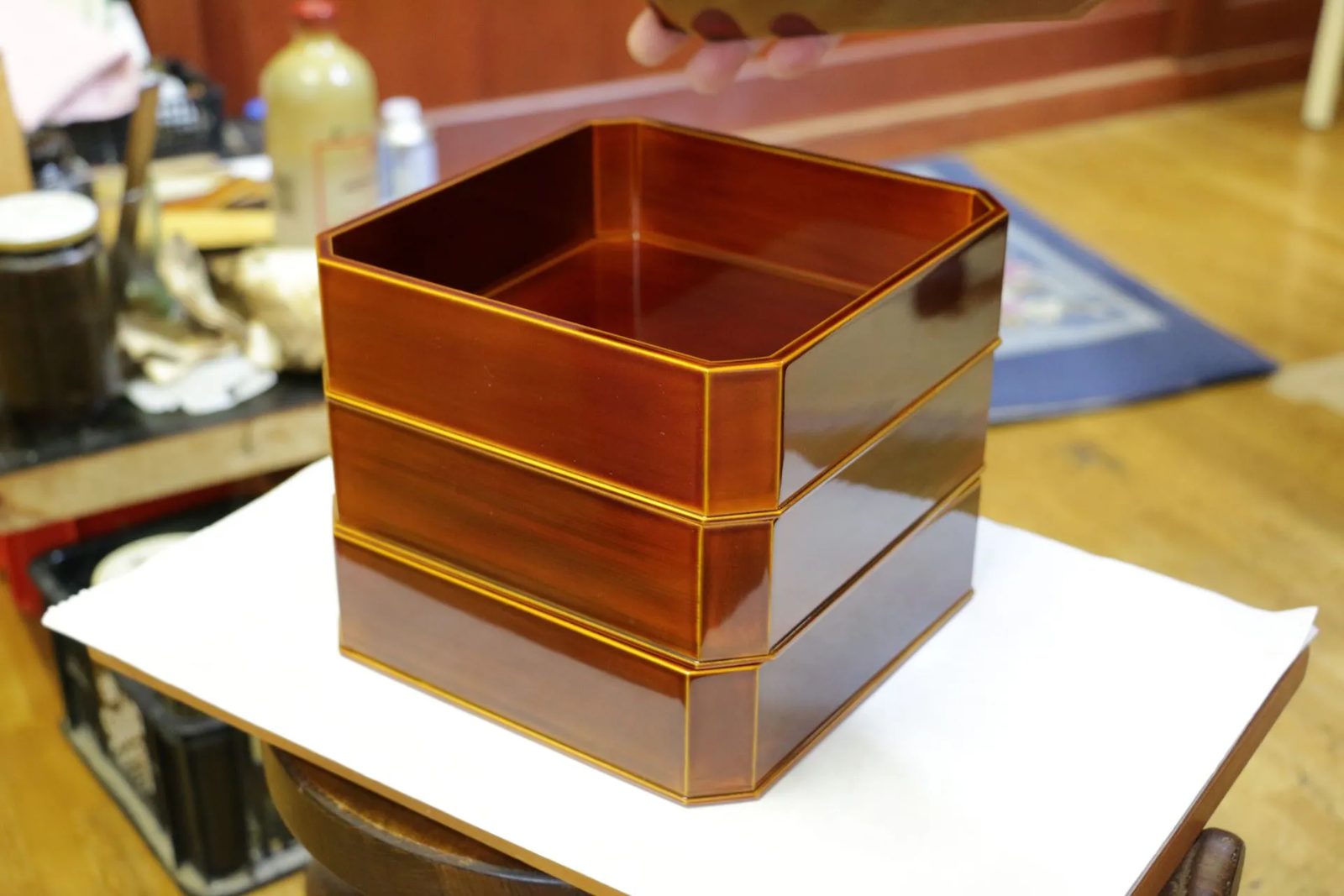
FactAt the beginning of the Edo period, Takahashi Kizaemon, a master carpenter in Takayama, was struck by the beautiful grain of a split piece of sawara cypress and made a tray from the board. It caught the fancy of Kanamori Shigechika, a member of the family of the lords of Takayama Castle (later known as the tea master Kanamori Sowa) (the Castle Town room). Shigechika had his retained lacquerer, Narita San'emon, finish it in sukiurushi, a transparent lacquer through which the grain shows. This is said to be the origin of Hida Shunkei.
LikelyThere are various theories about the name "Shunkei": that the colour of the ware resembled that of a celebrated ceramic tea jar known as "Hi-Shunkei", or that it was presented to the lord in spring (shun), among others. It is not known for certain.
FactOne craftsman makes the wooden base, another applies the lacquer. The skills of these two takumi combine to create ware that glows the colour of amber. Another of its charms is that the colour deepens the more it is used.
Ichii Ittobori: carving without paint
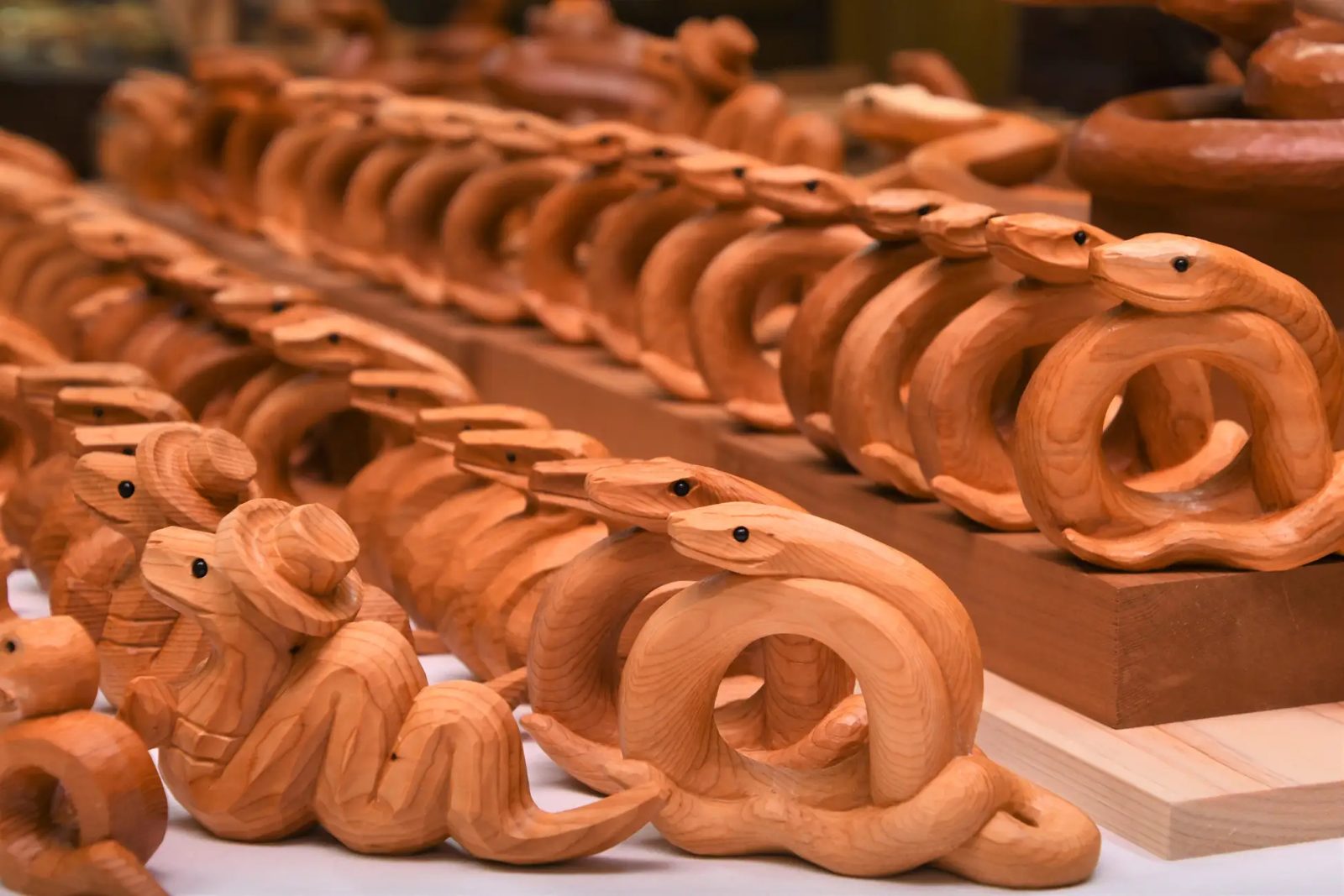
FactIchii Ittobori is wood carving in which ichii (Japanese yew) is carved with chisels and small knives. Yew wood has reddish-brown "heartwood" at the centre and white "sapwood" on the outside, and this difference in colour is used as it is to form the pattern; the carvings are finished without any paint at all.
FactIchii Ittobori is said to have begun in the late Edo period with Matsuda Sukenaga of Takayama, who made netsuke (small carved toggles for fastening inro medicine cases and the like to the sash) from yew wood and was called a master. The pale colour of a freshly made piece turns over the years to a glossy amber.
Bentwood and Hida furniture
FactThe mountains of Hida were rich in beech trees. Beech bends easily, and it was once regarded as a wood with few uses. In 1920 a furniture factory was founded in Takayama that steamed and bent this beech to make chairs. Hida chairs made with bentwood techniques were eventually exported abroad too, and "Hida furniture" became one of Japan's leading furniture brands.
Look here: craftsmen's workshops and shopfronts
In the old town and around central Takayama there are shops that double as workshops for Ichii Ittobori and Shunkei lacquer. You may even see a craftsman working with a carving chisel at the shopfront. Hold a piece of Hida Shunkei ware up to the light and the grain stands out clearly beneath the lacquer.
Main sources: Japan Traditional Crafts Aoyama Square, "Hida Shunkei" and "Ichii Ittobori" / Hida Shunkei Cooperative Association / Hida Sangyo, "About the Hida Takumi" / Takayama City