Home / Kanamori Nagachika and Takayama Castle
01 — CASTLE TOWN
Kanamori Nagachika and Takayama Castle
The framework of the town of Takayama was laid down by a single warlord of the Sengoku period: Kanamori Nagachika, who served Oda Nobunaga and loved the tea ceremony. He built a castle in a mountain basin and laid out a town of rivers, temples and townspeople. The castle is gone, but the town plan Nagachika drew is still alive 400 years later.
Labels: Factdocumented Likelysupported by most sources Legendoral tradition Urban legendlocal lore and rumour
Nobunaga's retainer comes to Hida
FactKanamori Nagachika was a warlord who served Oda Nobunaga from his youth. The character "naga" in his name is said to have been granted to him by Nobunaga. After Nobunaga's death he followed Toyotomi Hideyoshi, and in 1585, on Hideyoshi's orders, he invaded Hida and defeated the Mitsuki (Anegakoji) clan, who ruled the land.
FactThe following year, given the whole province of Hida, Nagachika began building a castle on a low hill beside the Miya River. This was Takayama Castle. Work began in 1588 and went on for more than ten years, producing a full-scale castle with its inner, second and third baileys ranged along the hilltop.
A town of rivers, temples and townspeople
FactNagachika placed samurai residences at the foot of the castle hill, and a townspeople's quarter to the north along the Miya River. The town was laid out in a neat grid of streets running north to south, and this is the origin of today's "old town" (the Old Town room). Temples were gathered along the foot of the hills on the east side of town to protect the castle town.
"He built the town in imitation of Kyoto"
It is said that Nagachika, a lover of Kyoto culture, lined his Higashiyama with temples and treated the Miya River as his Kamo River, making a town that resembled Kyoto. This is given as one reason why Takayama is called "the Little Kyoto of Hida".
A design suited to a mountain town
Separating the castle, the samurai quarter, the townspeople's quarter and the temple district was also a common way of building castle towns at the time. In Takayama's case, the town was laid out to make use of the terrain of a basin wedged between river and mountains.
Lords of the tea ceremony
FactNagachika was also a man of tea, on friendly terms with Sen no Rikyu. His love of tea passed down to his descendants: Kanamori Shigechika, son of the second lord Arishige, later founded the Sowa school of tea in Kyoto and became known as "Kanamori Sowa". Hida Shunkei lacquerware, too, has its origins in a story connected with Shigechika (the Crafts room).
The lords leave, and the castle vanishes
FactThe Kanamori clan ruled Hida for six generations and 107 years, but in 1692 the sixth lord, Yoritoki, was moved to Kaminoyama in Dewa Province (today's Yamagata Prefecture). Hida became tenryo, land ruled directly by the shogunate (the Tenryo room). Left without a master, Takayama Castle was placed in the care of the Kaga domain and demolished in 1695.
Look here: the inner bailey site in Shiroyama Park
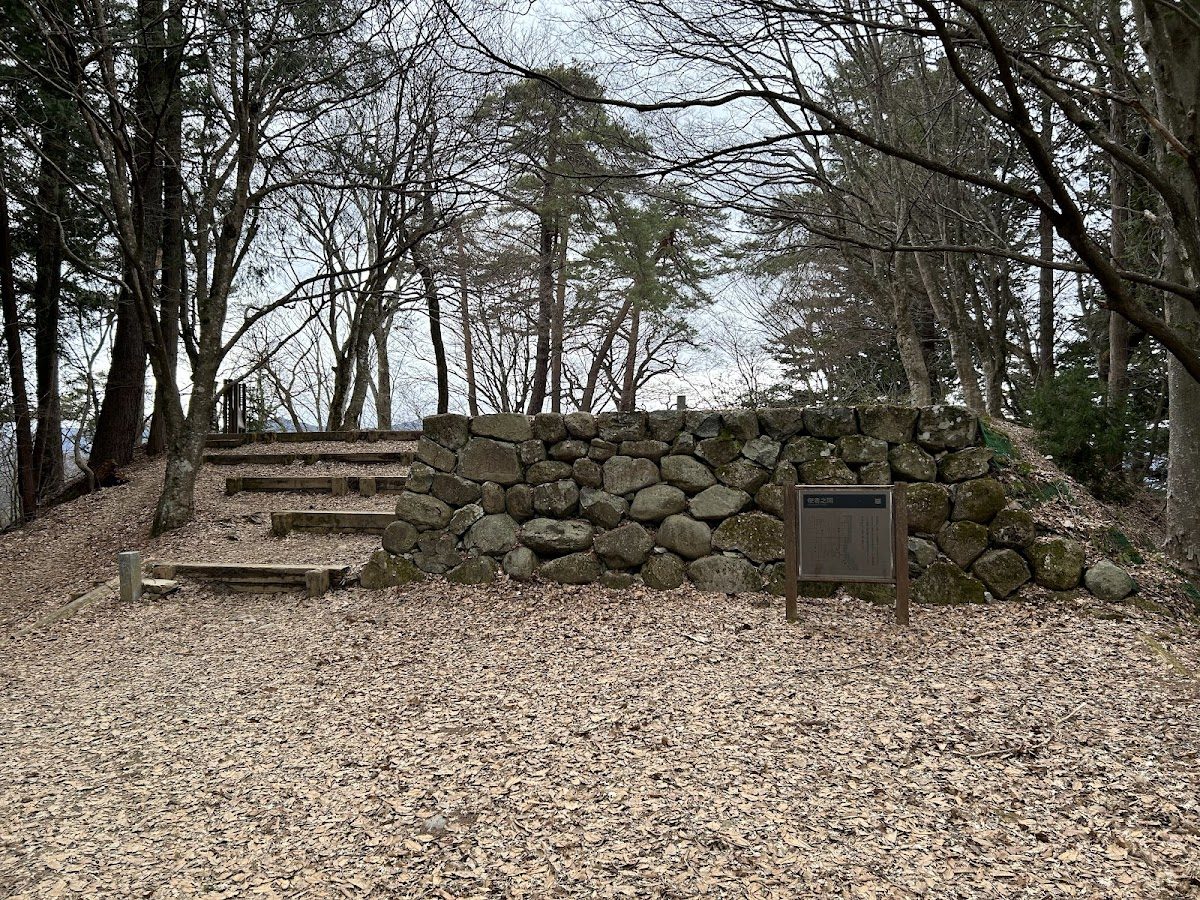
The hill where Takayama Castle stood is now Shiroyama Park. Climb the walking path and, at the site of the inner bailey, part of the stone walls remains, with views through the trees over Takayama's streets and the Northern Alps. Standing where Nagachika once surveyed his town, you can see clearly why it was laid out as it was.
Main sources: Takayama City, "History of Takayama" / Takayama City, "Takayama Castle Site" / Gifu Prefecture, "History of Hida" / Takayama City Local History Museum