Home / Strategy
01 — Strategy
An abacus over a spear,
a tea bowl over a sword.
To the Tokugawa, an “outside” lord holding more than a million koku was a threat that could turn at any moment. Yet the Maeda were never dispossessed and survived to the very end of the Edo period. Behind that were a founder who never let go of his abacus, a wife who went to Edo as a hostage, a third lord who played the fool and a fifth lord who staked everything on learning.
The founder
A dandy who learned the value of money as a ronin
The young Maeda Toshiie was a kabukimono, a flamboyant swaggerer who walked the streets in outlandish clothes. Wielding a spear some 6.3 metres long, he won fame in battle as “Mata-za of the Spear”. Fact
In 1559, however, he quarrelled with Juami, a tea attendant favoured by Oda Nobunaga, cut him down and fled. Cast out by his lord, Toshiie lived as a masterless samurai, and it was then, struggling even to eat, that he is said to have learned how frightening a lack of money can be.
Toshiie is reported to have said, in effect, that with money one need fear neither others nor gossip, but when poor, nothing is more frightening than the world. His own abacus, said to have gone with him even on campaign, is preserved as a Maeda family treasure. Likely
The Kaga domain had specialist accountant-samurai called gosanyo-mono. The household accounts kept by one such family, the Inoyama, from the end of the Edo period into Meiji were analysed by historian Isoda Michifumi in Bushi no Kakeibo (“A Samurai's Household Accounts”), later made into a film. Some 250 years after Toshiie's abacus, Kaga's tradition of numerate samurai survives in precise detail.
Diplomacy by hostage
Matsu went to Edo herself.
When Toshiie died in Osaka in 1599, Tokugawa Ieyasu accused his heir, Toshinaga, of plotting rebellion and hinted at a punitive expedition against Kaga. The Maeda house faced ruin.
The crisis was resolved by Toshiie's widow, Matsu (Hoshun-in). Toshinaga agreed that his mother would go to Edo as a hostage, and the expedition was called off. Matsu entered Edo in 1600 and spent about fourteen years there, returning home only after Toshinaga's death. Fact
- 1599Toshiie dies; the Maeda are suspected of rebellionIeyasu hints at invading Kaga.
- 1600Matsu goes to Edo as a hostageAn early case of a great lord's family living in Edo.
- EdoLords' wives and heirs live in Edo as a ruleLater formalised alongside the alternate-attendance system.
- NowThe story of “Toshiie and Matsu”Her decision is remembered as the starting point of Kaga's million koku.
The practice of lords' families residing in Edo developed from the actions of many lords, not from Matsu alone. But the political weight of the mother of a million-koku house entering Edo is often described as pioneering.
The third lord
Playing the fool, betting on culture
The third lord, Maeda Toshitsune, married Tama-hime, daughter of the second shogun Hidetada, making him one of the outside lords closest to the Tokugawa. Even so, in 1631 repairs to Kanazawa Castle and his choice of retainers aroused suspicion of rebellion, and he had to rush to Edo to explain himself. Fact
The best-known story about him is the nose hair: that he deliberately let it grow to seem dim-witted, and told a worried retainer that it protected the three provinces and their livelihoods. Tradition The tale derives from works such as Ihara Saikaku's Nippon Eitaigura, and its truth is unknown.
What is certain is where Toshitsune put the domain's wealth. He set up the Osaikusho, a domain workshop employing craftsmen, invited master artisans and cultural figures from Kyoto, and, through contacts such as the tea master and garden designer Kobori Enshu, brought in the tea ceremony and garden design. This cultural flowering, sometimes called the “Kaga Renaissance”, laid the foundations of Kanazawa's crafts, confectionery and tea culture. Spend on arms and you invite suspicion; spend on culture instead. In an age of peace, it may have been the smartest “defence budget” of all.
On retiring in 1639, Toshitsune gave the Toyama domain to his second son and the Daishoji domain to his third, and withdrew to Komatsu. The Maeda thus became a main house with two branch domains, each of which lasted to the end of the era.
The fifth lord
“Kaga is the library of the realm.”
The fifth lord, Maeda Tsunanori, inherited the domain at the age of three and remained its lord for some eighty years. His guardian was his father-in-law, Hoshina Masayuki of Aizu, a celebrated ruler, and under his influence Tsunanori devoted himself to scholarship and welfare.
He appointed book commissioners to collect classical texts from across Japan and had craft samples classified in the Hyakko Hisho. His collection was so rich that the Confucian scholar Arai Hakuseki declared, “Kaga is the library of the realm.” The Maeda collections survive today at the Sonkeikaku Bunko of the Maeda Ikutokukai foundation in Komaba, Tokyo.
During the Kanbun-era famine, he also set up relief shelters that gave the destitute rice and medical care, later adding facilities to teach them trades — an Edo-period welfare policy often cited today. Fact
And because the shogun Tsunayoshi loved Noh, Tsunanori studied the Hosho school and unified the domain's Noh under it. This was the start of Kaga Hosho, the Noh culture in which even town craftsmen chanted (see Gold Leaf & Crafts).
“Kaga is the library of the realm.”Words attributed to Arai Hakuseki, praising Tsunanori's book collection
Kaga in Edo
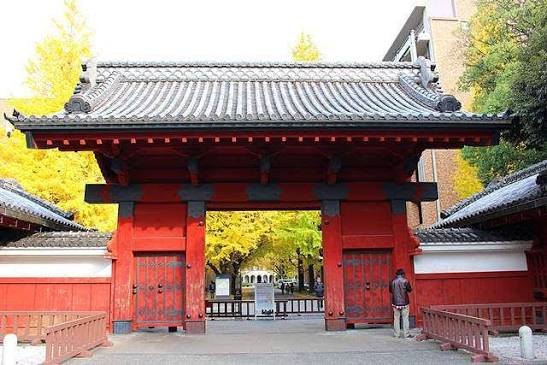
The University of Tokyo's Red Gate was a Kaga gate.
The Kaga domain's main Edo residence stood in Hongo — today's University of Tokyo Hongo campus. Its famous Akamon (Red Gate) was built in 1827 when Yohime, daughter of the eleventh shogun Ienari, married the thirteenth lord Maeda Nariyasu. Only lords receiving a shogun's daughter were allowed to build such a vermilion goshuden-mon gate. Fact
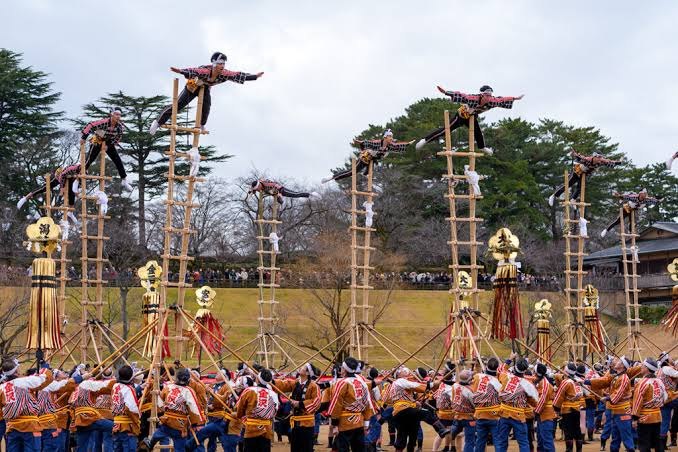
The domain's lordly fire brigade, the Kaga-tobi, famed in Edo for its dashing costumes and bravery, was also based here. Their spirit lives on in the Kaga-tobi ladder acrobatics performed at Kanazawa's New Year firefighters' review.
Four lords and a wife
The people who shaped Kaga's million koku
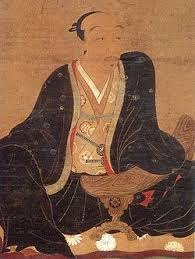
Maeda Toshiie
Founder of the Kaga domain
From Arako in Owari. Served Nobunaga and Hideyoshi, becoming one of the five great elders of the Toyotomi government alongside Ieyasu. Laid the foundations of the castle town.
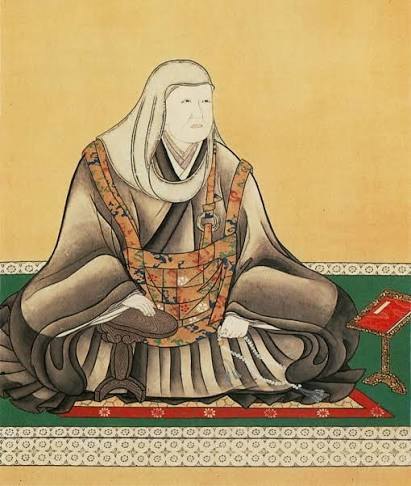
Matsu (Hoshun-in)
Toshiie's wife; saviour of the house
Said to have borne two sons and nine daughters. After her husband's death she went to Edo as a hostage, averting an invasion of Kaga.
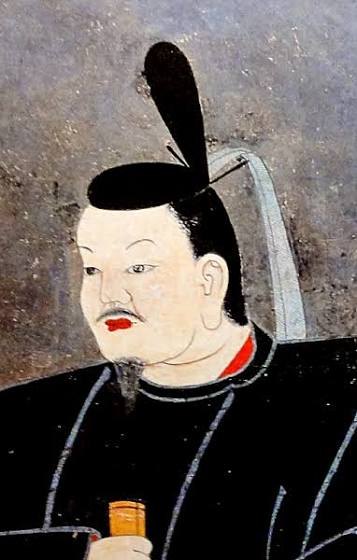
Maeda Toshitsune
Third lord; leader of the “Kaga Renaissance”
Founded the domain workshop, reformed agriculture and created the branch domains. Known for the nose-hair anecdote.
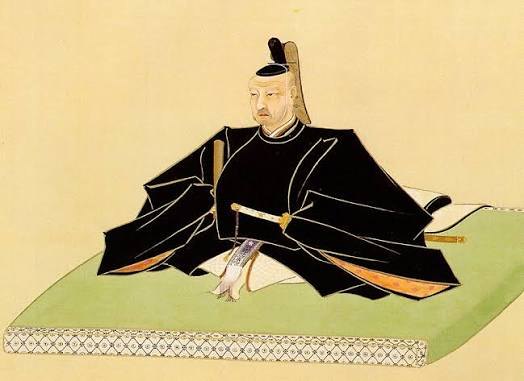
Maeda Tsunanori
Fifth lord; master of “the library of the realm”
Collected classical texts, compiled the Hyakko Hisho, promoted Hosho Noh and founded relief shelters.
Portraits are paintings believed to date from the Edo period. Some birth years are uncertain.
Next
Reading a castle without a keep
The wisdom of survival shows in the castle too: roofs of lead, walls built in every style, and a moat dug by a Christian lord.