Home / People
08 — People
Water for Taiwan, cherries for Washington,
Zen for the world.
Even people who have never heard of Kanazawa know what these people left behind: a dam that waters the plains of southern Taiwan, the cherry trees that announce spring in America's capital, and the Zen thought that fascinated Western intellectuals — even a symbol in astronomy textbooks. Meet the people connected with Kanazawa who left footprints across the sea.
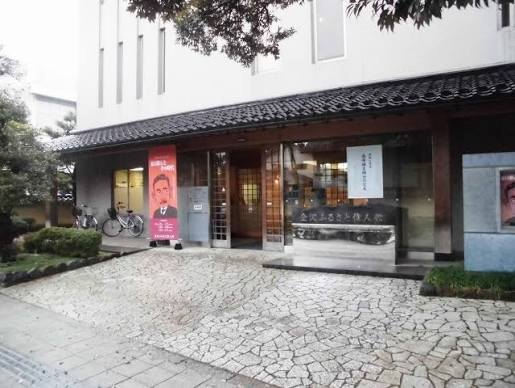
Hatta Yoichi
A Kanazawa engineer in Taiwan's textbooks
Born in 1886 in what is now Imamachi, Kanazawa, Hatta Yoichi studied at the Fourth Higher School and in the civil engineering department of Tokyo Imperial University, then soon crossed the sea as an engineer for the Government-General of Taiwan.
The Chianan Plain of southern Taiwan was then a barren land, flooded in the rainy season and parched in the dry. From 1920, over ten years, Hatta built the Wushantou Reservoir and the Chianan Canal network that spread across the plain — some 16,000 km of waterways in all. The vast plain became a great granary.
His genius was not only technical. To share limited water fairly, he devised a three-year rotation in which districts took turns growing rice, sugar cane and other crops, creating a system for farmers to share water. The names of those killed in accidents during construction were inscribed on a memorial, Japanese and Taiwanese alike.
In 1942 Hatta died at 56 when the liner Taiyo Maru, carrying him to the Philippines, was torpedoed. On 1 September 1945, just after the war ended, his wife Toyoki threw herself into the outlet of the reservoir her husband had built.
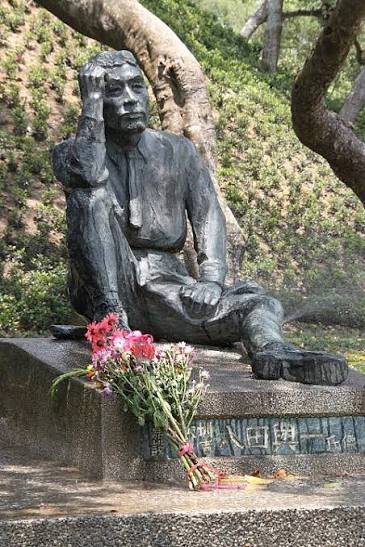
Beside the Wushantou Reservoir sits a bronze statue of Hatta in work clothes, seated deep in thought. Every year on 8 May, the anniversary of his death, local people hold a memorial at his grave, attended by visitors from Kanazawa. He appears in Taiwanese history textbooks, and in 2011 the Hatta Yoichi Memorial Park opened near the dam. It is one of the strongest threads tying Kanazawa and Taiwan.
The statue is said to have been hidden and protected by local people to save it from wartime metal collection and post-war turmoil, and later returned to its place. Likely
Takamine Jokichi
The chemist behind the Potomac cherry trees
Born in Takaoka in 1854, Takamine Jokichi moved to Kanazawa the next year when his father was appointed to teach at the domain's Western-studies school, Soyukan, and spent his childhood there. The soil for Western science was already in place.
In the United States, Takamine developed the digestive enzyme Taka-diastase in 1894. In 1900, with his assistant Uenaka Keizo, he became the first to isolate adrenaline in crystalline form from bovine adrenal glands. Fact
In America, however, the name “epinephrine”, given by another researcher, prevailed, and Takamine's work long went under-recognised. Only in 2006, more than a century after the discovery, did the Japanese Pharmacopoeia adopt “adrenaline” as the official name.
Then there are the cherry trees sent from Tokyo to Washington in 1912. Takamine worked with Tokyo mayor Ozaki Yukio and others to make this symbol of Japan–US friendship happen, and played a major role in funding it. Behind the spring crowds of the National Cherry Blossom Festival stands a chemist who grew up in Kanazawa.
D.T. Suzuki
The man who made “Zen” a world word
Born in 1870 in Hondamachi, Kanazawa, D.T. Suzuki (Suzuki Daisetsu, born Teitaro) left the Fourth Higher School for financial reasons and trained in Zen at Engakuji temple in Kamakura. In 1897 he went to the United States and spent eleven years translating Eastern thought for a publisher.
Writing many books on Zen and Japanese culture in English, Suzuki spread both the word and the idea of “Zen” in the West. After the war he lectured at Columbia University and elsewhere, and his thought is said to have influenced philosophers, artists and musicians.
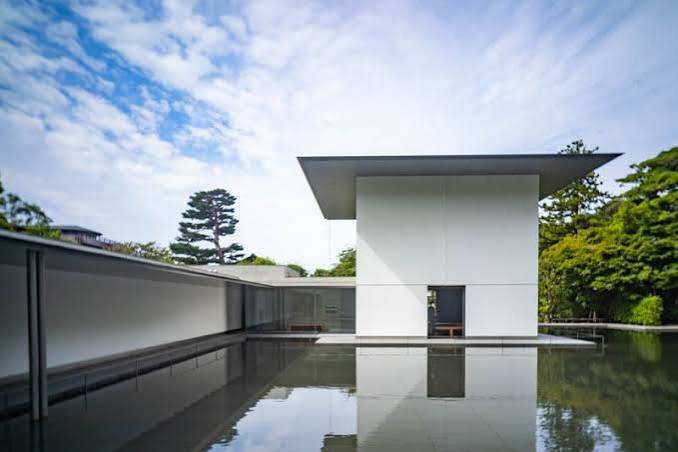
The D.T. Suzuki Museum, opened near his birthplace in 2011, is a quiet space known for its “Water Mirror Garden”, where the building seems to float. It was designed by Taniguchi Yoshio, architect of the new Museum of Modern Art (MoMA) in New York — whose father, Taniguchi Yoshiro, was also a Kanazawa-born architect. From Kanazawa to the world, and back again: thought and architecture meet in one place.
The Z-term
“Kimura”, a name astronomers know
Astronomer Kimura Hisashi, born in Kanazawa in 1870, observed tiny wobbles of the Earth's axis at the Mizusawa Latitude Observatory in Iwate, and in 1902 discovered a term missing from the formula then in use: the “Z-term”, also known as the “Kimura term”.
At the time, Japanese observational data was internationally suspected of being inaccurate; Kimura's discovery changed that reputation. In 1937 he received the first Order of Culture.
Takayama Ukon
26 years in Kanazawa, buried in Manila
Finally, someone who came to Kanazawa — and was driven out into the world. The Christian lord Takayama Ukon, having lost his domain under Hideyoshi's edict expelling missionaries, lived in Kanazawa as a guest general of the Maeda from 1588. He applied his skills to castle building and moat digging (see Kanazawa Castle & Moats), and as a noted tea practitioner is said to have influenced Kaga culture.
In 1614 the Tokugawa shogunate's edict expelling Christians forced Ukon to leave Kanazawa for Manila. Warmly received there, he fell ill about forty days after arriving and died early the following year. Fact A statue of Ukon stands in Manila today, and in 2017 he was beatified by the Catholic Church.
People
Kanazawa people who crossed the sea
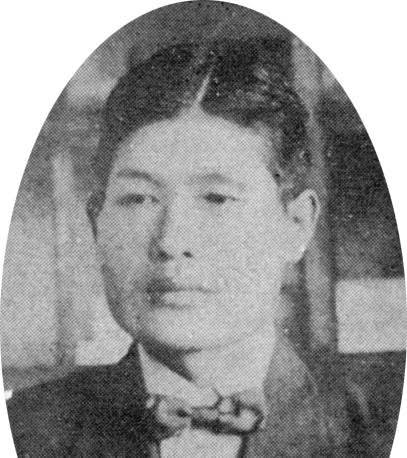
Hatta Yoichi
Civil engineer; born in Imamachi, Kanazawa
Built the Wushantou Reservoir and Chianan Canal. One of the Japanese most respected in Taiwan today.
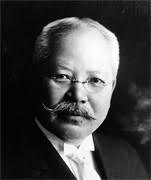
Takamine Jokichi
Chemist and entrepreneur; born in Takaoka, raised in Kanazawa
Taka-diastase and crystalline adrenaline. Also involved in founding the RIKEN research institute.
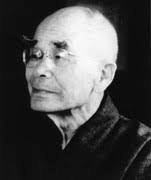
D.T. Suzuki
Buddhist scholar; born in Hondamachi, Kanazawa
Introduced Zen to the world through his English writings. A lifelong friend of Nishida Kitaro.
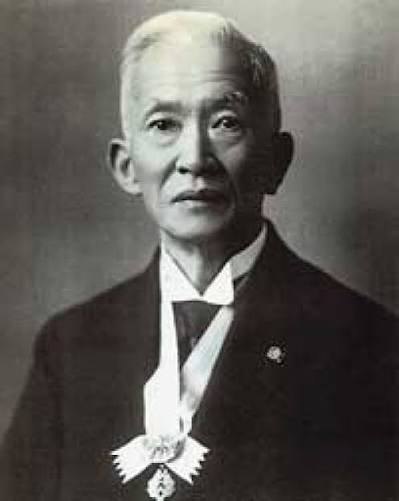
Kimura Hisashi
Astronomer; born in Kanazawa
Discovered the “Z-term” in latitude variation. Recipient of the first Order of Culture.
Next
True or false?
A ninja temple without ninja, a statue pigeons won't touch, a shrine gate that may have been a lighthouse. Kanazawa's legends, examined with labels.