Home / Water
03 — Water
Before pumps existed,
water climbed uphill.
In 1631 a great fire swept Kanazawa's castle and town. The castle on its plateau had no water to fight fire. The next year an engineer brought water from far up the Sai River into the castle itself — and on the final stretch, made water that had run down into a valley rise up onto the plateau again. The 55 canals still flowing through the city show how Kanazawa has long been protected by water.
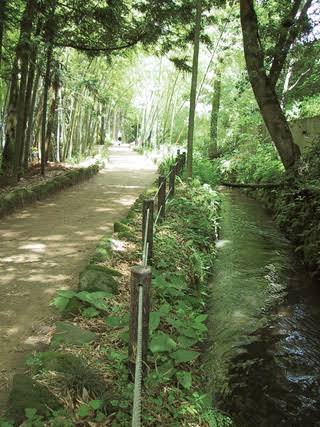
The Tatsumi Canal
About 11 km, finished in under a year
Completed in 1632, the year after the Kan'ei fire, the Tatsumi Canal draws water from the upper Sai River around Kami-Tatsumi, south-east of the city, and carries it across the Kodatsuno Plateau to Kenrokuen and Kanazawa Castle. It is about 11 km long. Tradition credits its design and construction to Itaya Heishiro, and says the work took less than a year. Likely
The hardest part was an upstream tunnel of about 4 km, cut through rock along the cliffs of the Sai River. The builders are thought to have dug many side shafts from the cliff face and worked on several sections at once; the shafts also served as exits for spoil and as openings for light and air.
In 2010 about 8.7 km of the upper and middle sections was designated a national historic site. A 400-year-old piece of engineering is still carrying water today.
The inverted siphon
To cross a valley, the water was pushed uphill.
The canal's great showpiece is where it passes from Kenrokuen to the castle. Between them lay a deep valley called the Hyakken-bori (today's Hyakkenbori street). Water only flows downhill. How do you get it across a valley to a castle only slightly lower on the other side?
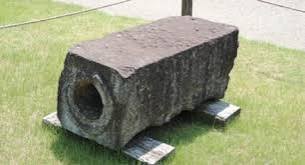
The answer was a sealed pipe. Water entered the pipe on the Kenrokuen side, dropped to the valley floor and rose again on the castle side. As long as the inlet's water surface is higher than the outlet, pressure pushes the water up and out. This is the principle of the inverted siphon, known at the time as fusekoshi no ri. Fact
The pipes were first made of wood and later replaced with stone pipes carved from Kanaya stone quarried in the Tonami area of Toyama. Some of these stone pipes are preserved and can be seen around Kenrokuen.
Walking from Kenrokuen's Katsurazaka entrance to Ishikawa Gate, look down from Ishikawa Bridge at Hyakkenbori street below. That road is the valley floor the water once crossed in a pipe. Kenrokuen behind you, the castle ahead, the valley beneath — the whole stage of the siphon at a glance.
Japan's oldest fountain
A fountain with no electricity and no pump
Below Kasumigaike Pond in Kenrokuen is a small fountain. Said to have been built as an experiment under the thirteenth lord, Maeda Nariyasu, in the last years of the Edo period, it is considered the oldest fountain in Japan.
It works on the same principle as the canal. Water is piped from the higher pond and released at a lower point. No power at all is used, so the jet rises to roughly the level of the pond's surface. When the pond level changes, so does the height of the fountain.
A technology built to bring water to a castle was used, two centuries later, to delight visitors to a garden — an elegant sequel to Kanazawa's water engineering.
55 canals
Waterways run all through the town.
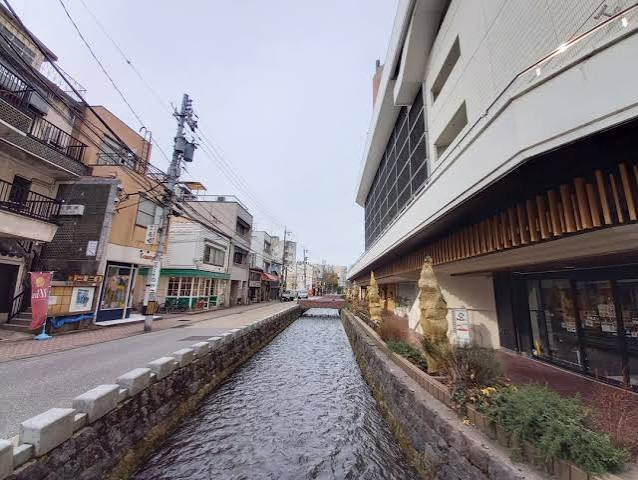
Besides the Tatsumi Canal, central Kanazawa has named canals such as the Kurazuki and Onosho canals — 55 in all, said to total some 150 km. Most draw water from the Sai or Asano rivers and run through the town like a net.
Among the oldest is the Onosho Canal, flowing along the earthen walls of the Nagamachi samurai district. It is said to have been used to carry timber and other materials when Kanazawa Castle was built, and still bears the nickname Oni-kawa, “the cargo river”. Likely
Water for firefighting
In a dense wooden castle town, canals supplied water to fight fires. The Tatsumi Canal itself was born of a fire.
Rivers for snow
In winter, snow cleared from roofs and streets was dumped into canals — a practice still followed under local rules.
Into samurai gardens
Canal water fed the streams and ponds of samurai gardens, as can still be seen at the Nomura family residence.
Rinsing Yuzen silk
Kaga Yuzen fabrics were once rinsed of excess dye and paste in the rivers — the famous “Yuzen nagashi”, a winter sight in Kanazawa.
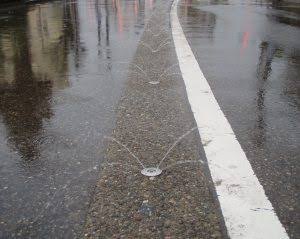
In winter, water sprays from the middle of Kanazawa's roads. These snow-melting sprinklers use groundwater and spread across the city after heavy snowfalls in the Showa era. Convenient — but merciless to pedestrians' shoes and trouser hems, one reason locals wear rubber boots in winter.
Next
A maze by the water
Surrounded by canals, slopes and temples, the castle town was deliberately built to be confusing.