Home / Literature
07 — Literature
The “women's river”, the “men's river”,
and three great writers.
Locals call the gently flowing Asano River the “women's river” and the swift Sai River the “men's river”. Izumi Kyoka and Tokuda Shusei were born by the Asano; Murou Saisei grew up by the Sai. Along with these “three great writers of Kanazawa”, the young men of the old Fourth Higher School carried the town's words to the world.
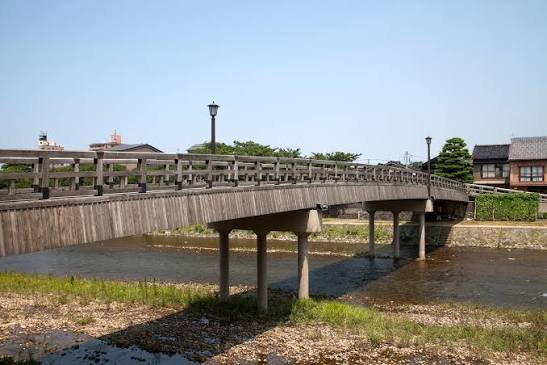
Asano River — Izumi Kyoka
The fantasy writer who couldn't bear the character for “rot”
Born in 1873 in Shimoshinmachi near the Asano River, Izumi Kyoka was a master of eerie, beautiful fantasy fiction, known for The Holy Man of Mount Koya, The Night Patrol and The Surgery Room. Losing his mother at nine left a lifelong void; idealised older women and maternal figures recur throughout his work.
Kyoka was also famous for his extreme fear of germs. He ate no raw food, only cooked dishes. He would not drink sake unless it was heated to a rolling boil. He even toasted gifted sweets over a spirit lamp before eating them. And disliking the character 腐 (“rot”) in the word for tofu, 豆腐, he wrote it 豆府 instead. Fact Many such anecdotes survive.
Born in the Year of the Rooster, Kyoka collected figurines of rabbits, the opposite sign in the zodiac. The collection can be seen at the Izumi Kyoka Memorial Museum on the site of his birthplace. In 1973 Kanazawa City founded the Izumi Kyoka Literary Prize, still awarded today.
Asano River — Tokuda Shusei
Same teacher, entirely different paths
Tokuda Shusei, born in 1871, two years before Kyoka, also grew up by the Asano River and also became a disciple of the novelist Ozaki Koyo. But their literature could not have been more different. While Kyoka wrote of fantasy and beauty, Shusei became a leading naturalist writer, depicting ordinary lives and relationships coolly and unsparingly. His major works include Arakure (“Rough Living”) and Shukuzu (“Miniature”).
Kyoka revered their teacher Koyo almost as a god, while Shusei kept his distance. The two were said to be on poor terms, and one story tells of Kyoka flying into a rage at something Shusei said about Koyo. Tradition A bittersweet relationship between two writers born by the same river.
Shusei entered the Fourth Higher Middle School, but in 1892 he left together with his classmate Kiryu Yuyu to try his luck in Tokyo. Yuyu later became a defiant journalist who criticised the military. Of the two young men who went to Tokyo together, one became a novelist and the other a newspaperman (see “The Fourth Higher School” below).
Sai River — Murou Saisei
Where was “The hometown is a thing to think of from afar” written?
Born in Kanazawa in 1889, Murou Saisei was separated from his birth parents shortly after birth and raised by the common-law wife of the priest of Uhoin, a temple by the Sai River. His complicated upbringing colours works such as Sei ni Mezameru Koro (“When I Awoke to Sex”). His pen name “Saisei” — literally “Sai-west” — comes from growing up west of the Sai River.
ふるさとは遠きにありて思ふものMurou Saisei, “Shokei Ijo II”, in Jojo Shokyoku-shu
“The hometown is a thing to think of from afar.”
This line is widely known as a young man in Tokyo longing for his distant hometown. Yet there is a persistent view that the poem was written not in Tokyo but in Kanazawa. Likely If so, it becomes the murmur of someone who feels out of place even at home: a hometown is something to think of from afar, not a place to return to.
Saisei himself never said clearly where he wrote it, and the meaning changes completely depending on how you read it. In his later years, after his last visit to Kanazawa, he is said to have pinned a photograph of the Sai River to his wall to remember his hometown.
City of learning
The “three Taros” of the Fourth Higher School — habitual latecomers?
Founded in 1887, the Fourth Higher Middle School (later the Fourth Higher School, or “Shiko”) was the academic centre of Hokuriku. Three young men were there at the same time: Nishida Kitaro, later Japan's foremost philosopher; D.T. Suzuki (Suzuki Teitaro), who introduced Zen to the world; and the scholar of Japanese literature Fujioka Sakutaro. From their names they are called “the three Taros of Kaga”.
Interestingly, when their Fourth Higher School grade registers were examined, their studies were excellent — but the records also noted lateness, skipped classes and chatting in lessons. Fact Some suggest the free-spirited youths were rebelling against the school's strict, militaristic atmosphere.
Nishida later returned to teach at the school, then moved to Kyoto University and wrote An Inquiry into the Good. Kyoto's “Philosopher's Path” is named after his habit of walking there in thought. For D.T. Suzuki, see Kanazawa People Abroad.
Many others came out of the school: Kiryu Yuyu, who was forced out of his newspaper after an editorial “laughing at” the army's air-defence exercises (1933), and novelist Inoue Yasushi, who wrote of his youth in the school's judo club in Kita no Umi. The dormitory song “Kita no Miyako ni Aki Takete” is still sung by alumni.
People
The people who shaped Kanazawa's words
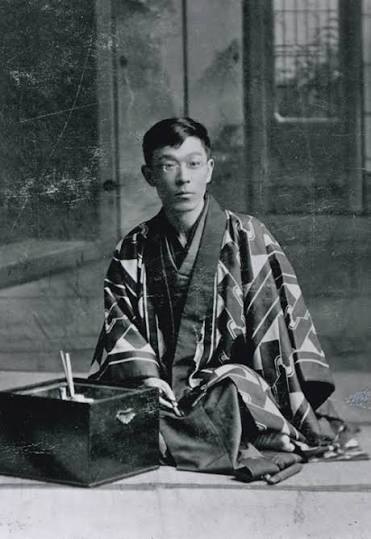
Izumi Kyoka
Fantasy fiction; born in Shimoshinmachi
The Holy Man of Mount Koya, Demon Pond, Onna Keizu. Many works are set around the Asano River. Memorial museum on the site of his birthplace.
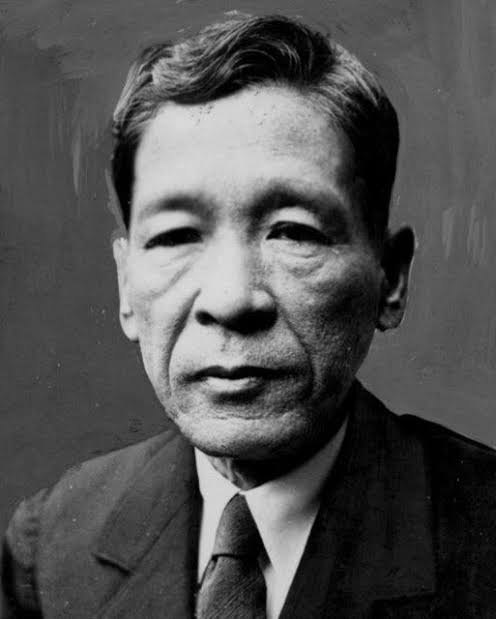
Tokuda Shusei
Naturalist fiction; grew up by the Asano River
Arakure, Kaso Jinbutsu, Shukuzu. The Tokuda Shusei Memorial Museum stands by the Umenohashi Bridge.
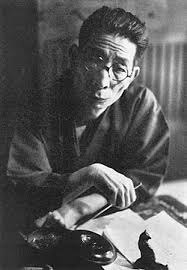
Murou Saisei
Poet and novelist; grew up west of the Sai River
Jojo Shokyoku-shu, Sei ni Mezameru Koro, Anzukko. Memorial museum on his birthplace; Uhoin temple still stands by the river.
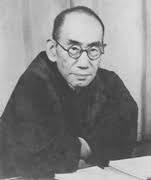
Nishida Kitaro
Philosopher; born in today's Kahoku City
Author of An Inquiry into the Good. The Nishida Kitaro Museum of Philosophy is in his birthplace of Kahoku.
Next
Footprints across the sea
A dam that waters Taiwan, the cherry trees of Washington, and “Zen” for the world. On to the people who left Kanazawa for the wider world.