Home / Nomugi Pass and the Mill Girls
11 — THE PASS
Nomugi Pass and the Mill Girls
Nomugi Pass, 1,672 metres high, stands on the border between Hida and Shinshu. From the Meiji to the Taisho era, the girls of Hida crossed this pass in long lines while snow still lay on it. They were heading for the silk mills of Okaya and Suwa in Shinshu. The raw silk that supported Japan's modernisation was reeled by their hands.
Labels: Factdocumented Likelysupported by most sources Legendoral tradition Urban legendlocal lore and rumour
Girls crossing the pass
FactIn the Meiji era, raw silk was Japan's main export. In Okaya and Suwa in Nagano Prefecture, silk mills that reeled thread from silkworm cocoons were built one after another, and many workers were needed. Those who went to work there were women from the villages of Hida, where cash income was scarce, and most of them were girls in their teens.
FactAt the end of winter they left Hida and crossed Nomugi Pass, still under snow, to Shinshu, and at the end of the year they crossed the pass again to return home with the money they had earned. On the way, the "rescue huts" (otasuke-goya) on the pass helped travellers who were close to collapsing from cold and exhaustion.
"Oh, I can see Hida"
FactMasai Mine, born in Tsunogawa, Kawai Village, Yoshiki District (today's Kawai-cho, Hida City), worked at a silk mill in Okaya. In 1909 her elder brother Tatsujiro received a telegram from the mill: "MINE ILL COME FETCH AT ONCE". He went to Shinshu to collect her and set off for Hida carrying her on his back.
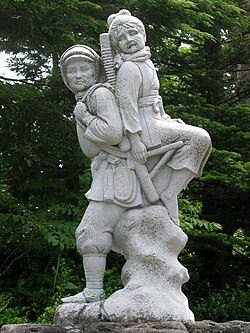
FactOn 20 November, having reached Nomugi Pass, Mine is said to have murmured "Oh, I can see Hida" (「ああ、飛騨が見える」) and died on her brother's back. She was 21 by the traditional Japanese count. A statue of her brother carrying her on his back now stands on the pass.
What "Ah, Nomugi Pass" conveyed
FactThe writer Yamamoto Shigemi interviewed many former mill girls, and in 1968 published the non-fiction work Ah, Nomugi Pass (Aa Nomugi Toge). His portrait of the mill girls, working long hours under strict control, drew a great response, and it was made into a film in 1979.
LikelyAt the same time, Yamamoto also recorded the voices of former mill girls who looked back on life at the mill as better than life at home. For girls from poor mountain villages, the wages they earned at the mills were precious money that supported their families. Both hardship and pride make up the memories of the mill girls who crossed the pass (the Books room).
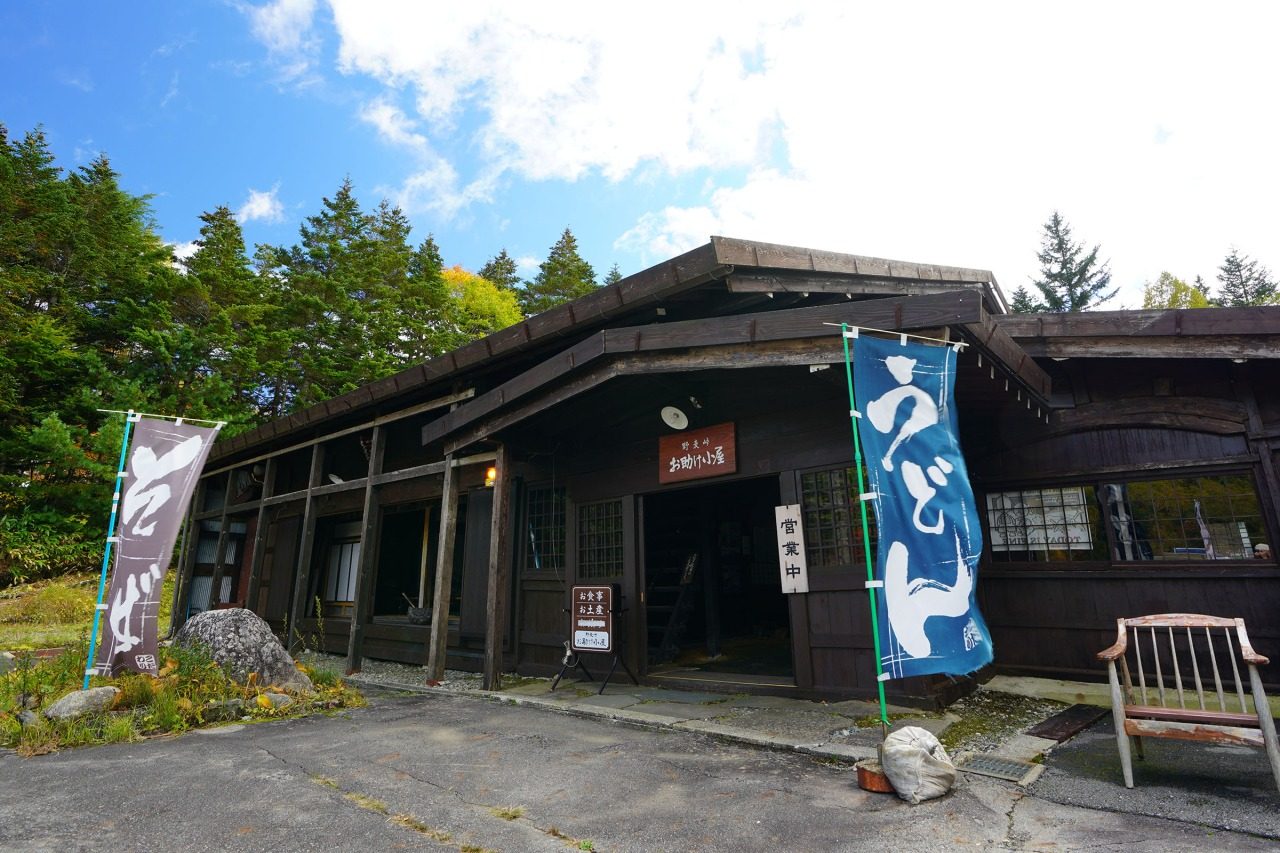
Look here: the rescue hut and the statue on the pass
A "rescue hut" of the kind that stood on the pass from the Edo period has been reconstructed. On a clear day, the majestic form of Mt Norikura spreads out before you from the pass. The road up to the pass is closed in winter, so visit between summer and autumn.
Main sources: Yamamoto Shigemi, Ah, Nomugi Pass / Takayama City, "Nomugi Pass" / Hida City, "Masai Mine" / Okaya Silk Museum