Home / Reviving the Shrine Town
05 — A revival documentary
From 200,000 visitors a year to millions.
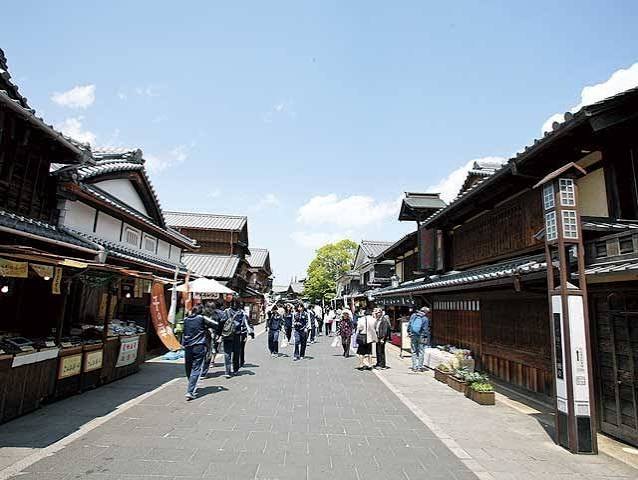
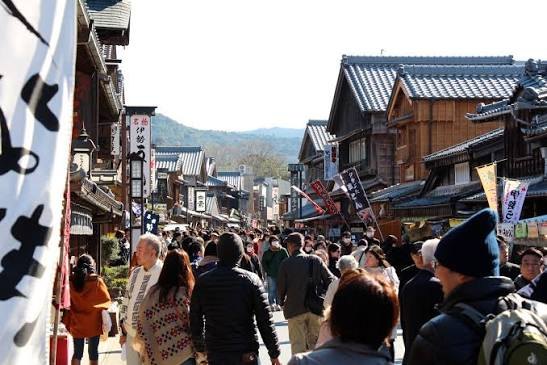
Oharai-machi, the street leading to Naikū, is crowded all year round today. But at the end of the Shōwa era, tour buses passed it by and visitors all but vanished. What brought it back was the decision of one old confectioner — and the town's choice to protect its streetscape. This is the story of Ise's gate-town revival.
The question of this room
Pilgrim numbers were rising. Why did the gate town decline?
THE QUESTION
People were visiting Naikū — so why was the street in front of it empty?
During Japan's high-growth era, most visitors began arriving by tour bus or car. They went straight from the car park to Naikū and, after worship, drove off to the next sight. There was no longer a reason to walk the gate town.
The roughly 800 m approach from Uji Bridge was once lined with oshi mansions, a street every pilgrim walked. The name Oharai-machi is said to come from the oshi giving out oharai purification talismans.
By the late Shōwa era, however, empty shops were everywhere, and at one point the number of people walking the street is said to have fallen to around 200,000 a year — even while Naikū itself drew millions.
An old firm's decision
Akafuku's bet on "another gate town"
The crisis alarmed Akafuku, a confectioner founded in 1707. Its then president, Hamada Masutane, reasoned that "if the gate town withers, sooner or later fewer people will come to Jingu", and set out to revive the street.
First, Akafuku rebuilt its head shop and nearby buildings in the traditional style of Ise townhouses. Ise City, for its part, put in place a townscape-preservation scheme, buried the overhead cables and began supporting owners who rebuilt in traditional style.
The gate town hollows out
With the car age, visitors stop walking the street.
The revival begins
Akafuku restores the area around its head shop in traditional style; Ise City advances townscape preservation.
Okage Yokochō opens
In the year of the 61st Sengu, Akafuku invests a reported 14 billion yen to recreate an Edo-to-Meiji-era Ise streetscape.
The 62nd Sengu
Visitors to Oharai-machi and Okage Yokochō surge; the gate town is fully revived.
The name Okage Yokochō comes from the Edo-period Okage Mairi. With Ise townhouses and relocated buildings, restaurants, souvenir shops and taiko performances, it was created to "bring the bustle of the Ise pilgrimage back to the present".
Insider's view: what made Okage Yokochō groundbreaking was that it tried to build a town, not a theme park. There is no admission fee, and it was designed to flow seamlessly into the existing Oharai-machi, so the whole street became a place to wander. As a case of one company taking on the revival of an entire gate town, it has drawn town-planners from all over Japan.
Reading Ise townhouses
Why do Ise houses face the street gable-end on?
Walking Oharai-machi, you'll notice most buildings present the triangular gable end of their roofs to the street — kirizuma tsumairi style. Townhouses elsewhere in Japan usually present the long side of the roof to the street (hirairi), but in Ise the gable-end style dominates.
Out of deference to the sanctuary
The main sanctuary of Jingu is hirairi, so — it is said — townspeople avoided copying its form out of reverence and built gable-end on. You'll hear this explanation often in Ise.
No firm record
The deference theory is widely told, but no reliable source confirms it. Other reasons, such as practicality on narrow plots, have also been suggested.
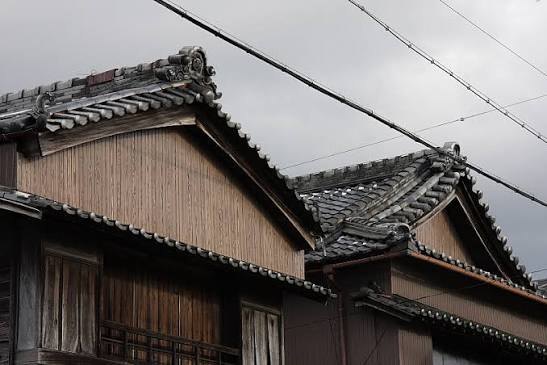
Another feature of Ise townhouses is the shimenawa rope at the entrance. Many households display it all year round. More in "Local Knowledge".
Another gate town
Gekū's approach and Kawasaki, "Ise's kitchen"
Gekū's approach — the street from Iseshi Station to Gekū was once the heart of Yamada, lined with oshi mansions. In recent years it has been improved in step with the Sengu, and more shops now occupy old buildings.
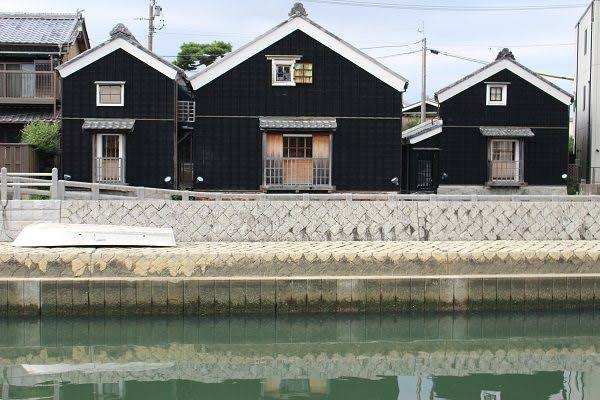
Kawasaki — north of Gekū along the Seta River, Kawasaki is a wholesale district dating back to the Edo period. Boats coming up the river from Ise Bay unloaded rice, salt, seafood and everything needed to host pilgrims, earning it the nickname "Ise's kitchen". Its rows of riverside storehouses show a different face of Ise: a merchant town. River works after a Shōwa-era flood cost some of the storehouses, but local preservation efforts saved much of the streetscape, and facilities such as the Ise Kawasaki Merchant Hall show how merchants once lived.
Read next
What to eat in the gate town
Akafuku, Ise udon, Henba-mochi: each of Ise's flavours carries a piece of pilgrimage history.