Home / The 125 Shrines
02 — Reading Jingu on the map
There is no single shrine called "Ise Jingu".
Its official name is simply "Jingu". And it is not one shrine but the collective name of 125 shrines scattered across Ise and neighbouring towns in Mie Prefecture. Remote "distant shrines" deep in the mountains, shrines promoted after the Mongol invasions' divine winds, and one that in the Edo period claimed to be the true main shrine: let's reread Jingu on the map.
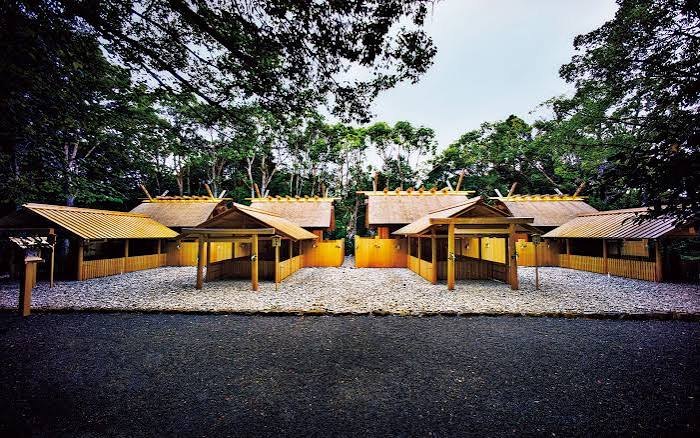
The question of this room
What does the number 125 count?
THE QUESTION
Why is Jingu made up of so many shrines?
The 125 are not separate shrines but a single organisation centred on the two main sanctuaries. Knowing how it came together shows that Ise faith spreads not from one point but across an entire landscape.
| Rank | No. | What they are |
|---|---|---|
| Shōgū (main shrines) | 2 | Naikū (Kōtai Jingū) and Gekū (Toyouke Daijingū). |
| Betsugū | 14 | "Branch" shrines of the main shrines: 10 belong to Naikū, 4 to Gekū. |
| Sessha | 43 | Old shrines listed in the Engishiki register of the Heian period. |
| Massha | 24 | Shrines listed in the even earlier Gishikichō reports of the Enryaku era. |
| Shokansha | 42 | Others closely tied to the main or branch shrines, including those that brew sake, make salt or weave cloth for the gods. |
Insider's view: the sessha/massha distinction is less about rank than about which era's official record lists the shrine. Among the shokansha are shrines that run Jingu's self-sufficient supply chain: Misakadono (sacred sake), Mishiodono (salt pressing) and Kanhatori-hatadono (weaving the gods' cloth).
The auxiliary shrines
The fourteen betsugū
| Belongs to | Betsugū | In brief |
|---|---|---|
| Naikū | Aramatsuri-no-miya | Amaterasu's aramitama. Ranked just below the main shrine, north of it. |
| Naikū | Tsukiyomi-no-miya, Tsukiyomi-no-aramitama-no-miya, Izanagi-no-miya, Izanami-no-miya | About 2 km north of Naikū. A rare sight: four shrines in a row. |
| Naikū | Takihara-no-miya, Takihara-narabi-no-miya | In the mountains of Taiki. Called tōnomiya, the distant shrines. |
| Naikū | Izawa-no-miya | In Isobe, Shima. Also a distant shrine; famous for its rice-planting festival. |
| Naikū | Kazahinomi-no-miya | Deity of wind and rain, promoted to "miya" after the Mongol invasions. |
| Naikū | Yamatohime-no-miya | Founded 1923 — the newest betsugū. |
| Gekū | Takanomiya | Toyouke's aramitama, at the top of 98 steps. |
| Gekū | Tsuchinomiya, Kazenomiya | Guardian of the land, and the deity of wind and rain. |
| Gekū | Tsukiyomi-no-miya (Gekū) | North of Gekū; the road from Gekū is called Kamiji-dōri. |
The straight road linking Gekū's Tsukiyomi-no-miya and Gekū, Kamiji-dōri, has long been said to be the road by which the deity of Tsukiyomi-no-miya travels to Gekū at night. That's why locals say you shouldn't walk down the middle of it.
Shrines of the divine wind
How the Mongol invasions promoted a shrine
Naikū's Kazahinomi-no-miya and Gekū's Kazenomiya both enshrine the deities of wind and rain. Originally they were small shrines called Kaze-no-yashiro. In 1281, during the second Mongol invasion of Japan, the court sent envoys to Ise to pray for deliverance. When storms then wrecked the Mongol fleet, the event was remembered as the kamikaze, the "divine wind". In 1293 both shrines were raised to betsugū and given the title "miya".
- 1281Second Mongol invasionMongol and Goryeo forces land in northern Kyushu
- Same yearPrayers at IseThe court prays to the gods, including the wind deities, for deliverance
- Same yearStorms wreck the fleetLater told as the "kamikaze"
- 1293Kaze-no-yashiro become "miya"Raised to betsugū as Kazahinomi-no-miya and Kazenomiya
- Modern eraThe word takes on a life of its own"Kamikaze" is invoked again and again in modern wars as a symbol of divine rescue
Distant shrines and a rival claim
The mountain shrine, and the shrine that claimed to be the original
Two betsugū far from Naikū, Takihara-no-miya (Taiki) and Izawa-no-miya (Shima), are called Amaterasu's tōnomiya, "distant shrines". Takihara-no-miya is said to be where Yamatohime once set up a shrine during her search for the goddess's home. Surrounded by deep cedar groves, it is said to preserve "an older Ise than Naikū itself". It is the only betsugū with a mifunagura, a storehouse for the deity's boat.
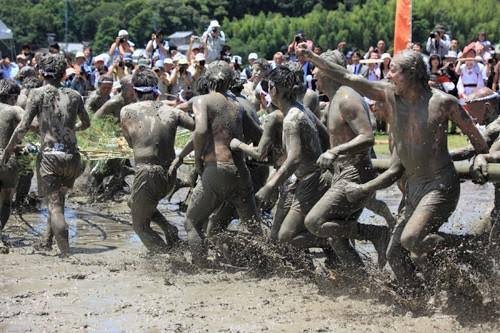
Izawa-no-miya is famous for its rice-planting festival on 24 June, counted with those of Katori Jingū and Sumiyoshi Taisha among Japan's three great rice-planting festivals. The take-tori shinji, in which men wrestle in the muddy paddy over a giant fan, is spectacular.
"Izawa is the true main shrine" — the Izawa-no-miya affair
In the early Edo period, priests of Izawa-no-miya claimed that their shrine was the original shrine of Amaterasu and that Naikū and Gekū came later, a dispute that eventually involved the shogunate. A text supposedly proving the claim, the Sendai Kuji Hongi Taiseikyō, then appeared — but the shogunate declared it a forgery, confiscated the printing blocks in 1681 and punished those involved. The affair was later linked to hexagrams and "alternative" ancient histories, and became a seed of modern urban legends (see Legends & Myths).
Moto-Ise
Why did Amaterasu come to Ise?
According to the Nihon Shoki, Amaterasu was originally worshipped within the imperial palace. But Emperor Sujin, in awe of her power, entrusted her to Princess Toyosukiirihime, who enshrined her outside the palace at Kasanui in Yamato. Under the next emperor, Suinin, the role passed to Princess Yamatohime. She travelled through Ōmi, Mino and other lands in search of a fitting home for the goddess, and at last came to the banks of the Isuzu River in Ise. There the goddess declared that this land of Ise, where the waves of the eternal world roll in, was where she wished to dwell.
Places where the goddess is said to have rested temporarily along the way are called Moto-Ise, "former Ise". They include Kono Jinja in Miyazu and Kōtai Jinja in Ōe, Fukuchiyama (both in Kyoto Prefecture) — more than twenty in all.
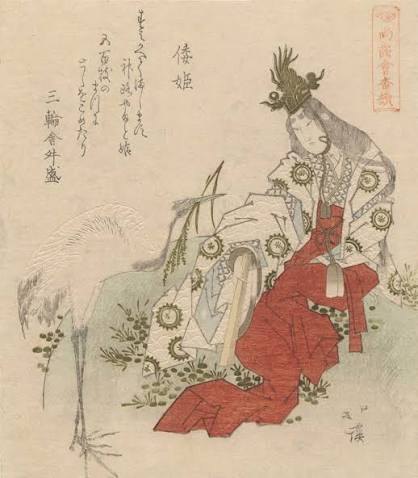
Yamatohime-no-miya is actually the newest. The shrine to Yamatohime, the "mother" of Ise Jingu, was founded only in 1923 in answer to long-standing local wishes — the newest betsugū of a shrine with nearly two thousand years of history.
Read next
How did people reach 125 shrines?
In the Edo period, the pilgrimages of ordinary people were produced by travel professionals called oshi.