Home / Okonomiyaki, Oysters and Momiji Manju
07 — FOOD
Okonomiyaki, Oysters and Momiji Manju
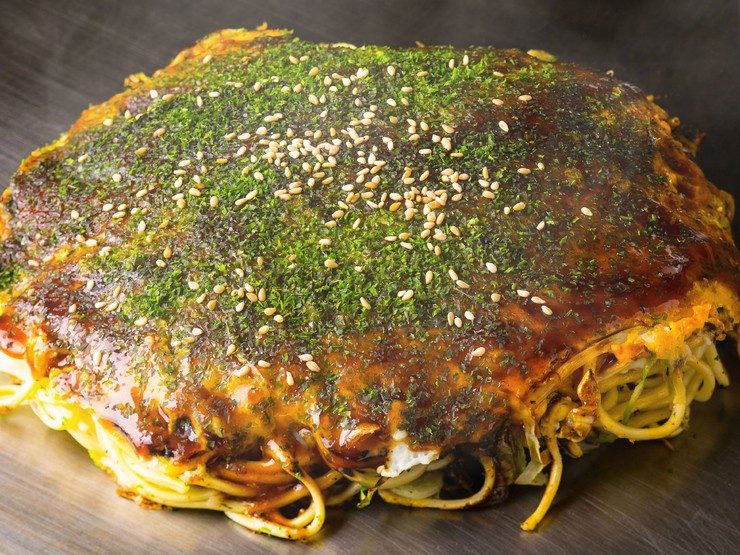
Okonomiyaki cooked in layers on the hotplate, oysters raised in the waters of the Inland Sea, momiji manju born on Miyajima. Many of Hiroshima's flavours are closely bound up with postwar life and with the bounty of the sea and islands. With every dish, a piece of the city's history comes into view.
Labels: Factdocumented Likelysupported by most sources Legendoral tradition Urban legendlocal lore and rumour
From issen yoshoku to okonomiyaki
FactBefore the war, Hiroshima had a children's snack called issen yoshoku ("one-sen Western food"): a thin pancake of flour mixed with water, topped with green onions and the like and finished with sauce. It got its name because it was sold at cheap sweet shops and similar places for as little as one sen.
LikelyIt is thought that after the war, when food was scarce, more and more stalls in the ruins began cooking issen yoshoku layered with cabbage and other ingredients, and that the present style, with a layer of yakisoba noodles, gradually spread. The hallmark of Hiroshima okonomiyaki is that the batter, cabbage, noodles and egg are not mixed but cooked in layers. Around Shintenchi in the city centre is "Okonomimura," where shops descended from those stalls are gathered together.
Oysters — fields in the Inland Sea
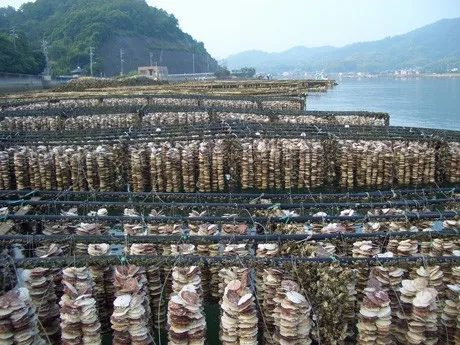
LikelyOyster farming in Hiroshima Bay is said to have begun between the end of the Muromachi period and the beginning of the Edo period. Nutrients from the mountains carried down by the rivers, and a sea with gentle waves, made it well suited to raising oysters.
FactIn the Edo period, kakibune ("oyster boats") — which carried Hiroshima oysters by ship to Osaka and served oyster dishes on board while moored on the river — became hugely popular. After the war, the method of raising oysters hung from rafts spread, and production rose sharply; today about 60% of Japan's farmed oysters come from Hiroshima Prefecture.
Momiji manju and lemons
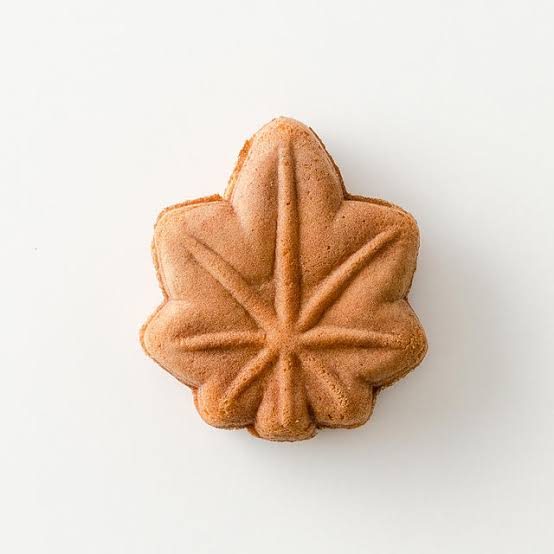
FactMomiji manju (maple-leaf cakes) are said to have been devised around the end of the Meiji era by the confectioner Takatsu Tsunesuke, at the request of a long-established inn in Momijidani ("Maple Valley") on Miyajima. Shaped after the leaves for which the valley is famous, these baked cakes became Miyajima's signature souvenir. The story of their birth involving Ito Hirobumi is told in the Legends room.
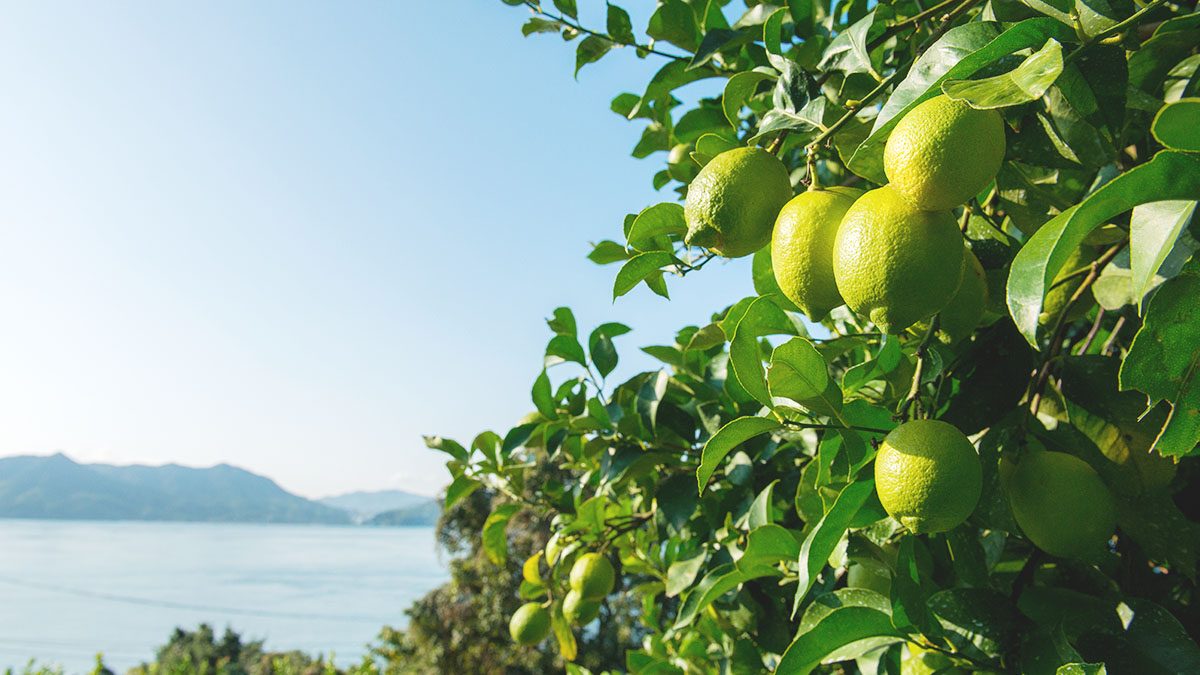
FactThe islands of the Inland Sea are warm with little rain, and citrus growing thrives there. Lemons in particular are a point of pride: Hiroshima Prefecture is Japan's largest producer. They have been grown on terraced fields on Ikuchijima, Osakishimojima and other islands since around the Meiji era.
Look here: the Saijo sake brewery street
In Saijo, Higashihiroshima City, is the Sakagura-dori (Sake Brewery Street), lined with red-brick chimneys and white-walled breweries. Hiroshima's water is soft, unlike the hard water thought to suit sake brewing. In the Meiji era Miura Senzaburo worked out a method for brewing good sake even with soft water, and Hiroshima sake became known throughout Japan.
Please don't call it "Hiroshima-yaki"?
Outside the prefecture it is sometimes called "Hiroshima-yaki," but locally it is simply "okonomiyaki." Some Hiroshima people seem to have mixed feelings about a name that arose to distinguish it from the Kansai style. When ordering, the Hiroshima way is to choose "soba-iri" (with soba noodles) or "udon-iri" (with udon).
Main sources: Hiroshima Prefecture, "Oyster Farming" and "Lemons" / Ministry of Agriculture, Forestry and Fisheries, "Marine Fishery Production Statistics" / Saijo Sake Brewery Street / Miyajima Tourist Association