Home / Kure and the Battleship Yamato
02 — KURE
Kure and the Battleship Yamato
Southeast of Hiroshima City, in an inlet ringed by mountains, lies the port of Kure. Until the early Meiji era this was a small village; it became a base for the navy, and in time gave birth to one of the largest battleships in the world, the Yamato. We trace the modern history of this naval port town, and what came after.
Labels: Factdocumented Likelysupported by most sources Legendoral tradition Urban legendlocal lore and rumour
An inlet that was easy to defend
FactThe port of Kure is a calm inlet, surrounded on three sides by mountains and screened in front by the islands of Etajima and Kurahashi. It was hard to attack from outside, and its waters were deep. Seeing the value of this terrain, the Meiji government chose it as a naval base. In 1889 the Kure Naval District was opened.
FactThe Kure Naval Arsenal, which built ships and guns, was soon established, and Kure became a naval port on a par with Yokosuka, Sasebo and Maizuru. Its population soared, and by the early Showa era it was counted among the largest cities in Japan. On Etajima, across the water, the Naval Academy that trained naval officers was established.
The battleship Yamato
FactIn 1937, in a dock at the Kure Naval Arsenal, construction of a battleship began in secret. This was the Yamato, completed in December 1941. With an overall length of 263 metres and main guns of 46 cm calibre, it was one of the largest battleships in the world at the time. Its construction was treated as top secret, and screening roofs and fences are said to have been put up around the dock.
FactBut the age of the aircraft had already arrived. Without ever having a real chance to show the power of its main guns in a major naval battle, the Yamato was attacked by American aircraft off Cape Bono in Kagoshima Prefecture on 7 April 1945, while on its way to Okinawa, and sank. More than 3,000 of its crew lost their lives.
Air raids, then a shipbuilding town
FactFrom spring to summer 1945, Kure's naval port and town were bombed again and again, and many people died. Most of the warships still left in the harbour were also sunk.
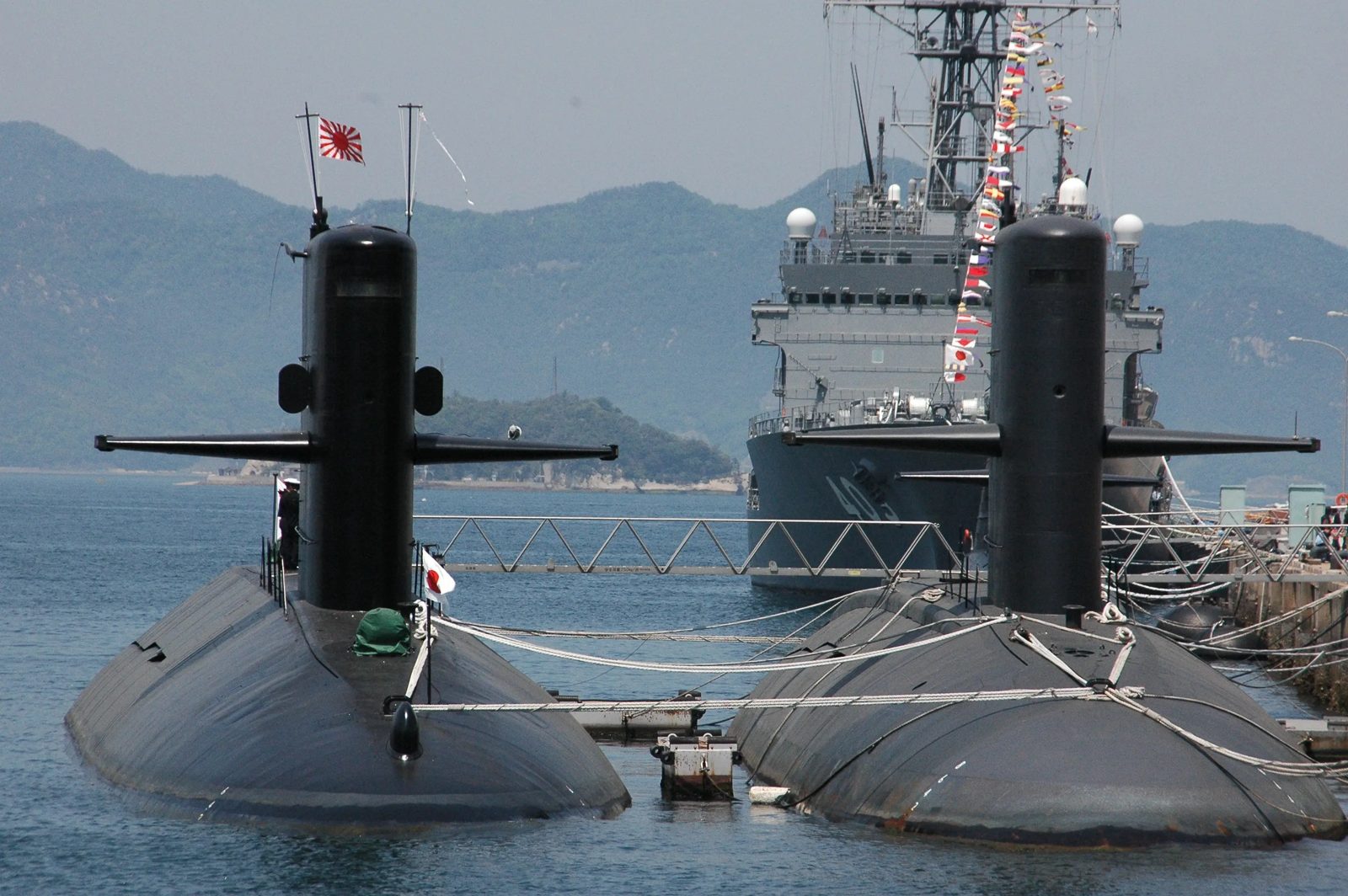
FactAfter the war, the facilities and skills of the naval arsenal passed to private shipyards. In the dock where the Yamato had been built, giant tankers were launched one after another, and as a shipbuilding town Kure helped power Japan's era of rapid economic growth. Today, ships and submarines of the Japan Maritime Self-Defense Force still line the harbour, keeping alive the look of a naval port.
Look here: a 1/10-scale Yamato and a real submarine
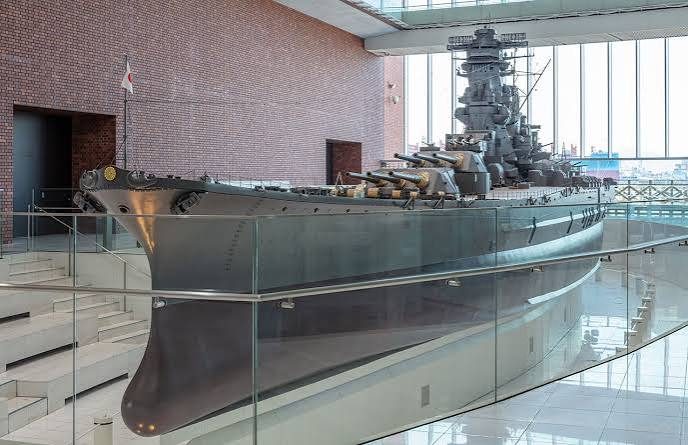
The Yamato Museum (Kure Maritime Museum), opened in 2005, has a 1/10-scale model of the Yamato, 26.3 metres long. After refurbishment, it reopened in April 2026. Across the road at the Tetsu no Kujira Kan ("Iron Whale Museum," the JMSDF Kure Museum), you can go inside a real submarine that has been brought up onto land.
The "Commander's Residence" on the hill
On Irifuneyama in Kure stands the former Official Residence of the Commander-in-Chief of the Kure Naval District, built in 1905. A blend of Japanese and Western styles — Western at the front, Japanese at the back — it is a nationally designated Important Cultural Property. From this hilltop overlooking the sea, you can sense the story of the naval port town. For how the city of Hiroshima grew hand in hand with the military, go to the Military City room.
Main sources: Yamato Museum (Kure Maritime Museum) / Kure City, "Irifuneyama Memorial Hall" / JMSDF Kure Museum / History of Kure City