Home / Rising from the Ashes
04 — REBIRTH
Rising from the Ashes
After the atomic bomb, it was said that "nothing will grow in Hiroshima for 75 years." Yet three days after the bombing the streetcars were running, and the following summer flowers bloomed in the ruins. We trace the path by which the scorched ruins were reborn as a "Peace Memorial City."
Labels: Factdocumented Likelysupported by most sources Legendoral tradition Urban legendlocal lore and rumour
Streetcars running three days later
FactMany of Hiroshima's streetcars were wrecked by the atomic bomb, and many drivers and conductors were among the victims. Even so, on 9 August, three days after the bombing, service resumed on the section from Koi to Nishi-Tenma-cho. Among those who ran the streetcars were teenage girls who had been studying at a school run by the railway company.
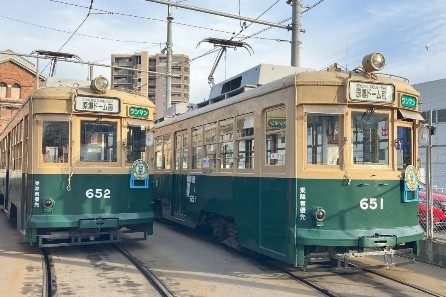
FactOf the streetcars that survived the bombing, cars such as Nos. 651 and 652 were repaired and still sometimes run through the streets of Hiroshima. It is still told how the sight of streetcars running through the ruins was a great encouragement to those who had survived.
"Nothing will grow for 75 years"
FactImmediately after the bombing, word spread in Hiroshima that "neither grass nor trees will grow here for 75 years." But the following summer, flowers bloomed here and there in the ruins. One of the first to bloom was the oleander, which was later chosen as the flower of Hiroshima City.
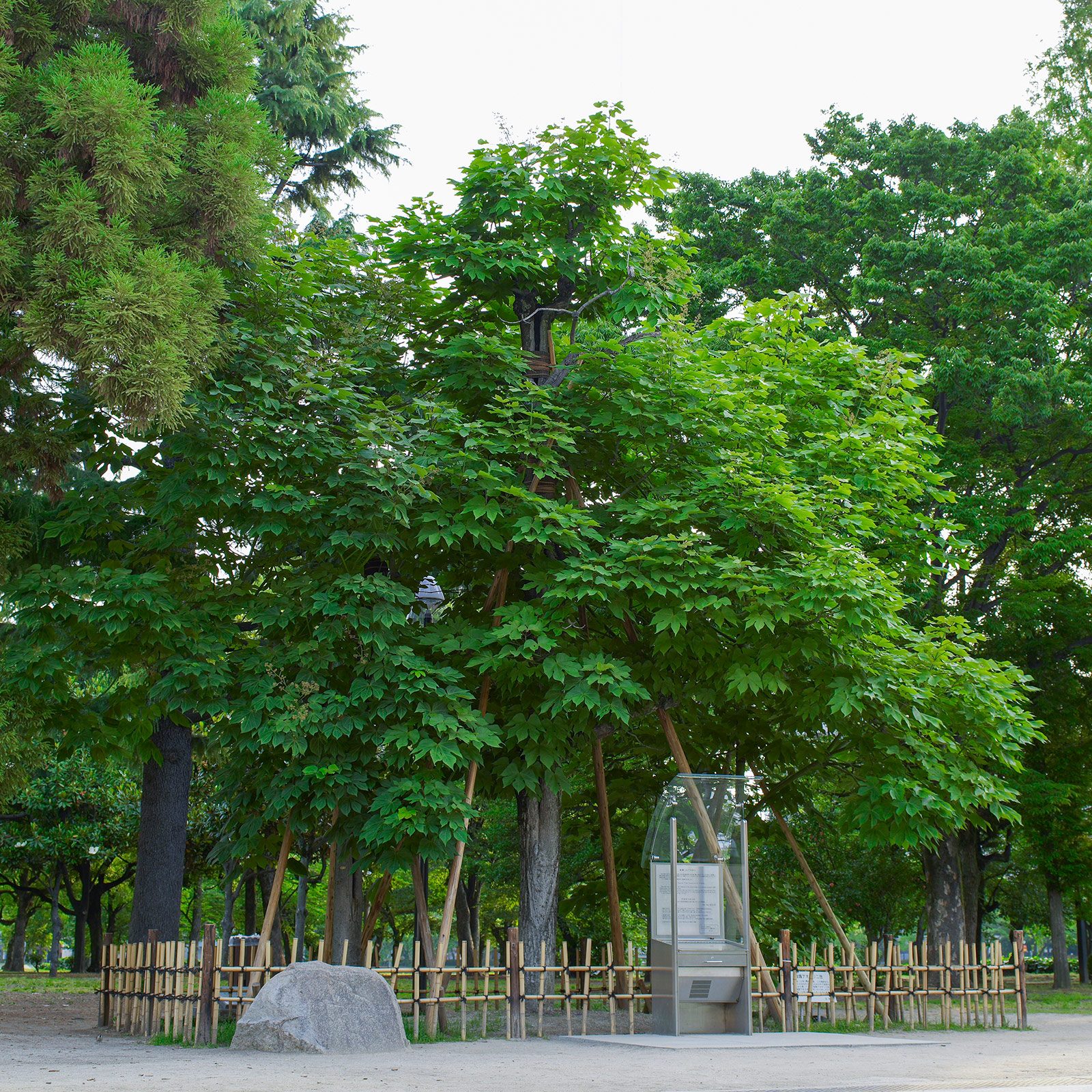
FactTrees that survived the bombing still stand in the city, and are registered as A-bombed trees. The A-bombed Chinese parasol tree in Peace Memorial Park was transplanted from a spot about 1.3 km from the hypocentre, where it had been exposed to the bomb and, though burned down one side of its trunk, put out new shoots.
A law to build a "Peace Memorial City"
FactRebuilding the city was impossible without special support from the state. In 1949 the Hiroshima Peace Memorial City Construction Law was passed by the Diet, won a majority in a local referendum, and was promulgated on 6 August. It provided, among other things, for state-owned land to be transferred to the city free of charge, and recovery took a great step forward.
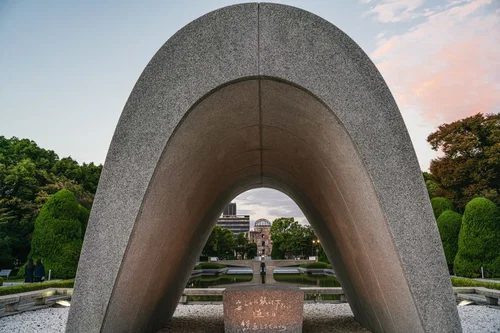
FactIn the same year, 1949, a design competition was held for a Peace Memorial Park in the Nakajima district near the hypocentre, and the plan by the architect Tange Kenzo and his team won first prize. The layout — in which the cenotaph and, beyond it, the A-Bomb Dome can be seen in a straight line between the buildings of the Peace Memorial Museum — comes from this design. The museum opened in 1955.
Look here: the "axis" from the museum to the A-Bomb Dome
Stand beneath the Main Building of the Hiroshima Peace Memorial Museum and look north. Through the arch of the Cenotaph for the A-bomb Victims, shaped like a haniwa clay house, and past the Flame of Peace, you will see the A-Bomb Dome. The cenotaph is inscribed "安らかに眠って下さい 過ちは繰返しませぬから" — "Let all the souls here rest in peace; For we shall not repeat the evil."
The 100-metre road, and saving the A-Bomb Dome
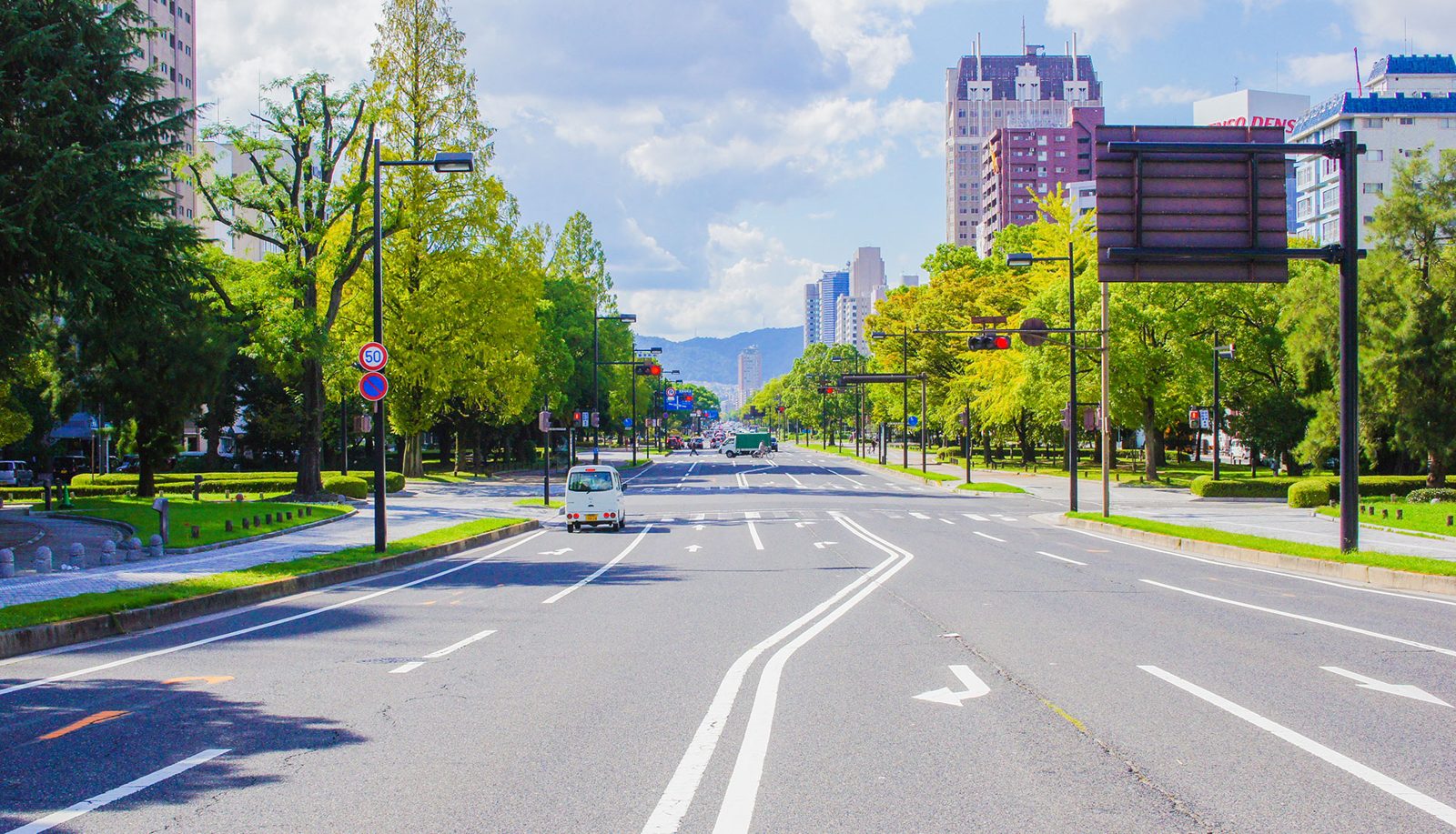
FactPeace Boulevard, which runs east–west through the city, is 100 metres wide. It began as land where buildings had been demolished to stop fires spreading in air raids, and after the war it was laid out as a great road. When it was built, some said "we don't need a road this wide," but today it is a green, tree-lined avenue that represents Hiroshima.
FactNor was it decided from the start that the A-Bomb Dome would be preserved. Some called for it to be demolished, saying that "every time we see it, the painful memories come back." What changed the tide was the diary of a girl who was exposed to the bomb at the age of one and died of leukaemia in 1960, aged 16. Her words — that the A-Bomb Dome would go on telling the world about the horror of the atomic bomb for ever — sparked a preservation movement, and in 1966 the Hiroshima City Council decided on the permanent preservation of the A-Bomb Dome.
A team that became a symbol of recovery
One of the things that gave heart to the people of Hiroshima as they tried to rise from the ruins was the Hiroshima Carp, a citizens' baseball team founded in 1950. For the story of how citizens kept a club with no parent company alive through their donations, go to the Carp room.
Main sources: City of Hiroshima, "Hiroshima Peace Memorial City Construction Law" / Hiroshima Peace Memorial Museum / Hiroshima Electric Railway, "A-bombed Streetcars" / City of Hiroshima, "A-bombed Trees"