Home / Walking Hiroshima
11 — WALK & READ
Walking Hiroshima
Why not take the streetcar and the ferry to the places where the stories you have read took place? Peace Memorial Park, a castle and garden, the island of the gods, a naval port, a port that waited on the tide. Even famous sights look completely different once you carry a single "look for this" in mind.
Labels: Factdocumented Likelysupported by most sources Legendoral tradition Urban legendlocal lore and rumour
Opening hours, closing days, admission fees and ferry services may change. Please check each facility's official information before you go. In front of the cenotaph in Peace Memorial Park, please offer your prayers quietly.
Around Peace Memorial Park
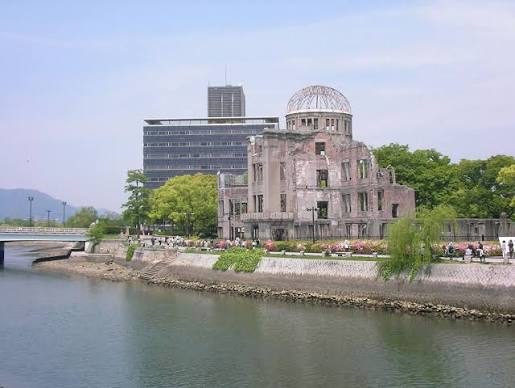
The A-Bomb Dome
About 160 metres from the hypocentre. A World Heritage Site that still shows how it looked after the bombing.
Look here: the steel frame of the dome, and the T shape of the Aioi Bridge to the north (the 6 August 1945 room).
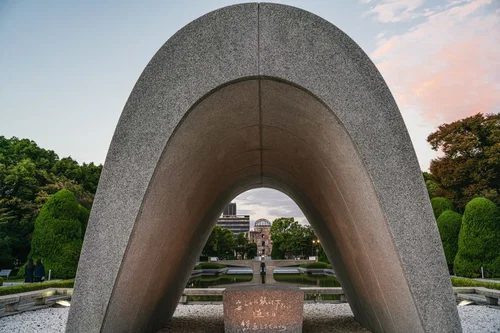
Peace Memorial Park and the Hiroshima Peace Memorial Museum
A park designed by Tange Kenzo, and a museum that conveys the reality of the atomic bombing.
Look here: the "axis" that runs in a straight line from the museum to the cenotaph and the A-Bomb Dome (the Rising from the Ashes room).
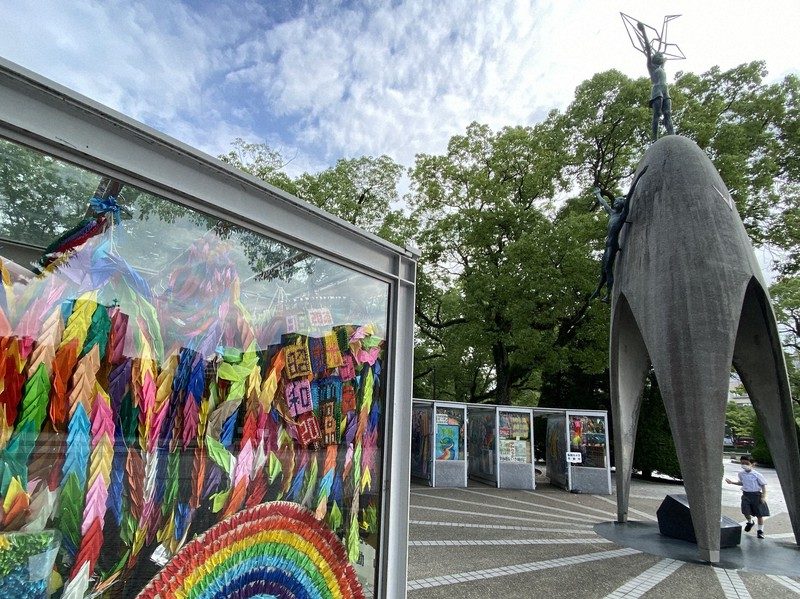
The Children's Peace Monument
A monument in memory of Sasaki Sadako and the children who died because of the atomic bomb.
Look here: the colourful paper cranes sent from all over the world.
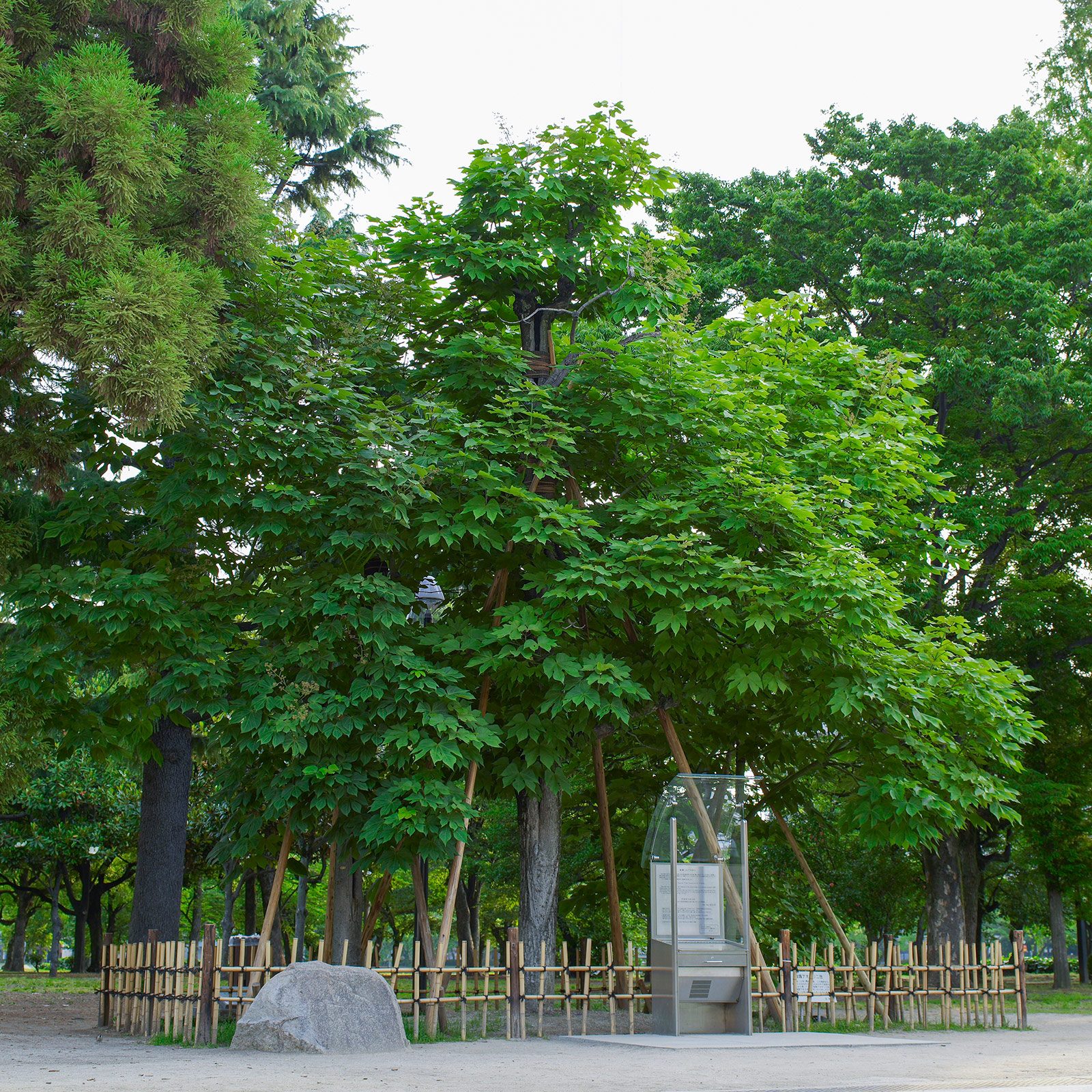
The A-bombed Chinese parasol tree
A tree that sprouted again, though burned down one side of its trunk.
Look here: the scars left on the trunk, and the leaves that still grow thick.
Castle and garden
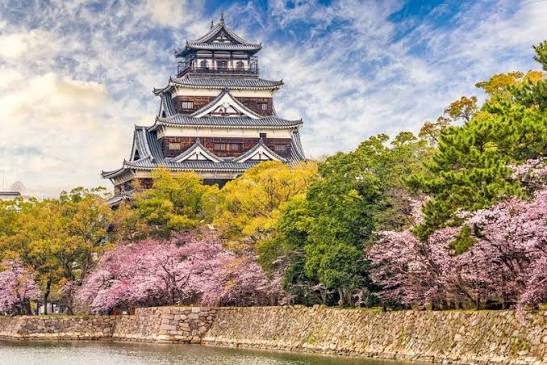
Hiroshima Castle
"Rijo" (Carp Castle), built by Mori Terumoto. The keep closed on 22 March 2026, but the exterior can still be viewed.
Look here: the stone walls and moats that keep their appearance from the time the castle was built (the Castle Town on a Delta room).
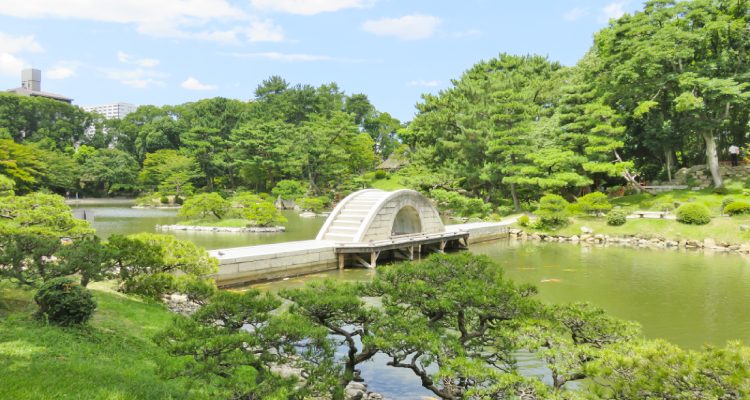
Shukkeien
The daimyo garden of the Asano family. Badly damaged by the atomic bomb, it was restored after the war.
Look here: the arched Kokokyo Bridge spanning the middle of the pond.
Miyajima and Kure
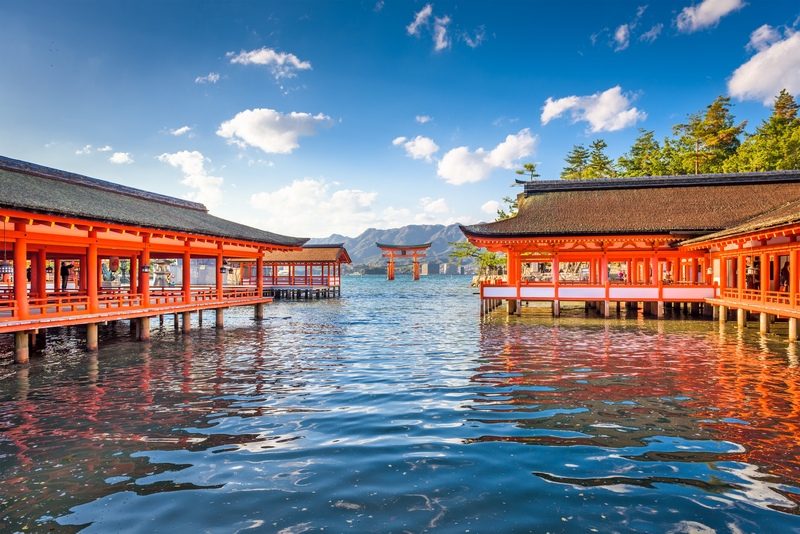
Itsukushima Shrine
The shrine over the sea laid out by Taira no Kiyomori. About 10 minutes by ferry from Miyajimaguchi.
Look here: the Grand Torii, standing by its own weight. At low tide you can walk right up to its base (the Miyajima room).
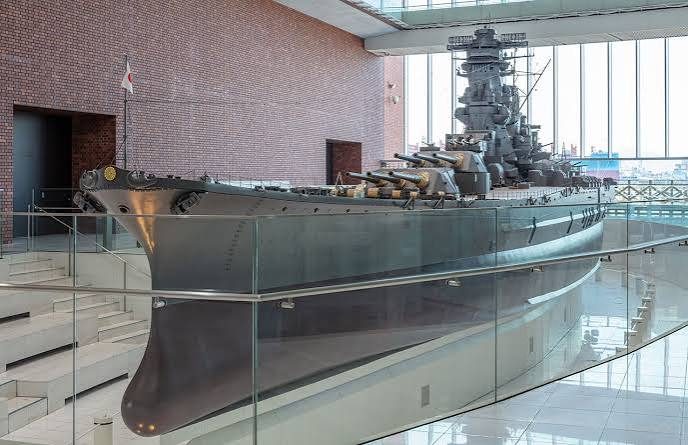
The Yamato Museum
Reopened after refurbishment in April 2026. A 1/10-scale battleship Yamato greets you.
Look here: the submarine at the Tetsu no Kujira Kan across the road, too (the Kure room).
To the port towns of the Inland Sea
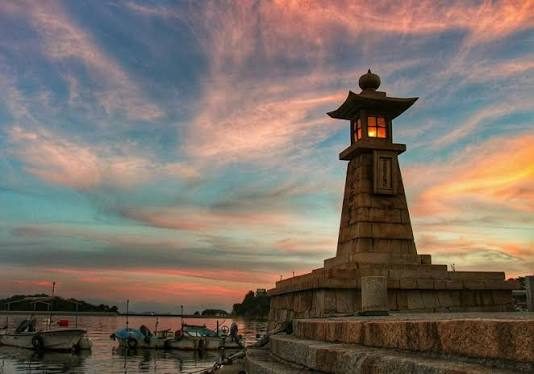
Tomonoura
A port where ships waited for the tide, with its Edo-period harbour facilities still intact. The Joyato lantern is the symbol of the harbour.
Look here: the "Nitto Daiichi Keisho" ("the finest scenery in Japan") view from the reception room of the Taichoro (the Port Towns room).
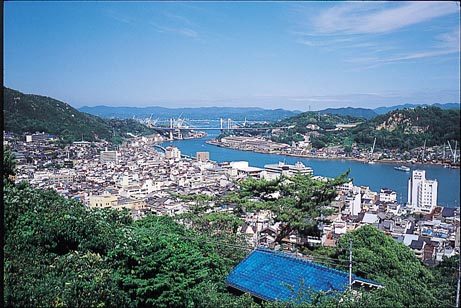
Onomichi
A town of slopes, alleys and temples. A town of literature, linked with Hayashi Fumiko and Shiga Naoya.
Look here: the Onomichi Channel seen from around Senko-ji Temple, and the ferries shuttling back and forth.
Planning a model route
On day one, get around the city by streetcar: A-Bomb Dome → Peace Memorial Park and Museum → Hiroshima Castle → Shukkeien. On day two, take the ferry from Miyajimaguchi to Miyajima. If you check the tide times in advance, you can see both the Grand Torii floating on the sea and the Grand Torii you can walk up to. On day three, head out to Kure, or go east to Onomichi and Tomonoura.