Home / Miyajima and Itsukushima Shrine
05 — MIYAJIMA
Miyajima and Itsukushima Shrine
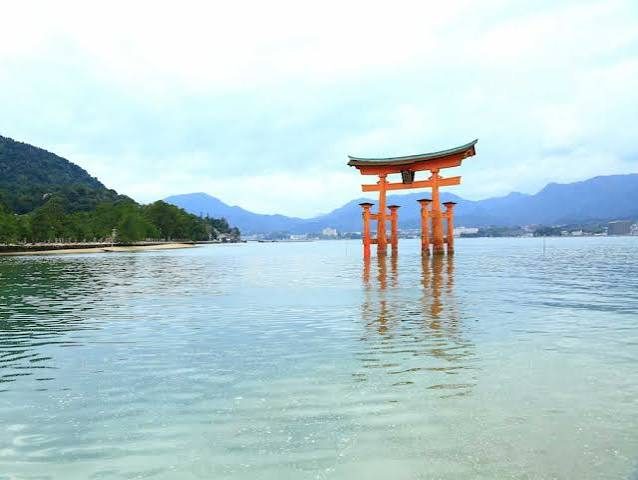
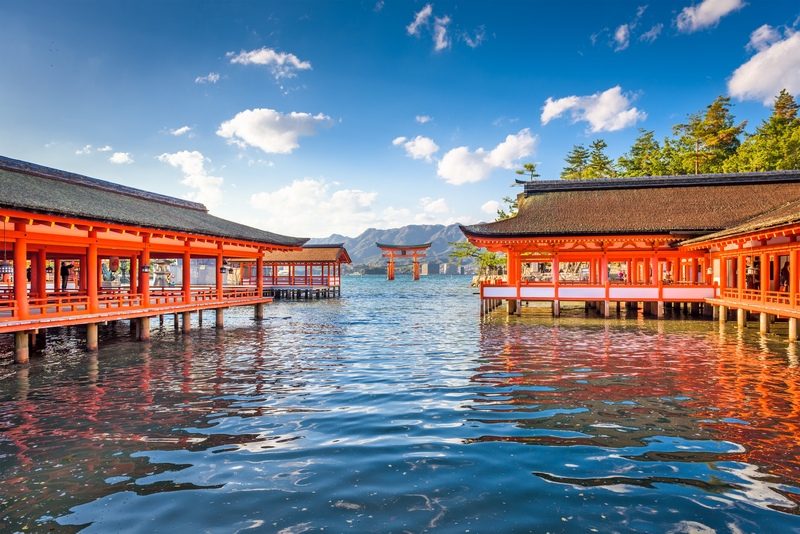
When the tide comes in, the vermilion shrine buildings and the Grand Torii seem to float on the sea. On Miyajima, where the island itself has been revered as a god, why was the shrine built over the sea? We trace its story, from Taira no Kiyomori's dream to a warlords' battle and the island's unique way of life.
Labels: Factdocumented Likelysupported by most sources Legendoral tradition Urban legendlocal lore and rumour
An island that is itself a god
LegendItsukushima Shrine is said to have begun in 593, when Saeki no Kuramoto, a powerful local chieftain, built a shrine here. Since ancient times Miyajima, centred on Mt. Misen, has been revered as an island where the whole land is a dwelling place of the gods.
LikelyIt is thought that the shrine was built not on land but over the sea, on a shore washed by the rising and falling tide, because people hesitated to clear the sacred ground of the island. Worshippers crossed the sea by boat and passed through the Grand Torii to pay their respects.
Taira no Kiyomori's shrine
FactThe man who laid out the shrine over the sea as we see it today was Taira no Kiyomori, who at the end of the Heian period, as Governor of Aki, controlled the sea lanes of the Seto Inland Sea. Around 1168, Kiyomori built magnificent shrine buildings in the shinden-zukuri style of aristocratic residences. The Taira clan were devoted to Itsukushima Shrine, and in 1164 members of the clan dedicated to it the Heike Nokyo sutras, which they had copied out by hand and lavishly decorated. The Heike Nokyo sutras are a National Treasure.
Look here: the Grand Torii simply "sits there"
The Grand Torii (great gate), about 16 metres tall, is not sunk into the seabed. Its main pillars are natural camphor trunks several hundred years old, and the kasagi crossbeam at the top is packed with stones, so that the torii stands by its own weight. The present Grand Torii was built in 1875, and underwent major repairs from 2019 to 2022.
The Battle of Itsukushima
FactIn 1555 Miyajima became the stage for a great battle of the Warring States period. Mori Motonari of Aki lured onto the island the large army of Sue Harukata — who had overthrown his own lords, the Ouchi, and seized power — and defeated it (the Battle of Itsukushima). With this victory, the Mori family went on to become masters of the Chugoku region. Later, Motonari's grandson Terumoto would build a castle in Hiroshima (the Castle Town on a Delta room).
Life on the island of the gods
LikelyBecause the whole island has been regarded as sacred, it is said that Miyajima long had a custom of not bringing onto the island the "impurity" associated with death and childbirth. The dead were buried on the opposite shore, and even today there are almost no graveyards on the island.
FactThe island's deer have been cherished as messengers of the gods. In 1996 an area including the buildings of Itsukushima Shrine, the sea in front of them and the primeval forest of Mt. Misen behind was inscribed as a World Heritage Site. And since October 2023, a Miyajima Visitor Tax (100 yen per person per visit) has been collected from visitors to the island.
The "Eternal Flame" of Mt. Misen
On Mt. Misen, Miyajima's highest peak, stands the Reikado hall, where Kukai (Kobo Daishi) is said to have practised austerities at the beginning of the Heian period. It guards the "Eternal Flame", said to have been burning ever since. In 1964, when the Flame of Peace in Peace Memorial Park was lit, this fire was shared as one of its source flames. A flame of prayer 1,200 years old lives on in a prayer for peace.
Main sources: Itsukushima Shrine / Hatsukaichi City, "History of Miyajima" and "Miyajima Visitor Tax" / Hiroshima Prefecture, "Conservation and Repair of the Grand Torii of Itsukushima Shrine" / Daisho-in Temple