Home / Hiroshima, the Military City
01 — MILITARY CITY
Hiroshima, the Military City
From the autumn of 1894 until the following spring, the Emperor stayed in Hiroshima, the Imperial General Headquarters directing the war was based here, and even the national Diet met here. Why did this city, with both a railway and a port, come to be called a "military city"? And that war would go on to change the fate of Taiwan.
Labels: Factdocumented Likelysupported by most sources Legendoral tradition Urban legendlocal lore and rumour
A port and a railway
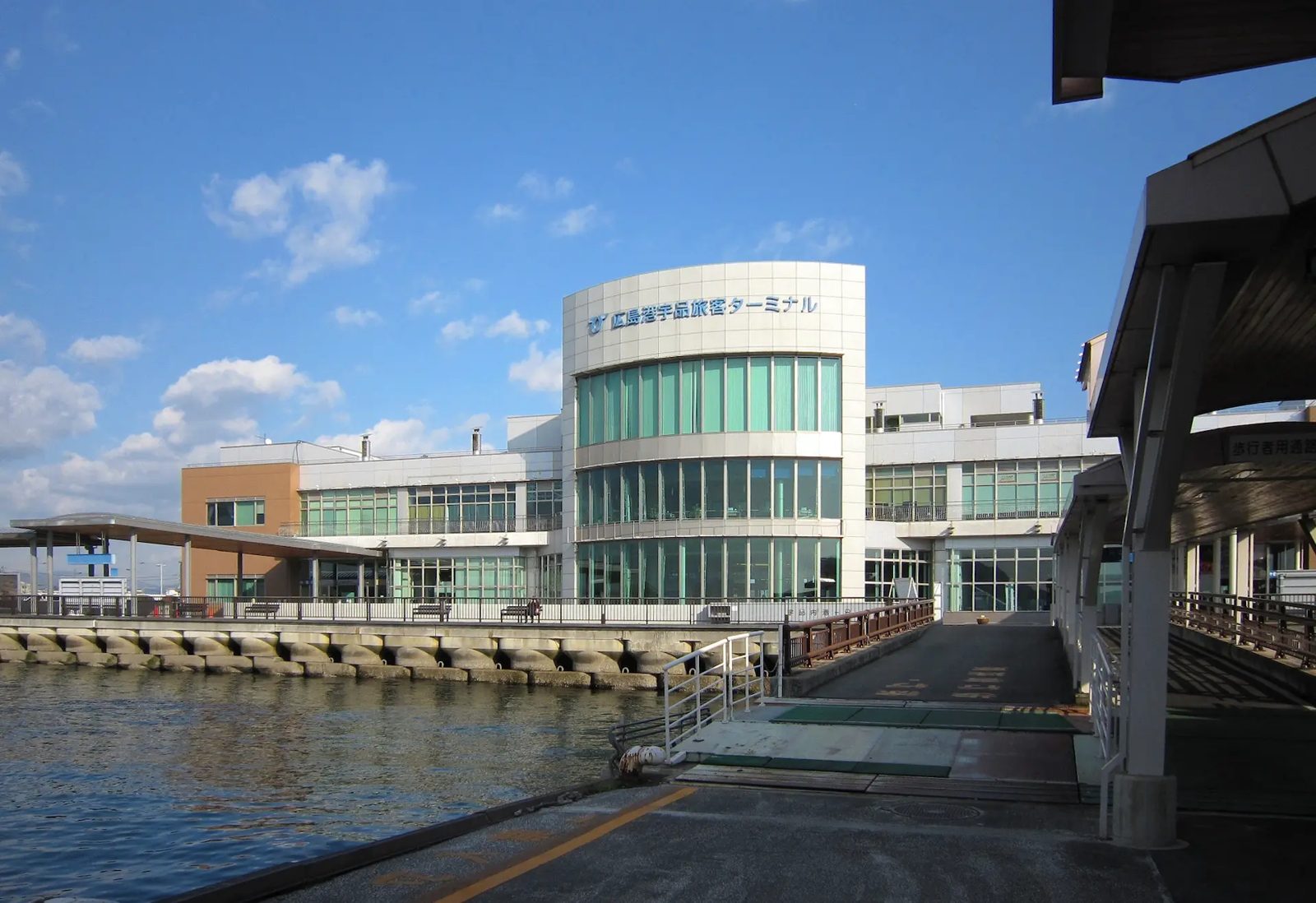
FactIn the early Meiji era, Hiroshima's harbour was shallow, and large ships could not enter it. Senda Sadaaki, the prefectural governor of Hiroshima, struggled against opposition and a shortage of funds as he reclaimed the shallows off Ujina to the south and built a port. Ujina Port was completed in 1889.
FactIn June 1894 the Sanyo Railway opened as far as Hiroshima, which was then the western end of the line. Soldiers and supplies could be carried by rail from Tokyo and Osaka, then shipped from Ujina Port to the Asian continent. Hiroshima had become a city with everything needed to do just that.
1894: the Imperial HQ comes to Hiroshima
FactIn August 1894 the First Sino-Japanese War broke out between Japan and Qing China. A military line (the Ujina Line) linking Hiroshima Station with Ujina Port was laid in only about 17 days. In September the Imperial General Headquarters, which directed the war, was moved from Tokyo into Hiroshima Castle, and Emperor Meiji came to Hiroshima too.
FactIn October an extraordinary session of the Imperial Diet, convened to debate the war budget, was held in a temporary assembly hall built in Hiroshima. The Emperor stayed in Hiroshima until April of the following year, about seven months in all. During that time Hiroshima played the role of what might be called a "temporary capital."
From Hiroshima to Taiwan
FactUnder the Treaty of Shimonoseki, concluded in April 1895, the Qing agreed to cede Taiwan and the Penghu Islands to Japan. So began 50 years of Japanese rule in Taiwan. A war directed from the Imperial General Headquarters in Hiroshima had profoundly changed the history of the people of Taiwan.
FactAfter the war, quarantine stations were set up on Ninoshima in Hiroshima Bay and elsewhere, so that the great numbers of soldiers returning from the continent would not bring infectious diseases home with them. This vast quarantine operation was actually run by Kodama Gentaro, the Vice-Minister of the Army, and Goto Shinpei, a former doctor turned official who worked under him. The two men would later govern Taiwan as Governor-General and Chief of Civil Administration.
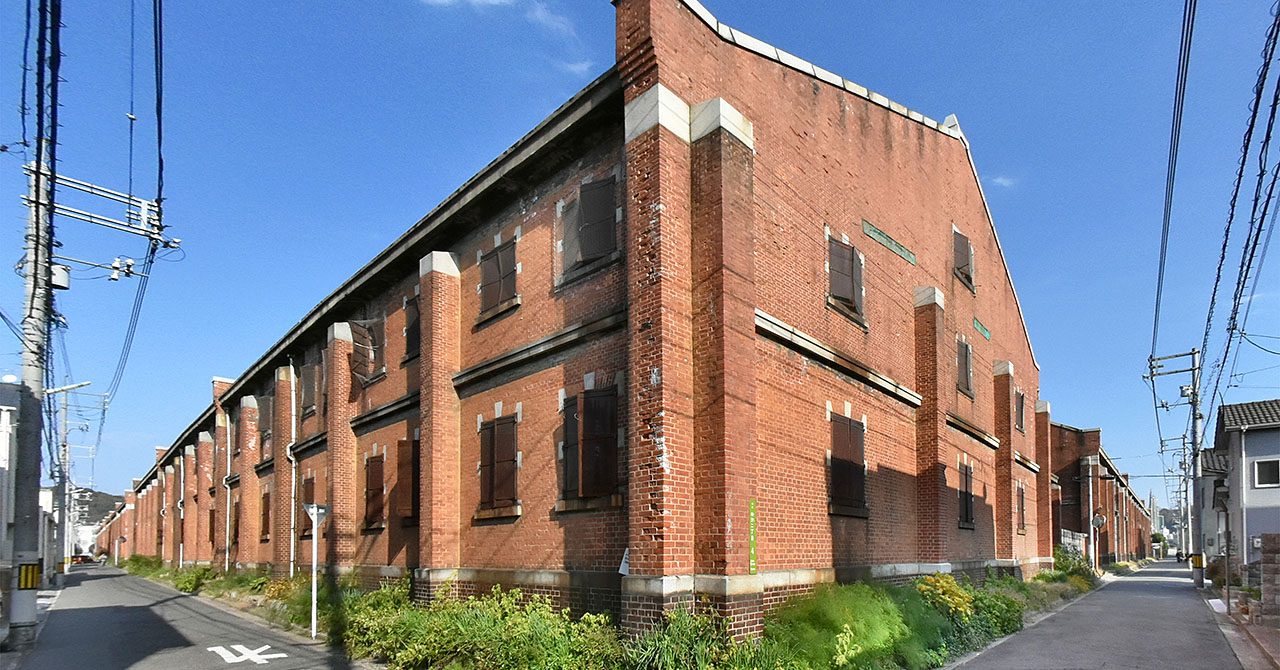
Look here: the former Hiroshima Army Clothing Depot
In Deshio, Minami Ward, the warehouses of an army factory that made uniforms and boots still stand. Built in 1913, they are among the earlier reinforced-concrete buildings in Japan. About 2.7 km from the hypocentre, they withstood the atomic bomb, and immediately after the bombing served as a temporary relief station. They are buildings that carry the memory of the military city and the memory of the bombing at the same time.
A city that grew with the military
FactAfterwards the army's Fifth Division continued to be based in Hiroshima, and Ujina Port remained a port for sending soldiers off, from the Russo-Japanese War through to the Pacific War. Factories making weapons, food and clothing for the army lined the streets, and the city grew hand in hand with the military. And in 1945 this "military city" would be chosen as one of the targets for the atomic bomb (the 6 August 1945 room).
Senda Sadaaki and "Senda-machi"
Senda Sadaaki, who built Ujina Port, was criticised when construction costs far exceeded the plan, and he eventually left Hiroshima. Later the port became indispensable to Hiroshima's development, and the place name "Senda-machi", named after him, survives in the city. A bronze statue of Senda also stands in Ujina.
Main sources: Hiroshima City Archives, "The Imperial General Headquarters and Hiroshima" / Hiroshima Prefecture, "Former Hiroshima Army Clothing Depot" / Hiroshima City Museum of History and Traditional Crafts / History of Hiroshima Prefecture