Home / Onomichi, Tomonoura and the Inland Sea
06 — PORT TOWNS
Onomichi, Tomonoura and the Inland Sea
In the days when ships were moved by wind and tide, vessels waiting for the tide to turn gathered in the ports of the Seto Inland Sea. Tomonoura, whose views were praised by envoys from Korea and where Sakamoto Ryoma faced tough negotiations; Onomichi, a town of slopes, temples and literature. We explore the port towns of eastern Hiroshima Prefecture.
Labels: Factdocumented Likelysupported by most sources Legendoral tradition Urban legendlocal lore and rumour
Tomonoura — the port where ships waited for the tide
FactTomonoura, in Fukuyama City, lies almost exactly in the middle of the Seto Inland Sea. On the rising tide, water flows into the Inland Sea from the Kii Channel in the east and the Bungo Channel in the west, and the two streams meet just off Tomo. On the ebb, the tide divides here and flows out to the east and west. In the days when ships sailed with the tidal currents, they had to wait at Tomo for the tide to turn. And so Tomo prospered as a "port for waiting on the tide."
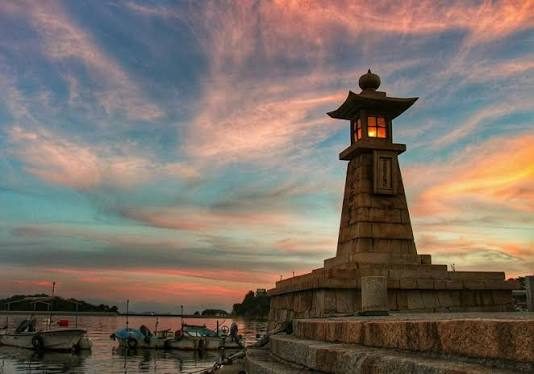
FactThe harbour still has a full set of Edo-period port facilities: the stone Joyato lantern (1859), a landmark for ships at night; the gangi, stone steps for loading and unloading cargo at any state of the tide; the hato breakwater; the tadeba, where ships' hulls were scorched to maintain them; and the funabansho, a lookout post guarding the harbour.
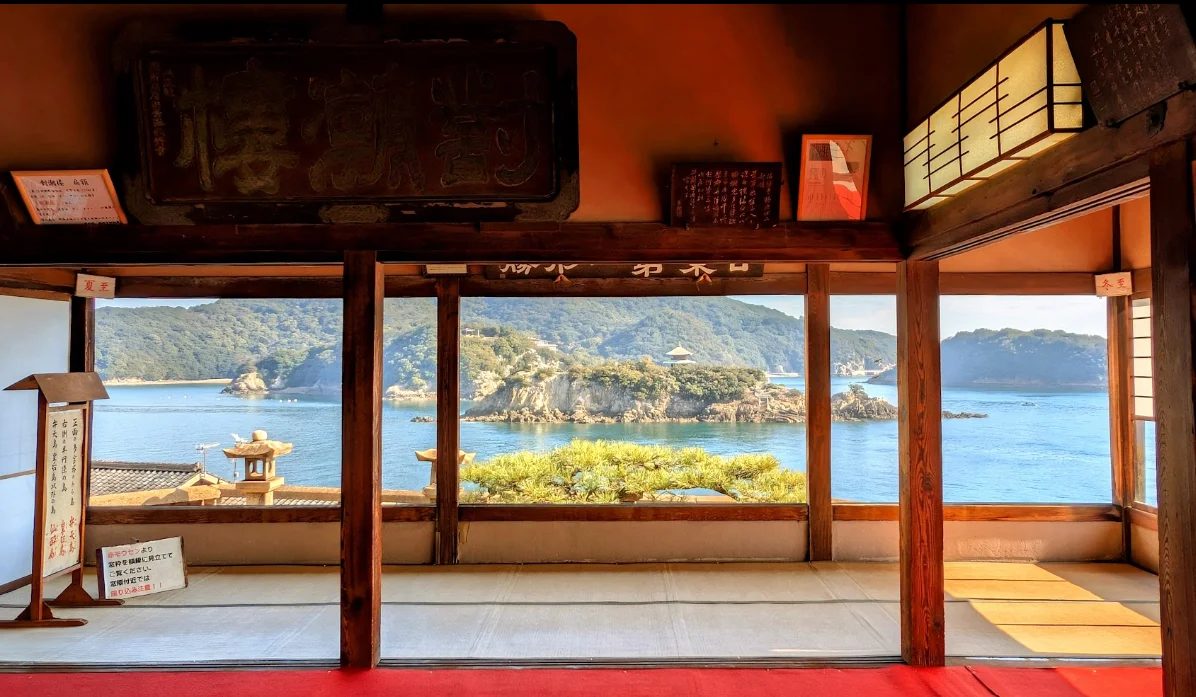
Look here: "Nitto Daiichi Keisho" from the Taichoro
In the Edo period, the Joseon Korean embassies — diplomatic missions sent from Korea to Japan — stopped at Tomo and stayed at Fukuzen-ji Temple. In 1711 one of the envoys praised the view of Sensuijima and Bentenjima islands seen from the reception room as "Nitto Daiichi Keisho" (日東第一形勝), meaning "the finest scenery east of Korea" — that is, the most beautiful view in Japan. His calligraphy still hangs in the Taichoro today. Try sitting in the room, where the window frames the view like a picture.
The Iroha-maru incident and Sakamoto Ryoma
FactIn April 1867 the steamship Iroha-maru, chartered by Sakamoto Ryoma's Kaientai company, collided off Tomo with the Meiko-maru, a large ship of the Kishu domain, and sank. Ryoma and his men went ashore at Tomo and entered into negotiations with the Kishu domain over compensation. Ryoma invoked international rules of navigation to argue that Kishu was at fault, and in the end succeeded in making the domain pay a large sum in compensation.
FactThe storehouse of the shipping agent where Ryoma hid at the time, and the place where the negotiations were held, still survive in Tomo. Underwater surveys have also been carried out off Tomo since the 1980s, and remains of a ship thought to be the Iroha-maru have been found. The findings are presented at the Iroha-maru Museum near the harbour.
Onomichi — a town of slopes, temples and literature
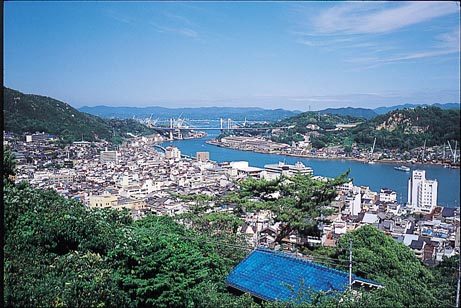
FactOnomichi, west of Tomo, was an important port of the Seto Inland Sea from medieval times. In the Edo period the kitamaebune trading ships also called here, and wealthy merchants built temple after temple on the hillsides, creating the distinctive sight of many temples packed into a narrow town. Steep lanes and alleys, and the ferries that shuttle across to Mukaishima island opposite, still sustain daily life in the town.
FactOnomichi is also known as a town of literature. The writer Hayashi Fumiko spent her girlhood in Onomichi and portrayed its sea and streets in her best-known work, Diary of a Vagabond (Horoki). Shiga Naoya also lived in Onomichi for a time, and the experience was put to use in his later long novel A Dark Night's Passing. And the series of films that director Obayashi Nobuhiko shot in his home town of Onomichi, known as the "Onomichi Trilogy," inspired many fans to visit the town.
From sea road to bridge road
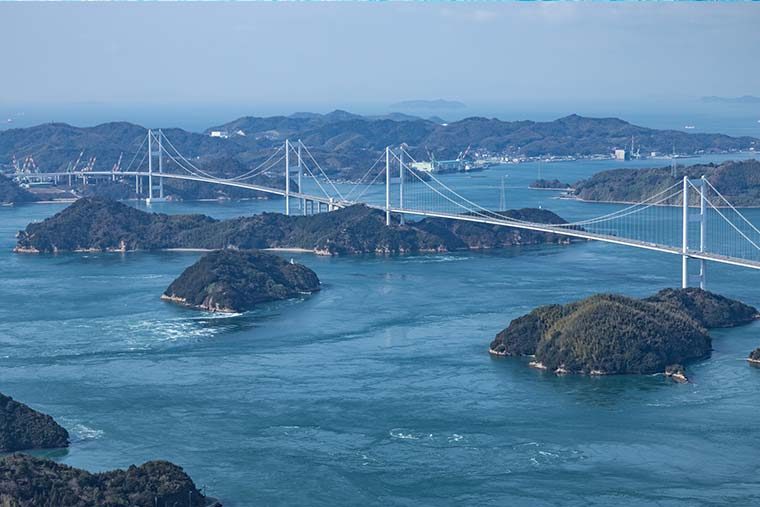
In 1999 the Shimanami Kaido, which links Onomichi with Imabari in Ehime Prefecture by bridges across the islands of the Inland Sea, opened along its full length. Where ships waiting for the tide once came and went, you can now cross the sea by bicycle. For the lemons, mandarins and other flavours of the Inland Sea grown on the islands, go to the Food room.
Main sources: Fukuyama City, "History of Tomonoura" / Fukuzen-ji Temple, Taichoro / Onomichi City, "Onomichi, Town of Literature" / Honshu-Shikoku Bridge Expressway, "Shimanami Kaido"