Every local specialty has a parent—and a lucky accident.
Miso ramen, soup curry, jingisukan. Many of the dishes now known nationwide as “the taste of Sapporo” were created in postwar Sapporo by unsung shop owners and makers through trial and error. Behind each dish is someone’s idea—and an unexpected chain of chance.
1954 — Susukino
Miso ramen began in a single shop
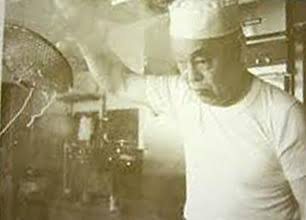
Omiya Morito, creator of miso ramen
In 1950 a small ramen shop called “Aji no Sanpei” opened in Susukino. Its owner, Omiya Morito, set out to create a ramen suited to Japanese people raised on miso soup, and after much experimenting completed miso ramen in 1954.
When the magazine Kurashi no Techo featured it the following year, word spread and the shop boomed.
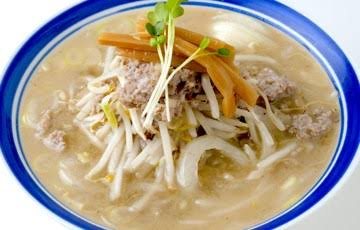
Thick, wavy noodles (from local maker Nishiyama Seimen) and a generous heap of bean sprouts—much of the template for “Sapporo ramen” is said to have been set in this shop.
A widely told story says it all started when someone put noodles into pork miso soup. The shop itself denies this.
Miso ramen was no accident—it was a bowl created on purpose.
Miso ramen piled with bean sprouts
Local know-how
Since 1968 Aji no Sanpei has been on the 4th floor of the Daimaru Fujii Central building at Minami 1 Nishi 3—a long-established stationery store every Sapporo resident knows. Where else can you buy notebooks and pens and then eat the original miso ramen upstairs?
“Sapporo Ichiban” was born in Gunma
The staple instant noodle “Sapporo Ichiban” is often assumed to come from a Sapporo company. In fact it is made by Sanyo Foods, founded in Gunma Prefecture.
Yet there is a deep link. The company’s Ida Takeshi (later its president) described Aji no Sanpei’s ramen as “a work of art” and said it inspired the Sapporo Ichiban series.
A single bowl in Susukino reached kitchens across Japan—a textbook butterfly effect.
1971 — Maruyama
Soup curry was born from herbal medicine
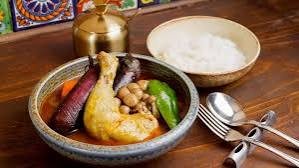
Soup curry with its signature chunky toppings
In 1971 a café called “Ajanta” opened in Maruyama, Sapporo. Its owner came from a family of traveling medicine sellers from Toyama.
Around 1975 he began serving “yakuzen curry,” combining Chinese-medicine health food with Indian cooking.
At first it was just soup and rice, with no toppings. Customers asked for chicken, and later big chunks of carrot and green pepper were added—
the prototype of today’s soup curry.
Then in 1993, “Magic Spice,” which opened in Shiroishi Ward, named its dish “soup curry.”
With a name, the dish spread fast, became a craze in Sapporo in the 2000s, and gained national fame after the shop opened a branch in a Yokohama food attraction in 2003.
Insider note
At a soup curry shop you usually choose the spice level and the type of soup. Many shops rate heat on a numbered scale, and some go astonishingly high—start somewhere in the middle. Rice sometimes comes with a wedge of lemon, and many locals eat the rice and soup alternately rather than soaking the rice.
Uniforms and sheep
Jingisukan began with wool
Sheep were not first raised in earnest in Hokkaido for food.
In 1918 the government launched a “One Million Sheep Plan” to make Japan self-sufficient in wool for military uniforms. Breeding stations were set up in five places nationwide, including Tsukisamu in Sapporo, and Hokkaido became the country’s top sheep region.
How to make the growing supply of mutton delicious? The answer that spread was jingisukan, grilled mutton named after Genghis Khan. There are several theories on the name; a leading one credits Komai Tokuzo, who worked in Manchuria.
Komai was a graduate of the agricultural college of Tohoku Imperial University—the successor to Sapporo Agricultural College.
Sauce after, or marinated before?
In Sapporo, the norm is “atozuke”: grill plain meat and dip it in sauce afterwards. Inland, in places like Takikawa, “ajitsuke”—meat marinated in advance—is the norm.
Once two Hokkaido natives start arguing about which is better, it can go on for a while.
Even the domed pan has a purpose: meat grills on the raised center while juices run down to cook the vegetables around the rim—not a drop of fat or flavor wasted.
Cherry-blossom viewing in spring, school sports days and outings in autumn: gathering outdoors around a jingisukan grill—a “jinpa”—is a seasonal ritual in Hokkaido.
A phantom vegetable
“Sapporo Ki”—the onion the college left behind
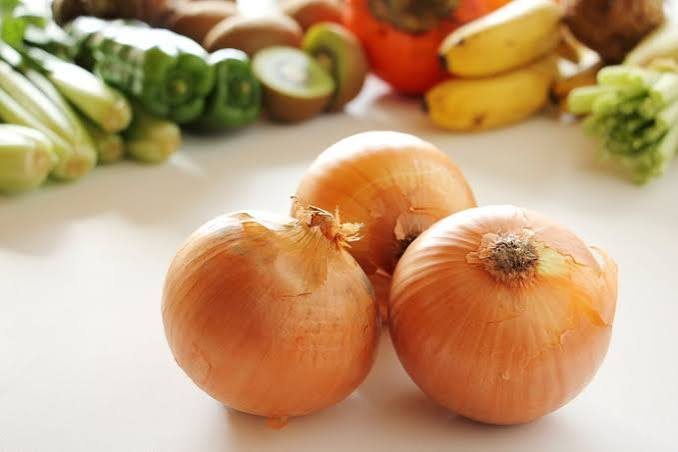
Onions (for illustration)
In 1878 William Brooks, a teacher at Sapporo Agricultural College, ordered onion seed from Massachusetts.
Selected over generations in Sapporo’s soil, it became “Sapporo Ki” (Sapporo Yellow).
It keeps well and turns intensely sweet when cooked. Once one of Japan’s leading onions, it declined sharply as disease-resistant, easier varieties spread.
In 2007 it was listed on Slow Food’s “Ark of Taste,” which protects endangered foods.
A few dozen farms still grow it around Okadama in Higashi Ward.
Everyday Sapporo flavors
Tastes locals take for granted
Toukibi wagons
A summer fixture of Odori Park since 1967: stalls selling grilled corn. In Hokkaido, corn is called “toukibi.”
Shiroi Koibito
Launched in 1976 by Ishiya in Nishi Ward. Its Miyanosawa factory is open to visitors as “Shiroi Koibito Park.”
Sapporo Classic
A Hokkaido-only beer since 1985 and the locals’ default first order. See Red Star Beer.
Zangi
Hokkaido’s word for fried chicken—usually well seasoned before frying. Some locals insist it is “not the same as karaage.”
Katsugen
A lactic-acid drink loved in Hokkaido for generations. Many only learn it isn’t sold nationwide after leaving the island.
Sekihan with amanatto
Celebratory red rice made with sweet candied beans instead of plain adzuki. Common in Hokkaido homes and a surprise to outsiders; said to have been popularized by Nanbu Akiko, founder of a Sapporo cooking school.
Read next
You “Throw” Trash and “Wear” Gloves on Your Feet
Dialect, flat snow-proof roofs, entrance hoods and sand boxes: everyday Sapporo visitors never see.