FILE 01
Hokkaido Jingu’s main hall glares at Russia
Half true
It is true that the main hall faces northeast—unusual, since shrines more often face south or east. Explanations such as “a guard against Russia to the northeast” or “to seal the unlucky demon-gate direction” are often told, but no official reason can be confirmed; these are interpretations passed down over time.
FILE 02
“Boys, be ambitious” was spoken in Sapporo
Myth
Clark is said to have spoken the words after leaving Sapporo, when he parted from the students who had ridden out with him at the post station of Shimamatsu (now Kitahiroshima City). Accounts of what came next also differ. See The Agricultural College.
FILE 03
The “tanuki” of Tanukikoji weren’t animals
Theories differ
By around 1873 the street was already called Tanukikoji (“Raccoon-Dog Lane”). An 1891 book says the name compared women who smooth-talked customers into shops to shape-shifting tanuki—the leading theory. Others say real tanuki lived there, or that merchants who “tricked” customers were the tanuki. The “Honjin Tanuki Daimyojin” shrine on the 5th block was set up in 1973 to mark the arcade’s centenary.
FILE 04
Susukino is named after the silver grass that grew there
Theories differ
In 1871 the Development Commission set up a licensed quarter here to keep construction workers in town. Besides the theory that the area was a field of susuki (silver grass), another holds that Commissioner Iwamura named it after Usui Tatsuyuki, the official in charge of the works—and some consider this more credible based on the testimony of people involved at the time.
FILE 05
Miso ramen began when someone put noodles in pork soup
Myth
A popular tale, but the current owner of Aji no Sanpei, credited as the originator, denies it. Miso ramen was deliberately developed and completed in 1954 after much experimentation. See Food Stories.
FILE 06
“Sapporo Ichiban” noodles were born in Sapporo
Half true
The maker, Sanyo Foods, was founded in Gunma Prefecture, not Sapporo. But the company’s Ida Takeshi (later president) is said to have been inspired by the ramen at Aji no Sanpei in Susukino. There was a reason for the name after all.
FILE 07
Mt. Moiwa and Maruyama swapped names
Largely true (leading theory)
The leading theory is that the Ainu name “Moiwa” (small mountain) originally referred to the smaller Maruyama, while today’s Mt. Moiwa was called “Inkarushpe.” The names are thought to have shifted as maps were drawn. See Place Names.
FILE 08
Sapporo’s grid copies Kyoto
Half true
Shima Yoshitake, who began building the capital, is said to have envisioned an orderly city like Kyoto. But the actual blocks, street widths and firebreaks like Odori were designed by the Meiji Development Commission itself, drawing on Western knowledge. Less a copy of Kyoto than a new design with Kyoto as its ideal.
FILE 09
Sapporo was going to host the 1940 Olympics
Largely true
Sapporo had been chosen for the 1940 Winter Games, but Japan returned them as the war escalated. The 1972 Sapporo Olympics were, in a sense, a comeback 32 years in the making.
FILE 10
First snow comes two weeks after the snow bugs fly
Half true
Snow bugs (a type of aphid) swarm in late autumn as temperatures drop, so they often coincide with the first snow. But there is no fixed number of days, and it varies by year. It’s a seasonal rule of thumb.
FILE 11
There are no cockroaches in Sapporo
Myth
Thanks to the cold climate they are far rarer than in mainland Japan, and many locals have never seen one. But they do live in heated restaurants and buildings—so “none” isn’t true.
FILE 12
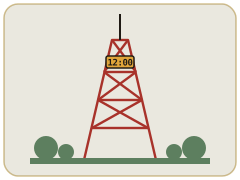
Godzilla once destroyed the Sapporo TV Tower
Largely true (on screen)
In the 1991 film Godzilla vs. King Ghidorah, the TV Tower is destroyed. The tower, completed in 1957, was designed by “Dr. Tower” Naito Tachu, who also designed Tokyo Tower and Nagoya’s TV tower. In 2025 it became a registered tangible cultural property.