Sapporo, Hokkaido — A History Portal
Some 150 years ago, this was an alluvial fan of springs and reed beds. A canal was dug, a government commission laid out a grid, beer was brewed under a red star, young men studied at an agricultural college—and eventually a Winter Olympics built a second city underground. Here we collect the “why” of Sapporo: things every local takes for granted, but no travel guide explains.
Four keys to Sapporo
Few places in Japan have gone from open wilderness to one of the country’s largest cities in just 150 years—without ever being a castle town or a port. Follow the story and four keys emerge.
First, landform: the Toyohira River built a well-drained alluvial fan, with clear springs lining its lower edge. Second, design: precisely because nothing was here, the state could draw an “ideal capital” from scratch. Third, people: former samurai and farmers from all over Japan, American engineers, and the Ainu, who had lived on this land long before. And fourth, snow: the know-how of living with nearly five meters of it every winter shaped the city’s very character.
Explore the site
Each page stands on its own. Start wherever your curiosity leads.
A dry great river, or a river of reeds? Swapped mountain names and towns named after Miyagi and Hiroshima.
Read →The line of springs called “mem,” a 40,000-year-old pyroclastic flow, and the gentle slope to the south.
Read →A commissioner dismissed within half a year, a canal that became the origin of every address, and a firebreak that became a park.
Read →The brewery was meant for Tokyo. Hisanari Murahashi changed that—then vanished from history.
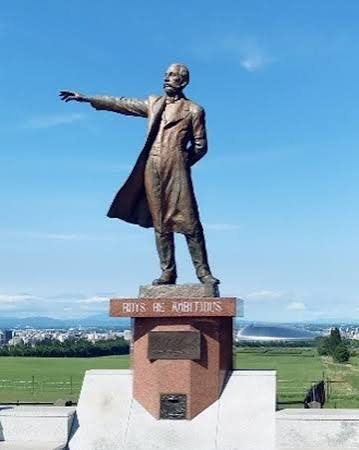
Read →Clark spent just nine months in Sapporo—and his famous words weren’t spoken in Sapporo at all.
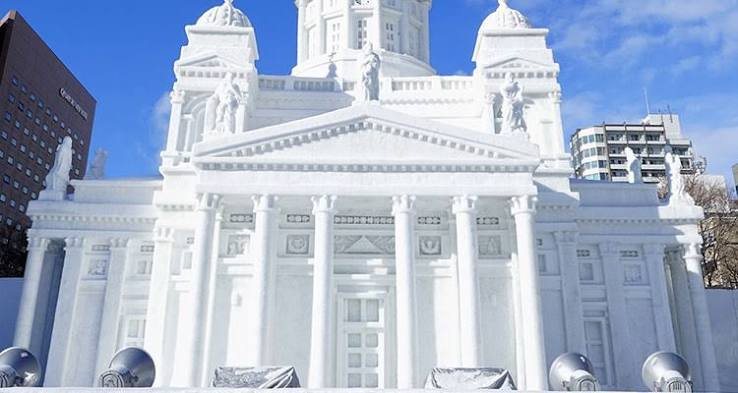
Read →A festival that began with six statues, a rubber-tired subway, a bamboo-broom tram and a vast snow budget.
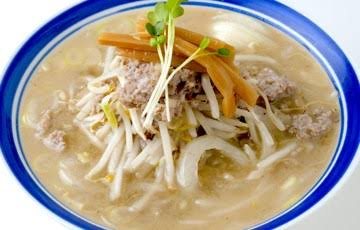
Read →The instant noodle named “Sapporo” was born in Gunma. A curry born of herbal medicine, and a heirloom onion.
Read →Dialect, flat snow-proof roofs, entrance hoods and sand boxes: everyday Sapporo visitors never see.
Read →Does the shrine glare at Russia? Who were the “tanuki” of Tanukikoji? Popular stories, checked against sources.
Read →From six student-built snow statues to two million visitors; from one bowl of ramen to a national brand.
Read →A quarry turned park, a landfill turned art, a tea house and a former court: places that change once you know.
Read →In pictures
Some things words can’t convey. Each photo also links to a related page.


Sapporo in numbers
Among cities of over a million people, very few get this much snow. A few figures behind daily life here.
Locals shorten addresses like “Minami 1 Nishi 4”—South 1st Block, West 4th Block. The classic meeting spot called “Yon-chōme” (4-chome) is this very intersection, and Sapporo Station is simply “Satsu-eki.” If you can read that sentence fluently, you’re halfway to being a Hokkaido native.
Overview
The full stories are on each page. Here is just the big picture.
Pyroclastic flows reached what is now southern Sapporo and hardened into “Sapporo soft stone”—the building material of the Meiji-era city.
The “Otomo Canal,” dug by a settler sent by the shogunate, later became the Sosei River—the east–west origin of every address in Sapporo.
Ezo is renamed Hokkaido. Commissioner Shima Yoshitake surveys the plain from the hills of Maruyama and envisions a grid-plan capital—but is dismissed within about six months.
A strip of open land about 105 meters wide divided government land to the north from townspeople’s land to the south. The same year, retainers from Shiroishi in Sendai domain arrive and found “Shiroishi Village.”
Murahashi Hisanari moves the brewery—originally planned for Tokyo—to Sapporo. That summer, the college opens with William S. Clark.
Hokkaido’s first railway links Temiya in Otaru with Sapporo, connecting the port and the new capital.
Sapporo Ward becomes a city. Its population had only just passed 100,000.
It began with six snow statues built by local students—and grew into a winter festival drawing over two million visitors.
A rubber-tired subway and underground shopping streets arrive, followed by the Sapporo Olympics in February 1972. In April, Sapporo becomes a designated city.
A dish descended from the “medicinal curry” of a 1970s Maruyama café finally gets a name—and goes national.
A 520-meter underground boulevard linking Sapporo Station and Odori. Even on snowy days, you can now walk across downtown.