In the autumn of 1876, a brewery was completed on the open plain of Sapporo. The following year, “Chilled Sapporo Beer” went on sale in Tokyo and won a good reputation. Yet under the original plan, the brewery was to be built in Tokyo. This is the story of the official who overturned that plan—and of the life that later vanished from history.
Chapter 1 — A young man abroad
From Satsuma to London
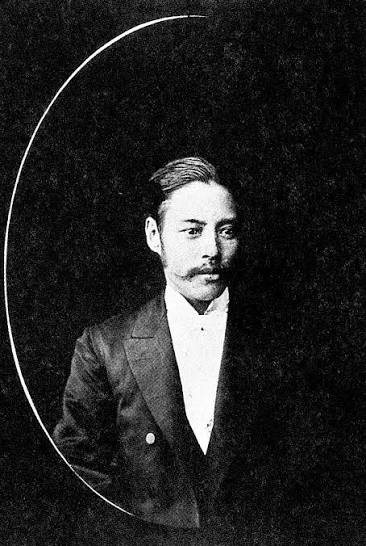
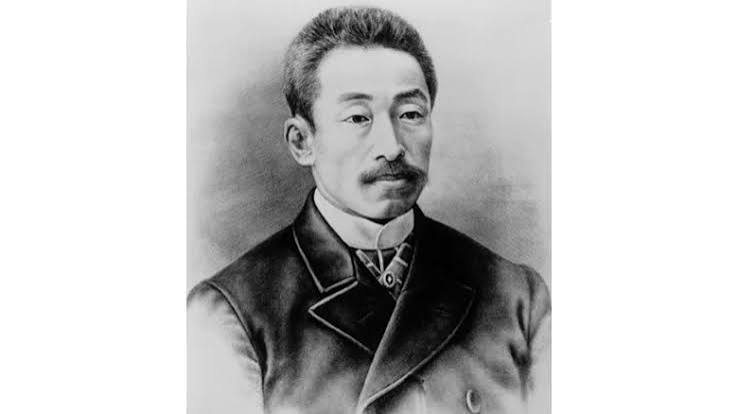
Murahashi Hisanari (1842–1892)
Murahashi Hisanari was born in 1842 into a high-ranking samurai family of the Satsuma domain. In 1865 he was chosen as one of the students the domain secretly sent to Britain, and he traveled to London under an assumed name.
These were the “Satsuma Students,” and he sailed with young men who would later become famous diplomats and businessmen.
But life abroad weighed heavily on him, and he returned after only about a year. In the Boshin War he led an artillery unit all the way to Hakodate and is said to have taken part in surrender negotiations with the former shogunate forces.
In the Meiji era, he joined the Development Commission and headed north.
Chapter 2 — The proposal of 1875
“Beer should be made in Hokkaido.”
Nakagawa Seibei, the brewer
In 1875 Murahashi was put in charge of building a government brewery. The plan at the time called for it to be in Tokyo.
Murahashi objected.
A cool climate suited to brewing, plentiful ice and water, and barley and hops as raw materials—Hokkaido had them all.
And wasn’t the whole purpose of the Commission to build industry in Hokkaido? His proposal was accepted, and the brewery moved to Sapporo.
The brewery was completed in September 1876. The brewing was entrusted to Nakagawa Seibei, a Japanese brewer who had trained in Germany.
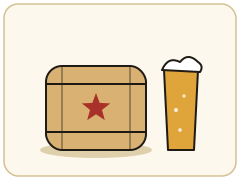
In the summer of 1877, “Chilled Sapporo Beer” went on sale in Tokyo and was well received. The barrels and labels bore the Commission’s red star—the Pole Star.
PROPOSAL
Climate, ice, water, raw materials—everything is on the side of the northern land.
— The gist of Murahashi Hisanari’s proposal (summary)
Chapter 3 — The man who disappeared
A mendicant monk, found on a street in Kobe
Besides the brewery, Murahashi oversaw several government enterprises, including a silk mill and a winery.
Then in 1881, shortly before the Commission was abolished, he suddenly resigned. The reason is still unclear.
He is said to have left his family and wandered the country as a mendicant Buddhist monk.
In September 1892 he was found collapsed on a street in Kobe and died a few days later, aged 50 by the traditional count. What did he feel as the beer from the brewery he built became known across Japan?
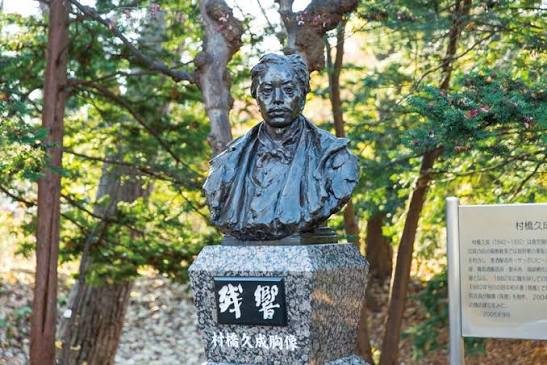
Insider noteThe bust “Echo” (Governor’s Official Residence)
“Echo” in the Governor’s garden
Long forgotten, Murahashi’s achievements were gradually rediscovered after the war. In 2005 a bust of him titled “Echo” (Zankyo) was erected in the front garden of the Hokkaido Governor’s Official Residence in Sapporo. He also appears as one of the students in the “Young Satsuma Group” statue in front of Kagoshima-Chuo Station. Pay him a visit before you raise a glass in Sapporo.
What became of the red star
From government brewery to Sapporo Breweries
1876
Government brewery completed in Sapporo
Built in Sapporo thanks to Murahashi’s proposal; brewed by Nakagawa Seibei.
1886–87
Sold to private hands; Sapporo Beer Company founded
After the Commission was abolished, its enterprises were sold off. The brewery passed to businessmen and became a company.
1906
Great merger into Dai Nippon Beer
The Sapporo, Nippon and Osaka beer companies merged to form a giant that dominated the domestic market.
1949
Postwar split—the “Sapporo” name disappears for a time
Dai Nippon Beer was split in two. One successor, Nippon Breweries, sold its beer as “Nippon Beer,” and the Sapporo brand temporarily vanished.
1956–64
Sapporo Beer returns, and so does the name
After Sapporo Beer was revived in Hokkaido, the company itself was renamed Sapporo Breweries in 1964.
1993
Sapporo Factory opens on the brewery site
The site linked to the Commission’s brewery is reborn as a shopping complex that makes use of its brick buildings.
Local know-how
Hokkaido’s “usual” is a Hokkaido-only beer
Nationally, “Black Label” and “Yebisu” are well known. But in Hokkaido’s pubs and homes, the go-to order is often Sapporo Classic, sold only in Hokkaido since 1985. Surprisingly few visitors know Sapporo’s true “local beer.”
Walk the story
Places connected to the brewery
Sapporo Beer Museum
Higashi Ward. The red-brick building was built in 1890 as a sugar factory. Exhibits trace the history back to the Commission era.
Sapporo Factory
Kita 2 Higashi 4, Chuo Ward. Site of the Commission’s brewery; the brick hall and chimney recall the old days.
Hokkaido Governor’s Official Residence
Kita 1 Nishi 16, Chuo Ward. Murahashi’s bust “Echo” stands in the front garden, on the old line of mem springs.
Sapporo Beer Garden
Higashi Ward, next to the museum. Jingisukan (grilled mutton) with draft beer—one of the places that made this pairing a Sapporo classic.
Read next
The Teacher Who Stayed Nine Months
Clark spent just nine months in Sapporo—and his famous words weren’t spoken in Sapporo at all.