Home / Okinawa Soba, Champuru and Awamori
08 — FOOD
Okinawa Soba, Champuru and Awamori
"Soba" made without buckwheat, home cooking starring canned meat, and a spirit brewed from Thai rice. On Okinawa's dinner tables, the trade of the Ryukyu Kingdom and the memory of Amerika-yu overlap. In every dish, you can glimpse the islands' history.
Labels: Factdocumented Likelysupported by most sources Legendoral tradition Urban legendlocal lore and rumour
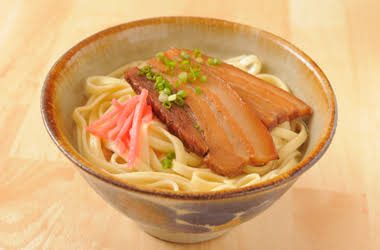
It's soba, but there's no buckwheat
FactOkinawa soba is a dish of thick wheat-flour noodles in a broth made from pork bones and bonito. The noodles were originally made using the clear liquid skimmed from wood ash (lye water). In Okinawa, "soba" means this Okinawa soba.
FactIn 1976, however, the Japan Fair Trade Commission objected that labelling noodles with little buckwheat flour as "soba" was a problem. The name "Okinawa soba" might no longer be allowed. Local noodle makers negotiated again and again, and on 17 October 1978, the name "Honba Okinawa Soba" (authentic Okinawa soba) was approved. In honour of that date, 17 October is "Okinawa Soba Day."
With pigs, "everything but the squeal"
In Okinawa they say that "you eat every part of the pig except its squeal." Rafute (braised pork belly), tebichi (trotters), mimiga (ear skin), and nakami-jiru (a soup of offal): dishes that use the whole pig without waste still appear on the table today.
LikelyOne reason pig-raising spread is said to be the Chinese investiture envoys. While missions of several hundred people stayed for several months, large quantities of pork were needed. The spread of the sweet potato, which made pig feed easier to secure, is also thought to have played a big part (the butterfly effect on the home page).
Champuru and "pork"
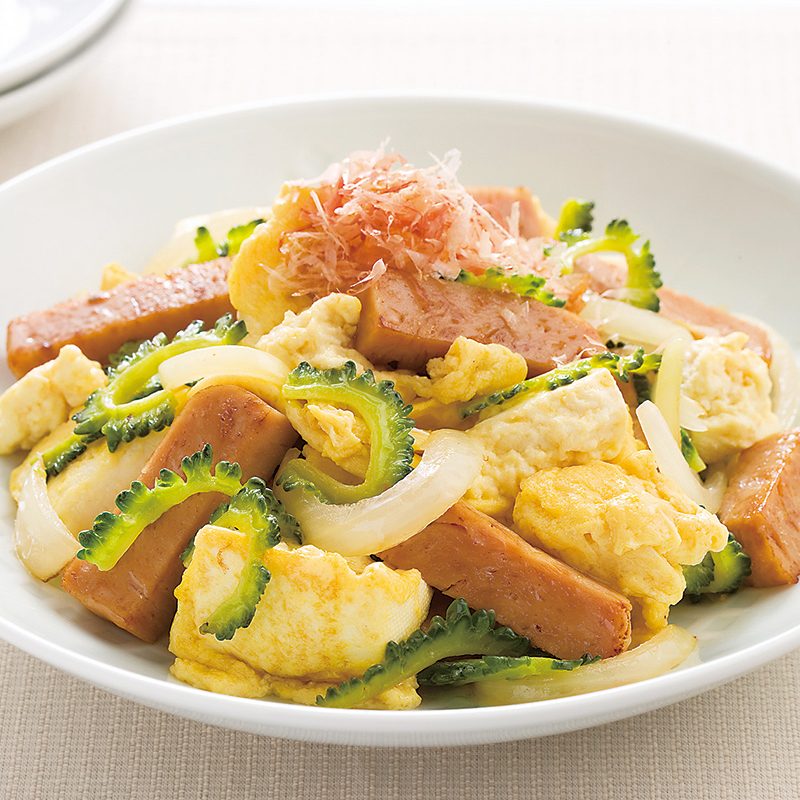
Champuru (a stir-fry) is a dish of tofu fried with vegetables and other ingredients, and the word means "mixed together." One theory links it to the Indonesian and Malay word meaning "to mix." Its name changes depending on the star ingredient: goya (bitter melon), somin (thin wheat noodles), fu (wheat gluten) and so on.
FactAn essential ingredient of champuru is "pork" — that is, canned luncheon meat. Brought in after the war as US military rations, it spread into homes, and pork tamago (luncheon meat with omelette) became a staple of Okinawan breakfasts and lunch boxes.
Flavours left by Amerika-yu
FactIn 1963, Japan's first A&W restaurant opened at Yagibaru in Kitanakagusuku Village, in the central part of the main island. A drive-in where you could order root beer and hamburgers without leaving your car was, to Okinawans at the time, America itself.
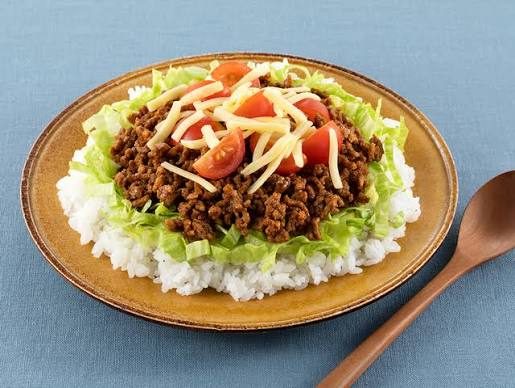
FactTaco rice was born in 1984 in Kin Town, home to Camp Hansen. It began when a diner owner served taco fillings on rice — cheap and generous — for hungry American servicemen. Today it is one of the prefecture's everyday dishes, and even appears in Okinawan school lunches.
Awamori — a spirit of Thai rice and black koji
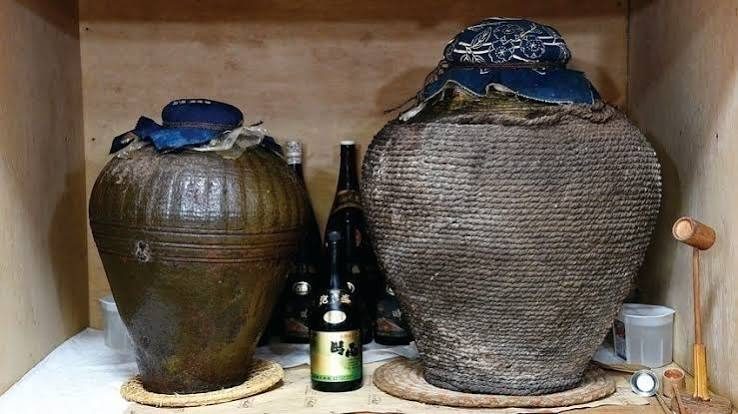
FactAwamori is Okinawa's traditional distilled spirit. It is made mainly from Thai rice (Indica rice): all of the rice is first turned into koji using Okinawa's distinctive black koji mould, and then fermented and distilled.
LikelyThe leading theory is that distillation techniques arrived around the 15th century from Siam (Thailand), one of Ryukyu's trading partners. In the kingdom era, awamori production was permitted only in three districts of Shuri (the Shuri Sanka), and it was valued as a gift to China and Japan. Awamori aged for three years or more is called kusu (aged awamori), and the longer it is aged, the mellower it becomes.
Look here: the black koji that survived the war
In the Battle of Okinawa, the distilleries of Shuri and much of their kusu, some of it over 100 years old, were lost. But in 1998, black koji mould collected before the war and preserved at the University of Tokyo was found, and a Shuri distillery used it to revive its awamori. A mould that had lain dormant for more than 50 years made spirits once again.
The "26 shock"
Okinawa has long been known as a prefecture of longevity. But in the 2000 rankings of average life expectancy by prefecture, Okinawan men fell to 26th in the country — a result dubbed the "26 shock." Changes in the postwar diet and a lack of exercise in a car-dependent society have been pointed to as causes. It also became an occasion to look again at what traditional food had to offer.
Main sources: Okinawa Fresh Noodle Cooperative, "Okinawa Soba Day" / Okinawa Prefectural Distillers Association, "History of Awamori" / Ministry of Health, Labour and Welfare, "Prefectural Life Tables"