Home / Shippoku, Champon and Castella
09 — FOOD
Shippoku, Champon and Castella
Shippoku cuisine shared around a round table, champon born to fill the stomachs of hungry students, and castella brought from Portugal. On Nagasaki's table, the history of "wakaran" — the blend of wa (Japan), ka (China) and ran (Holland) — is served up just as it is.
Labels: Factdocumented Likelysupported by most sources Legendoral tradition Urban legendlocal lore and rumour
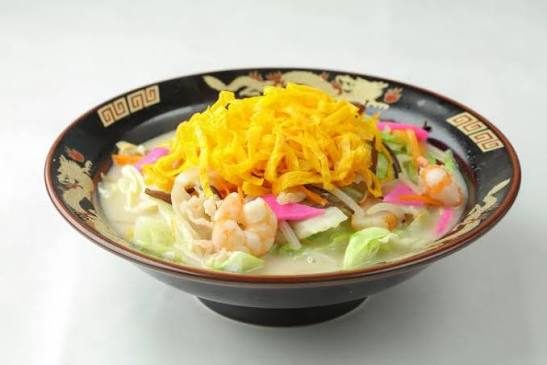
Champon — a bowl for overseas students
FactNagasaki champon is said to have been created in 1899 (Meiji 32) by Chen Pingshun, founder of the Chinese restaurant Shikairo. Many students from China were living in Nagasaki at the time, but they were far from well off. He wanted to feed them something cheap, filling and nourishing. The result was a dish of meat, seafood, vegetables and thick noodles simmered in a pork-bone and chicken broth.
LikelyAs for the name, the best-known theory is that it comes from "shapon" (or "seppon"), a Fujian greeting meaning "have you eaten?" There are other theories too, such as that it comes from a word meaning to mix various things together.
Look here: the "sauce" on sara udon
Locals often pour Worcestershire sauce over sara udon — crispy fried thin noodles topped with a thick sauce. A bottle of Worcestershire sitting on every restaurant table as a matter of course is a sight unique to Nagasaki.
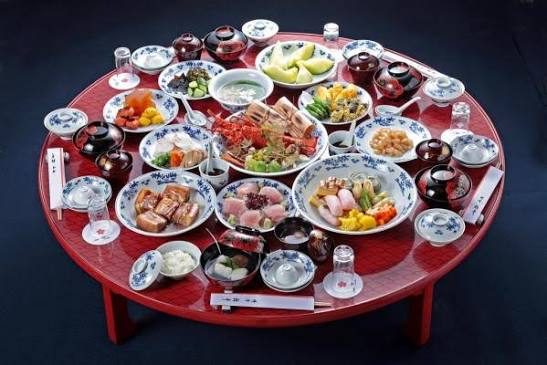
Shippoku — wakaran around a round table
FactShippoku cuisine is Nagasaki's distinctive hospitality meal, in which diners gather around a round table and share dishes served on large platters. It adds Chinese and Western elements to Japanese cuisine, and included dishes rare in Japan at the time, such as kakuni (braised pork belly, or "Dongpo pork") and other pork dishes.
LegendAccording to tradition, a shippoku meal begins with the hostess greeting the guests with "O-hire wo dozo" ("please have the fin"). Only after everyone has taken the first course, a clear soup called o-hire, does the banquet begin. The custom is said to mean "we serve each guest a soup made using one whole sea bream fin."
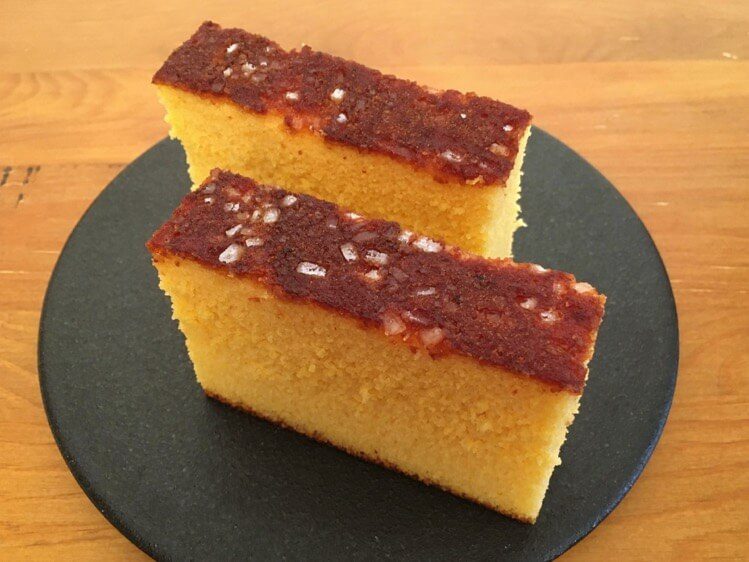
Castella — a sweet from Portugal
LikelyCastella is thought to have been based on a cake introduced by the Portuguese, then adapted in Nagasaki to Japanese tastes. The name is generally believed to come from the Castile region of Spain. Some of Nagasaki's long-established shops trace their founding back to the early Edo period.
Where is the "Turkey" in Turkish rice?
"Toruko raisu" (Turkish rice) is a Nagasaki Western-style dish that puts pilaf, spaghetti and a pork cutlet on one plate. Theories about the name vary — from Turkey as the bridge between East and West, to a tricolour flag — and nothing is certain.
A milkshake you "eat"
Nagasaki's milkshake is not a drink but a sherbet-like treat made with finely crushed ice, eaten with a spoon. It has long been loved as a reward after climbing the slopes in summer.
Butterfly effect: the Sugar Road
Through Dejima and the Chinese Quarter, huge amounts of sugar entered Nagasaki. The Nagasaki Kaido highway, running from Nagasaki to Saga and Kokura, later came to be called the "Sugar Road," and a culture of confectionery took root along its route. Castella, too, is a sweet that grew up along this road of sugar.
Main sources: Shikairo, "The Origin of Champon" / City of Nagasaki, "Nagasaki's Food Culture" / Sugar Road Liaison Council