Home / A Harbour of Slopes
00 — ORIGIN
A Port Town of Slopes and Inlets
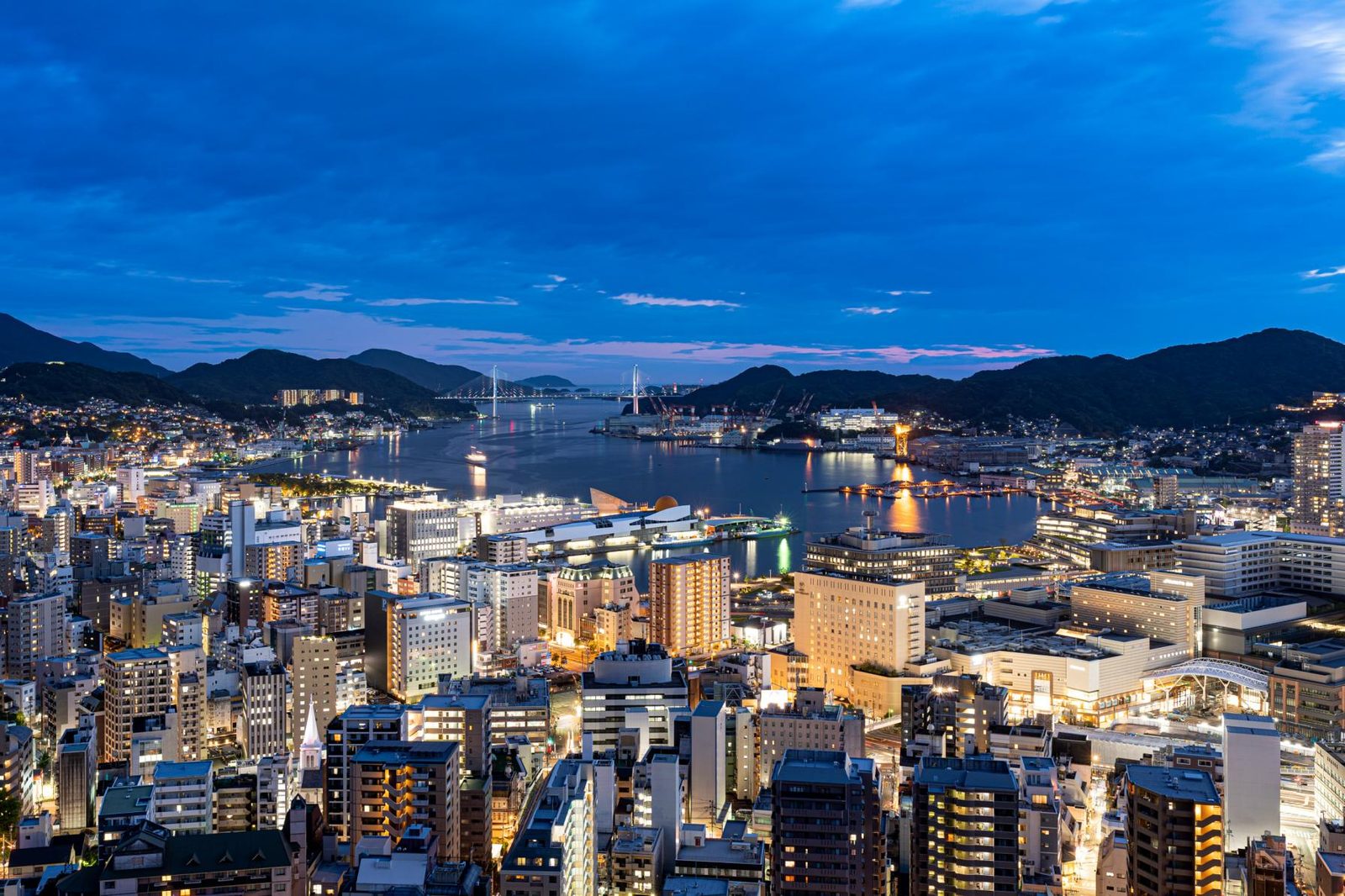
Nagasaki sits on a long, narrow inlet with almost no flat land. How did a place so hard to live in become the Japanese port closest to the rest of the world? We trace the history of its slopes and land reclamation, starting from the port's opening in 1571.
Labels: Factdocumented Likelysupported by most sources Legendoral tradition Urban legendlocal lore and rumour
Ideal for ships, hard for people
Nagasaki harbour is a long, narrow inlet reaching northeast from the open sea. Its narrow mouth keeps out the ocean swell, and the water stays deep all the way in. It was a superb natural harbour, where large sailing ships could safely come in close to shore.
On the other hand, the land around the harbour rises straight into mountain slopes. Mt. Kazagashira towers to the east and Mt. Inasa to the west, and the only flat ground was a small patch at the river mouths. This is why Nagasaki's houses climb the hillsides in terraces.
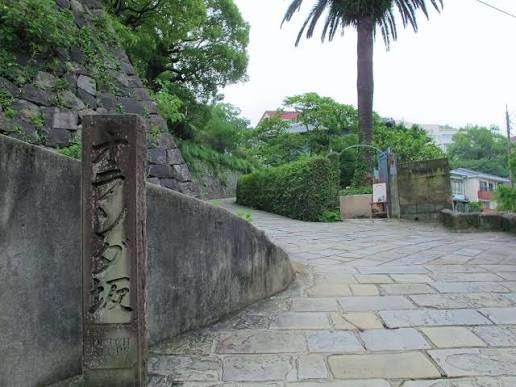
Look here: the stairways of a "hillside city"
Narrow stone stairways that no car can use run all through the city's residential areas. People carrying their shopping up the steps, and postal motorbikes working their way up and down, are an everyday sight in Nagasaki. The lights spread across these slopes are what create the famous night view from Mt. Inasa.
1571: a town rises on a cape
FactIn the mid-16th century, Portuguese ships were calling at Hirado, Yokoseura, Fukuda and elsewhere. Then, in 1571 (Genki 2), Nagasaki was opened as a port under the Christian daimyo Omura Sumitada, and Portuguese ships sailed in. Six new town blocks were laid out on the cape jutting into the harbour. The area around today's prefectural office marks the tip of that cape.
FactIn 1580, Omura Sumitada donated Nagasaki and Mogi to the Society of Jesus — an extraordinary event in which Japanese land came under the control of a foreign religious order. Toyotomi Hideyoshi later took it back and made Nagasaki his direct holding. From then on, throughout the Edo period, Nagasaki was a shogunate-controlled territory (tenryo) governed by the Nagasaki Magistrate.
The name "Nagasaki"
LikelyThere are several theories about the origin of the name "Nagasaki." One holds that it comes from the Nagasaki clan (such as Nagasaki Jinzaemon Sumikage), who ruled the area; another, that it comes from the landscape itself — a long cape (naga = long, saki = cape). The clan's name may itself have come from the landscape, and which came first remains unclear.
A town that grew by filling the sea
With too little flat land, Nagasaki has been reclaiming land from the sea since the Edo period. Dejima was one of the first examples. Harbour works continued the reclamation after the Meiji era, and Dejima, which once floated in the sea, has now been completely absorbed into the city.
Butterfly effect: no flat land, so it connected with the world
For a warlord of the Sengoku period, an inlet with little flat land — no room for a large castle town — was not an attractive prize. Perhaps that is exactly why there was room for the Portuguese, who only wanted a harbour, and a Christian daimyo to join hands. A landscape hard to live in gave birth to a port open to the world.
Main sources: City of Nagasaki, "History of Nagasaki City" / Nagasaki Prefecture, "History of Nagasaki Prefecture" / Nagasaki-ken no Rekishi (History of Nagasaki Prefecture; Yamakawa Shuppansha)