Home / Dejima, the Fan-Shaped Island
01 — DEJIMA
Dejima — The Fan-Shaped Artificial Island
About 1.5 hectares — roughly two football pitches. For 218 years, Europe existed on this fan-shaped island. Yet it was not originally built for the Dutch at all: it was built to confine the Portuguese.
Labels: Factdocumented Likelysupported by most sources Legendoral tradition Urban legendlocal lore and rumour
An island for the Portuguese
FactDejima is an artificial island whose construction began in 1634 and was completed in 1636. Its purpose was to gather the Portuguese, who had been living scattered around the town, into one place and prevent the spread of Christianity. The cost of construction was paid by Nagasaki's leading merchants. Known as the "Dejima machinin" (Dejima townsmen), they collected rent from the Portuguese once the island was finished.
But in 1639, just three years after completion, the shogunate banned Portuguese ships from coming to Japan. Dejima was left empty.
FactSo in 1641, the Dutch trading post at Hirado was moved to Dejima. From then until the port opened to free trade in 1859, this tiny island was Japan's only gateway for trade with Europe.
Life on the island
Usually only a dozen or so Dutchmen lived on Dejima: the chief of the trading post (the kapitan), a physician, clerks and others. A single bridge linked the island to the town, and all comings and goings were strictly controlled. The Dutch could not freely go into town, and the only Japanese allowed onto the island were officials, tsuji (interpreters), merchants and others with permission.
Even so, records and pictures show that the residents played billiards, kept cattle and pigs, and grew Western vegetables inside the island. LikelyIt is also said that Dejima was where games like billiards and badminton were first played in Japan.
Look here: the Kapitan's Room and Mini Dejima
Restored Dejima is lined with buildings such as the "Kapitan's Room," once the residence of the chief of the trading post. "Mini Dejima," near the centre of the island, is a 1:15 scale model of Dejima as it was in the early 19th century. At a glance you can see the whole fan-shaped island and how it was connected by a single bridge.
The "Oranda fusetsugaki" — a gateway for world news
FactEvery time a Dutch ship arrived, the chief of the trading post submitted a report on overseas events to the shogunate. These were the "Oranda fusetsugaki" (Dutch news reports). Even in the era of so-called national seclusion, the shogunate kept track of affairs in Europe and Asia through these reports. News of the Opium War, and advance warning of Commodore Perry's arrival, both reached Edo by way of Dejima.
An island buried by land, an island reborn
FactOnce the port opened, Dejima's role came to an end. Harbour improvement works in the Meiji era filled in the waters around it, joining Dejima to the mainland and burying its fan-shaped outline within the city.
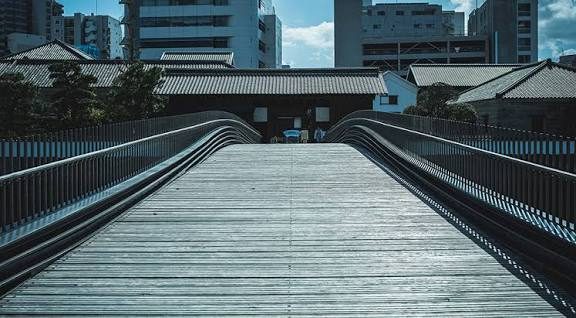
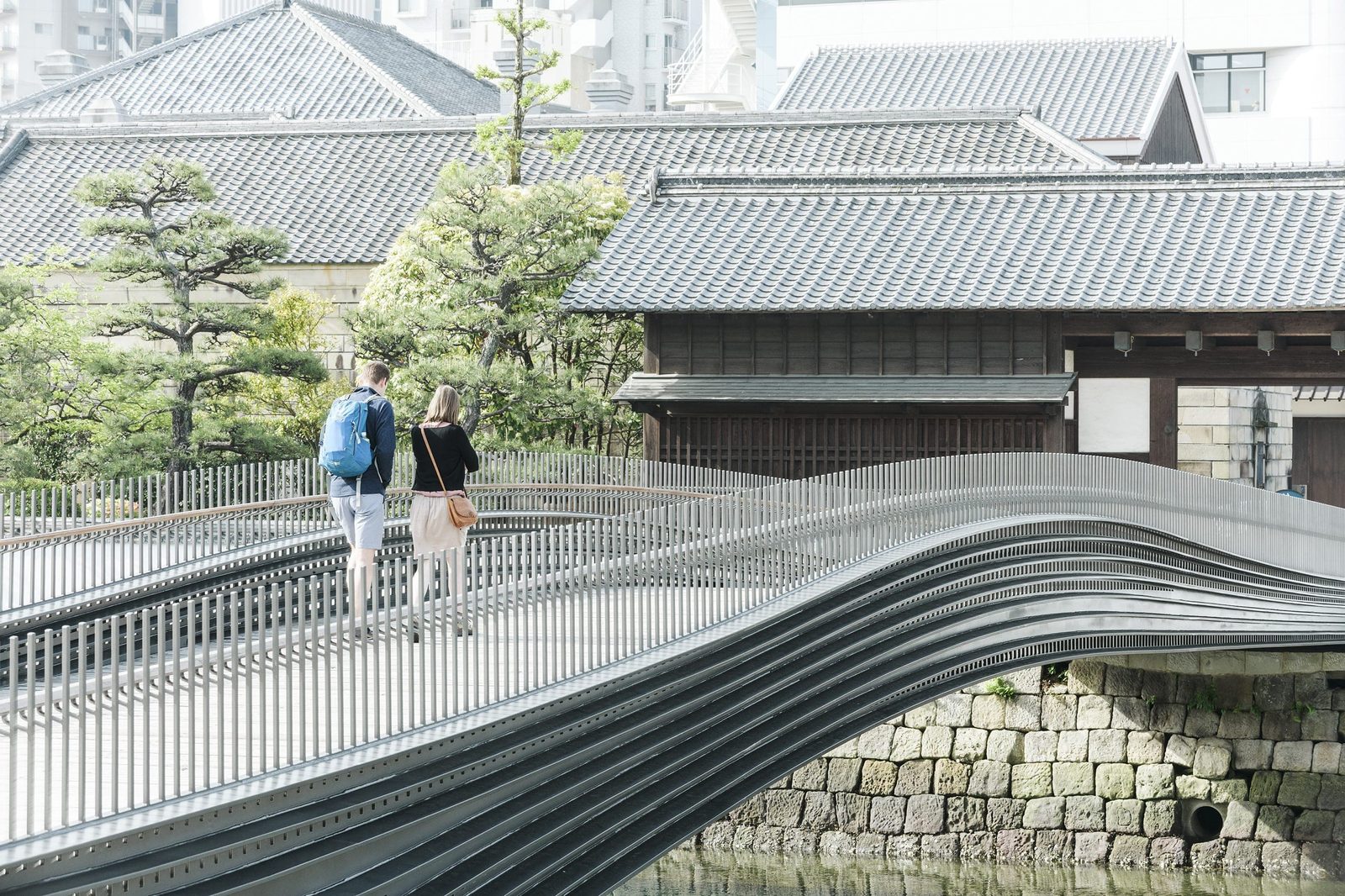
The City of Nagasaki began work to restore Dejima in 1951, and full-scale restoration has been underway since 1996. In 2017, the Omotemon Bridge was built, once again linking the island to the opposite bank for the first time in about 130 years. The long-term goal of the plan is one day to surround Dejima with water again, making it an island once more.
"Its shape was decided by opening a fan"
A story tells that when the shogun asked what shape the island should be, an official opened a folding fan to show him. The tale is widely known, but there is no reliable record of it (see the Legends room).
A shape that fits the terrain
The generally accepted view is that the fan shape resulted from efficiently creating land in a limited space, following the shoreline and the tidal currents.
Main sources: City of Nagasaki, official Dejima website / Materials from the City of Nagasaki Dejima Restoration Office / Nagasaki Customs, "Exploring History: The Dejima Site"