Home / Dutch Learning
05 — DUTCH LEARNING
Dutch Learning and Study in Nagasaki
In the later Edo period, young people who were serious about studying medicine or astronomy set their sights on Nagasaki. The school of Siebold, the Dejima physician; his daughter Kusumoto Ine, who studied Western medicine; the Naval Training Center; Japan's first Western-style hospital. Nagasaki was Japan's "classroom."
Labels: Factdocumented Likelysupported by most sources Legendoral tradition Urban legendlocal lore and rumour
"Nagasaki yugaku" — going to Nagasaki to study
Studying Western learning through books written in Dutch was called rangaku ("Dutch learning"). The books could be read in Edo too, but only in Nagasaki could you learn directly from a Dutch physician and handle real instruments and medicines. Young people hoping to become doctors or scholars gathered in Nagasaki from all over the country, and this was called "Nagasaki yugaku" (study in Nagasaki).
The bridge between the two worlds was the tsuji, the Dutch interpreters. They were not only interpreters for trade but also scholars, who compiled dictionaries and translated works on medicine and astronomy.
Siebold and the Narutaki-juku
FactIn 1823, the German physician Siebold arrived in Japan as doctor to the Dutch trading post on Dejima. The following year, 1824, he opened the Narutaki-juku school at Narutaki on the outskirts of Nagasaki, where he treated patients while teaching medicine and natural history to students who came from all over Japan. Many of his students went on to distinguished careers in Dutch learning and medicine.
FactBut in 1828, as Siebold was preparing to return home, maps of Japan and other items that were forbidden to be taken abroad were found among his belongings (the Siebold Incident). Siebold was banished from the country, and many of those involved were punished, starting with the shogunate official who had given him the maps.
Kusumoto Ine — a woman doctor trained in Western medicine
FactKusumoto Ine was the daughter of Siebold and a Nagasaki woman, Kusumoto Taki (O-Taki). She was just two years old when her father left Japan. As she grew up, Ine studied obstetrics and other fields of medicine under her father's former students, and became known as the first woman in Japan to have trained in Western medicine as a doctor. She later opened a practice in Tokyo and is said to have assisted at births in the Imperial Court.
Ine's life is portrayed in Yoshimura Akira's novel Fon Shiiboruto no Musume (Von Siebold's Daughter) (see Further Reading).
The Naval Training Center and the Yojosho
FactAt the end of the Edo period, Nagasaki became an even bigger "school." In 1855, with Dutch help, the shogunate opened the Nagasaki Naval Training Center, where students learned to handle warships, build ships and carry out surveys. Among the trainees were Katsu Kaishu and Enomoto Takeaki.
FactFrom 1857, Pompe, a surgeon in the Dutch navy, taught medicine, and in 1861 the Yojosho was opened. It is considered Japan's first modern Western-style hospital, and its lineage continues today in the Nagasaki University School of Medicine.
Look here: the Siebold Memorial Museum and the Narutaki-juku site
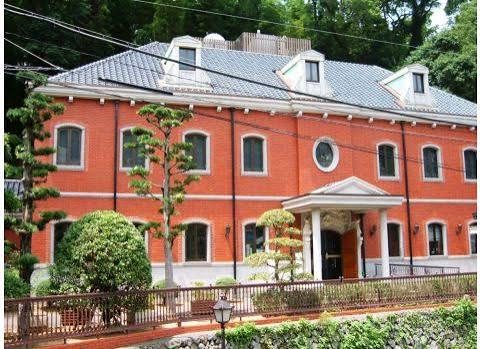
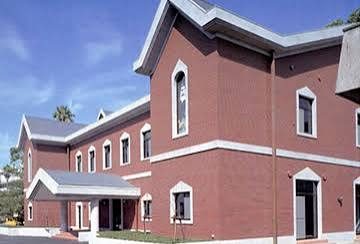
The site of the Narutaki-juku is a National Historic Site, with the Siebold Memorial Museum next door. The museum building is designed to evoke a Dutch merchant's house. Stand at the school site halfway up the slope, and you can picture the young people who came to this valley from all over Japan.
Butterfly effect: from a tiny island to medicine nationwide
There were usually only one or two physicians on Dejima. Young people from all over Japan gathered around that one doctor and carried what they learned back to their home towns. One of the triggers for the spread of vaccination against smallpox in Japan was cowpox vaccine that arrived in Nagasaki. A single doctor on Dejima redrew the map of Japanese medicine.
Main sources: City of Nagasaki, "Siebold Memorial Museum" / Nagasaki University School of Medicine, "History of the School of Medicine" / Nagasaki Prefecture, materials on "Nagasaki yugaku"