Home / Legends and Urban Legends
10 — LEGENDS
Legends and Urban Legends
A heart-shaped stone hidden in the stone walls by Meganebashi, the origin of the name "Shianbashi," why Dejima is shaped like a fan, the ear-splitting firecrackers of Shoro Nagashi. Here we gather the stories told and retold in Nagasaki, marking where they part ways with history.
Labels: Factdocumented Likelysupported by most sources Legendoral tradition Urban legendlocal lore and rumour
Meganebashi and the heart stone
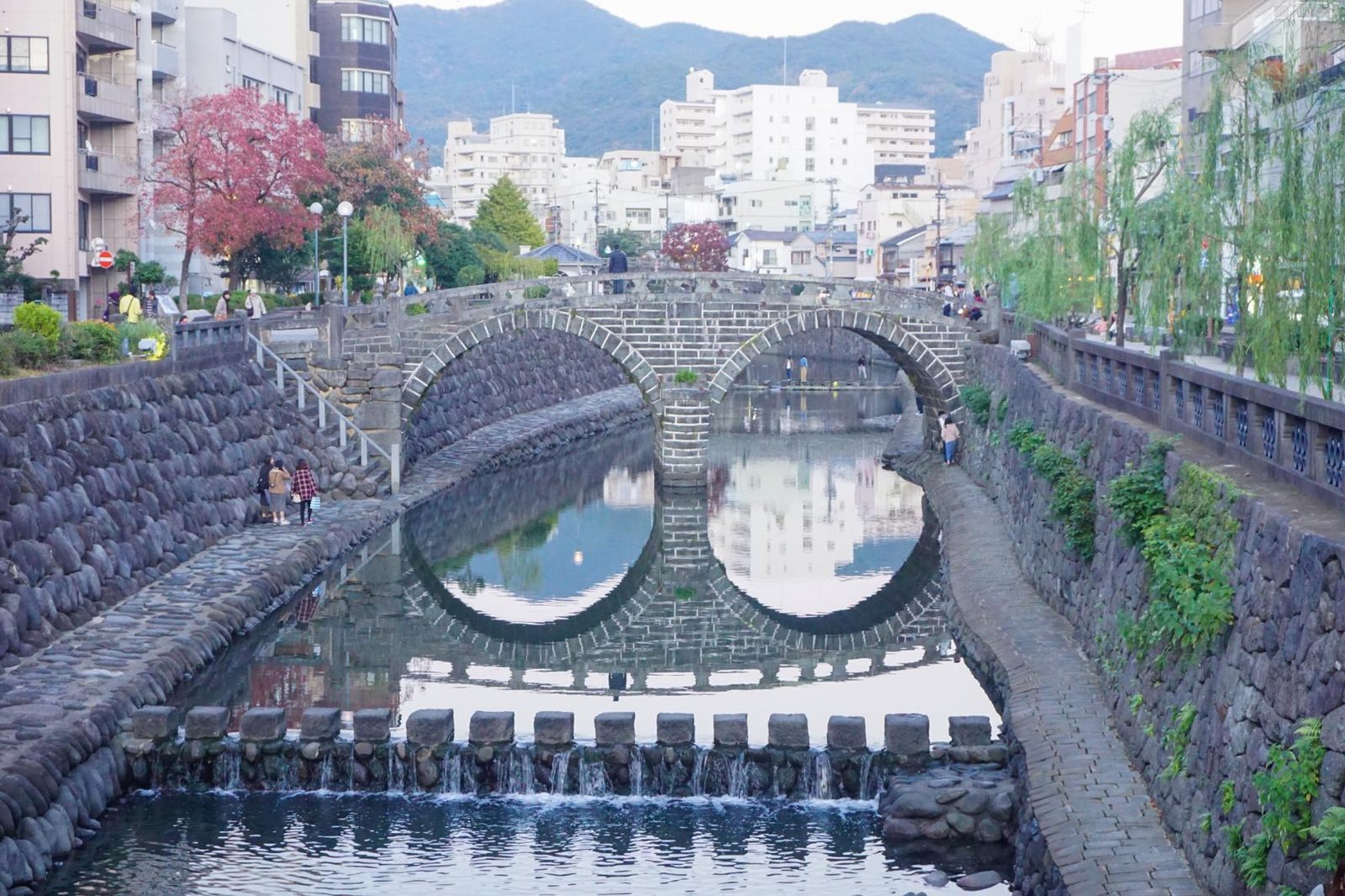
FactMeganebashi (Spectacles Bridge), spanning the Nakashima River, is a stone arch bridge built in 1634 by Mokusu Nyojo, a monk of Kofukuji temple. Its name comes from the way its two arches, reflected in the water, look like a pair of spectacles. Apart from the Tenjo Bridge in Okinawa (the former Ryukyu Kingdom), it is considered the oldest stone arch bridge in Japan.
FactIn the Great Nagasaki Flood of 1982, the stone bridges of the Nakashima River were badly damaged, and about half of Meganebashi was destroyed. Many of the stones that were swept away were gathered up downstream and used in its restoration.
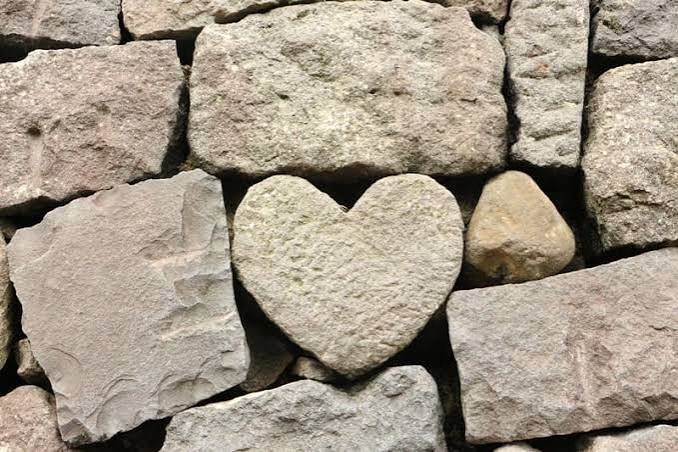
Urban legendSet into the stone embankment of the river near Meganebashi is a heart-shaped stone. People say that "if you find it, your love will come true" or "you'll be happy," and you often see visitors walking along the wall searching for it. There are various stories about when, and by whom, it was put there, and nothing is certain.
Local lore: a fact check
The origin of the name "Shianbashi"
The well-known story goes that men would stand on this bridge pondering (shian) whether to go on to the pleasure quarter of Maruyama or turn back. The bridge itself is gone, but the name lives on in a tram stop and a place name.
Maruyama, one of the great pleasure quarters of the Edo period
Maruyama was ranked alongside Yoshiwara in Edo and Shimabara in Kyoto. Its women were even permitted to visit the Dutch on Dejima and the Chinese in the Chinese Quarter.
"Dejima's shape was decided by opening a fan"
The story goes that an official, asked what shape the island should be, opened a folding fan in front of the shogun. It is often retold in guides to Dejima.
A result of the terrain and tidal currents
There is no reliable record, and the generally accepted view is that the fan shape resulted from building land to fit the shoreline and the river's flow (see the Dejima room).
"Shoro Nagashi is a quiet ceremony"
Hear "Shoro Nagashi" (the floating of spirit boats), and many people imagine a solemn scene of lanterns set adrift on a river. In Nagasaki, it is nothing like that.
Amid firecrackers and gongs
On the night of 15 August, families and friends pull spirit boats carrying the souls of the departed through the streets, setting off firecrackers as they go. It is so noisy that earplugs are essential — a cheerful send-off for the dead.
"Motte koi!" at Kunchi
FactNagasaki Kunchi is said to have begun in 1634, when two courtesans of Maruyama, Takao and Otowa, performed the dance-song "Komai" as an offering at Suwa Shrine. Every year from 7 to 9 October, the neighbourhoods on duty (odori-cho), whose turn comes round once every seven years, present their performances. The shouts the audience uses in place of "encore" — "Motte koi!" ("Bring it back!") and "Shomo yare!" ("We want more!") — are a Kunchi signature.
What the legends tell us
The heart stone is a new piece of lore; the fan story is a tradition going back to the Edo period. In every age, Nagasaki's legends seem to carry the playful spirit of a city that never stopped mingling with the wider world.
Main sources: City of Nagasaki, "Meganebashi" / Nagasaki Traditional Performing Arts Promotion Association, "Nagasaki Kunchi" / City of Nagasaki, "Shoro Nagashi"