Home / Crafts
08 — CraftsA town that casts iron,
spins wool and dyes with purple root.
Morioka's crafts were refined not as souvenirs but as tools for getting through harsh winters. Ironware that began with an artisan invited from Kyoto by the lord; handspun woolens that after the war made the town one of Japan's leading producers; and an ancient purple dye. Welcome to Morioka, the town of handwork.
From a lord's tea kettle to Parisian teapots.
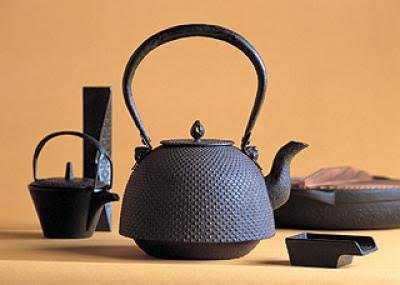
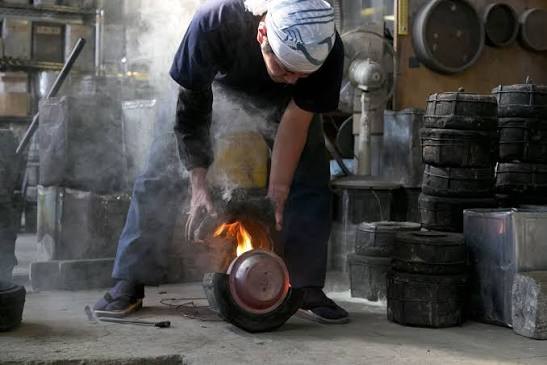
Nanbu ironware is said to have begun in the mid-17th century, when the Morioka lord Nanbu Shigenao invited the kettle maker Koizumi Nizaemon from Kyoto to cast kettles for the tea ceremony. The Morioka area had everything casting required: good iron sand, sand and clay for molds, charcoal for fuel and lacquer for finishing.
In the 18th century the tetsubin — an iron kettle with spout and handle — was devised to make the tea kettle easier to use. Its surface pattern of neatly ranked little bumps, called arare (hail), became its signature. The domain protected the craft, and Morioka ironware spread across Japan as a domain specialty.
In 1975 Nanbu ironware was among the very first items designated a Traditional Craft of Japan. In recent years colorful teapots in red, blue and pink have become popular, especially in Europe, and are sold in Parisian tea shops.
Water boiled in an iron kettle is said to taste mellower, and some Morioka households still use one daily. After use, pour out the water and let the residual heat dry the inside; never scrub the interior with detergent.
A town that spins and weaves wool by hand.
Homespun is woolen cloth woven by hand from hand-spun yarn. Originally a British cottage craft, it took root in Iwate along with sheep farming from the Meiji era, and Morioka is still known as one of Japan's leading centers of homespun.
After the war, influenced in part by the mingei folk-craft movement, Morioka workshops continued to make light, warm fabrics from plant-dyed wool. For a single scarf or jacket, every step — washing, dyeing, carding, spinning, weaving and fulling — is done by hand.
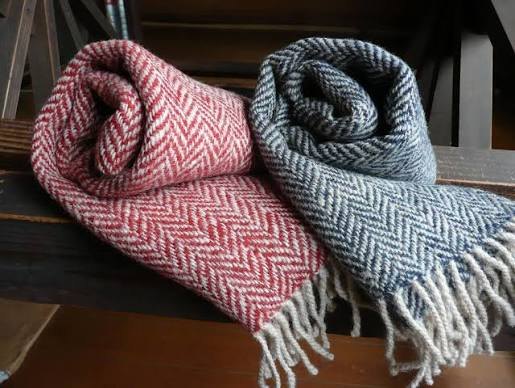
Homespun is said to “become part of your body the more you wear it”, and stories of parents and children wearing the same jacket are not unusual. Some Morioka workshops offer tours and small craft workshops.
Shikon-zome: dyeing with gromwell root.
Purple has long been the noblest of colors in Japan. Shikon-zome dyes it using the roots of the purple gromwell plant (murasaki). The Nanbu region has an old tradition of this dyeing, and “Nanbu purple” and “Nanbu madder red” were known as domain specialties.
The process — dyeing, drying and dyeing again many times, then resting the cloth to settle the color — takes a long time. Combined with shibori tie-dyeing as “Nanbu shibori”, its deep, calm purples are still carried on as a Morioka tradition.
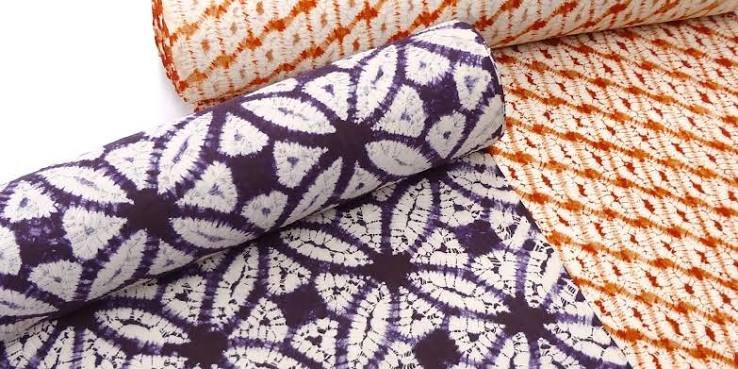
Wild purple gromwell is now almost never seen and is listed as endangered. Alongside efforts to cultivate and preserve the plant, passing on the dyeing technique is a challenge.
Zaimoku-chō and “Kenji's shop”.
From Morioka Station, instead of crossing Kaiun Bridge, walk north along the Kitakami River to the Zaimoku-chō shopping street. Here, beside Kōgensha, shops sell folk crafts, ironware and lacquerware, and on Saturdays from April to November the evening market “Yo-ichi” draws crowds of locals.
At the entrance to Zaimoku-chō is a bench with a statue of Miyazawa Kenji, where people sit beside him for photos — a street where you can savor the air of Kenji's “Ihatov” among handmade goods.
Jōbōji in Ninohe, northern Iwate, produces the majority of Japan's domestic lacquer. Many Morioka craft shops carry Jōbōji lacquerware, so you can compare northern Tōhoku's ironware, lacquer and homespun in one visit.