Home / Domain
02 — The Nanbu DomainA domain at the edge of the realm
that never stopped standing its ground.
The Morioka (Nanbu) domain began on the last battlefield of Hideyoshi's unification, and reached the end of the Edo period carrying a bitter feud with Tsugaru, an inflated rank and one of the greatest peasant uprisings in Japanese history. Behind the elegant castle town lies a slightly bitter story of pride and strain.
The last battle of unification was fought in the far north.
Textbooks say Hideyoshi completed the unification of Japan when the Hōjō of Odawara fell in 1590. But the following year, another major war broke out at the northern end of the country: the Kunohe Masazane Rebellion.
It began as a succession dispute in the Nanbu house. Kunohe Masazane, a powerful Nanbu kinsman famed for his valor, resented Nanbu Nobunao becoming head of the clan and rose in 1591 with about 5,000 men. Unable to put it down alone, Nobunao appealed to Hideyoshi.
Hideyoshi sent a great army under Gamō Ujisato, Asano Nagamasa, Ii Naomasa and others — tens of thousands strong by most accounts. Masazane held Kunohe Castle bravely until, through a priest from a nearby temple, he was offered his garrison's lives in exchange for surrender. He came out; the promise was broken. Masazane and his officers were executed, and those left in the castle are said to have been put to the sword.
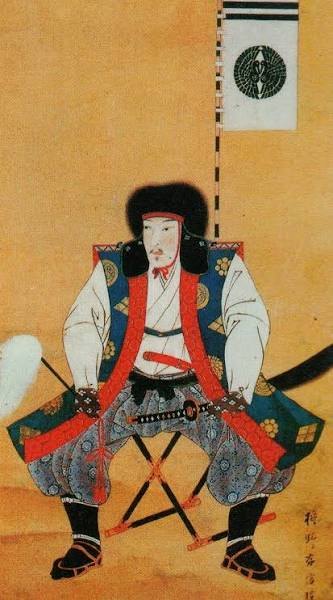
The Kunohe Rebellion was the last large-scale war fought by the Toyotomi regime within Japan, and is often called “the last battle of unification”. Takahashi Katsuhiko's novel Ten o Tsuku, with Masazane as its hero, remains popular as a view of the Sengoku period from the Tōhoku side.
After the rebellion, Nanbu Nobunao renamed Kunohe Castle “Fukuoka Castle” and made it his base. Then, with advice from Gamō Ujisato and others he had come to know in the war, he decided to move to Kozukata in the center of his lands. The birth of Morioka grew directly out of this war.
A feud with Tsugaru that lasted over two centuries.
To the Nanbu, the Tsugaru were not just neighbors. Tsugaru Tamenobu was considered a Nanbu kinsman and vassal — from the Nanbu side, a traitor who had stolen his lord's land and declared independence. Because Hideyoshi recognized that independence, Nanbu anger had no outlet, and the grudge smoldered throughout the Edo period.
It exploded in 1821 with the Sōma Daisaku affair. The trigger was a reversal of rank. In the early 19th century, partly for its service guarding Ezo, the Hirosaki (Tsugaru) domain's official rating was raised and its lord Tsugaru Yasuchika received a higher court rank. Meanwhile, the young lord of Morioka held a low rank — the former vassal house now sat above its old master.
Outraged, the Morioka samurai Shimotomai Hidenoshin plotted to ambush Yasuchika at a mountain pass in Akita territory on his way home from Edo. The plan leaked; Yasuchika changed his route and escaped. Hidenoshin was later caught hiding in Edo and executed the following year.
Under his alias “Sōma Daisaku”, Hidenoshin became the hero of storytelling and theater, cheered by the commoners of Edo as a loyal retainer avenging his lord's humiliation — some even compared him to the Forty-Seven Rōnin.
The Nanbu–Tsugaru rivalry is still joked about. Even within Aomori Prefecture, the Nanbu region (around Hachinohe) and the Tsugaru region (around Hirosaki) are said to differ in dialect and temperament, and “Nanbu and Tsugaru don't get along” is something most people in Tōhoku have heard at least once.
“200,000 koku” was both an honor and a burden.
Around the same time Tsugaru rose in rank, in 1808, the Morioka domain's nominal rating was raised from 100,000 to 200,000 koku, officially for its service guarding Ezo against Russian ships. On paper, a great promotion.
But the actual harvest did not double. A higher rating brought higher expectations of ceremony, military service and obligations to the shogunate. For a northern domain already battered by cold summers and famine, the “200,000 koku” signboard only deepened its financial trouble — and the burden fell on its farmers.
The Morioka domain was repeatedly hit by crop failures caused by the yamase, a cold easterly wind in summer, and the Tenmei and Tenpō famines killed many. Despite river transport on the Kitakami, the marine products of the Sanriku coast and mineral resources, unstable farming remained the domain's fundamental weakness.
The day 16,000 people crossed the border.
In 1853 — the year Perry's ships arrived at Uraga — the Sanhei district on the Morioka domain's Pacific coast saw one of the largest actions in the history of Japanese peasant uprisings: the Sanhei Uprising.
Unable to bear heavy levies and new taxes, farmers marched south gathering people village by village, until they numbered about 16,000. Their destination was not Morioka Castle but Sendai territory across the border. Petitioning a neighboring domain over the head of one's own lord was a life-risking tactic.
About half succeeded in crossing to Tōni (now part of Kamaishi) in Sendai territory. Among their demands was an astonishing one: that the Sanhei district be made shogunal land, or be transferred to Sendai. In effect, they declared they were giving up on their domain.
The outcome was a near-total victory for the uprising. The Morioka domain accepted almost all the demands except the return of a former lord — and promised not to punish the leaders. Moving a domain through organization and negotiation rather than force, the Sanhei Uprising is still highly regarded today.
Compare a human being with fields: a human is an udumbara flower that blooms once in three thousand years; fields are like gravel in a stony river.Miura Meisuke, prison notes to his family (English rendering)
Miura Meisuke, one of the leaders, was later arrested and died in prison in Morioka. His voluminous letters from jail express a remarkably modern view: life comes first, fields can always be replaced.
Was the lord swapped?
The Morioka domain has one more story, long told in hushed tones. Around the time of the Sōma Daisaku affair, the young lord Nanbu Toshimochi died suddenly. Fearing the domain would be abolished, the story goes, officials hid his death and reported another member of the Nanbu family to the shogunate as “Toshimochi” — the tale of the substitute lord.
In that era, a lord dying without a registered heir could doom his house, so official records and reality often diverged. This episode in Morioka is well known in local history as a desperate measure to save the domain.
Naturally, the details of the substitution and the people involved do not appear in official domain records; parts of the story come from later research and tradition. Please bear in mind that accounts differ.