Home / Food
07 — FoodThree noodles
from three different places.
Wanko soba, jajamen and Morioka reimen — the “three great noodles of Morioka” — have completely different roots: one from a legend of a Nanbu lord, one from Manchuria, one from the north of the Korean Peninsula. This northern castle town set three different histories on one table.
The hardest part is saying no to more.
The server calls out “hai, janjan!” and “dondon!” while flicking mouthful after mouthful of soba into your bowl. It doesn't stop until you cover the bowl with its lid. That's wanko soba — wanko meaning “bowl” in the local dialect.
Its origins are disputed. One popular story, the Hanamaki theory, says that in the Edo period a Nanbu lord stopping in Hanamaki was served soba in small bowls, liked it and kept asking for more. Another, the Hara Takashi theory, says it spread after Hara, visiting home, declared “soba is best in a wanko”.
At its root is said to be the custom of otebachi: serving soba to crowds of guests at village festivals, weddings and funerals. To serve hot soba to many people, serving small amounts one after another made sense.
Roughly 10 to 15 bowls equal one regular bowl of soba. Many restaurants give a certificate for 100 bowls or more; the trick is to pace yourself with side dishes such as condiments, sashimi and grated yam. Mind you, many locals say wanko soba is “for tourists and banquets”, and on ordinary days slurp chilled kake soba instead.
Noodles from Manchuria, and the last bowl: chītantan.
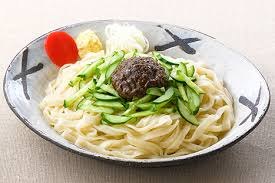
Flat, udon-like noodles topped with meat miso, cucumber and green onion, seasoned to taste with chili oil, vinegar and grated garlic and mixed well — Morioka jajamen has its roots in Chinese zhajiangmian.
It is said to have begun with Takashina Kanshō, who had lived in Manchuria before the war and could not forget the zhajiangmian he ate there. After the war he opened a food stall in Morioka — the forerunner of the famous restaurant Pairon. Adapted over time to Japanese tastes, it became something distinct from both Chinese zhajiangmian and Tokyo's jajamen: “Morioka jajamen”.
Every local knows the finish. Leave a little noodle on the plate, crack a raw egg into it and stir, then hand it to the staff; they'll add hot noodle water and more meat miso to make a soup. This is chītantan (鶏蛋湯, egg soup). Season with salt, pepper and chili oil, and enjoy it to the last drop — the Morioka way.
A northern cook tried to recreate the noodles of home.
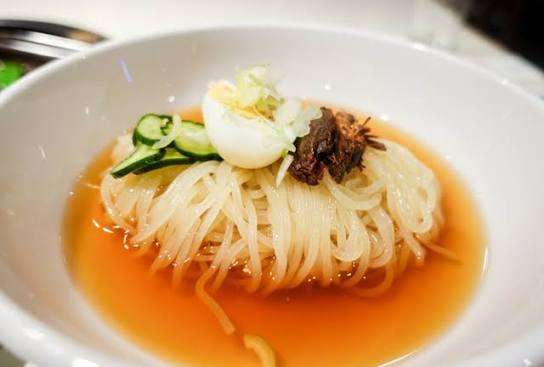
Chewy, translucent noodles, beef-bone broth, kimchi and seasonal fruit. Morioka reimen is said to have begun in 1954 at Shokudōen, a yakiniku restaurant in Morioka, with a bowl served by Aoki Teruhito (Yang Yong-chol), a cook from Hamhung in the north of the Korean Peninsula.
He wanted to recreate the cold noodles of his hometown, but the same ingredients were unavailable. Using wheat flour and starch, he devised noodles extruded under pressure. First served as “Pyongyang reimen”, this uniquely evolved dish became known nationwide as Morioka reimen.
In Morioka it's standard to order the spiciness “betsu-kara” — kimchi on the side — so you can adjust the heat yourself. The fruit changes with the seasons — watermelon, pear, apple — and regulars enjoy guessing what will come.
Rolls filled to order.
Ask Morioka people about their soul food and some will name Fukuda Pan before any noodle. The shop displays big koppe-pan rolls and around fifty fillings; order, and the staff spread your choice on the spot.
Founder Fukuda Tomekichi was a pupil of Miyazawa Kenji. A yeast researcher, he founded the bakery in 1948 and created a large roll for Iwate University students, said to provide the calories of two bowls of rice and a bottle of milk.
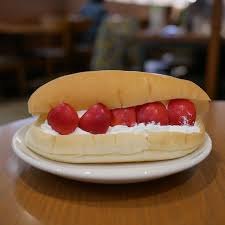
The undisputed favorite, said to account for about 30% of orders, is “an-butter” (sweet bean paste and butter). You can combine sweet and savory fillings, and when talk turns to “my usual combination”, Morioka people get surprisingly passionate.
Everyday Iwate flavors rarely found in guidebooks.
Nanbu senbei
Simple wheat crackers baked in round molds. Many people love the thin “ears” around the edge. Besides sesame and peanut versions, there are ones made to be simmered in senbei-jiru soup.
Hittsumi
A soup of wheat dough torn thin by hand and simmered with vegetables and mushrooms. The name comes from hittsumamu, “to tear off”. A home staple in cold months.
Ganzuki
A steamed, cake-like local sweet made with brown sugar and vinegar. The sesame or walnuts on top are said to resemble geese (gan) crossing the moon (tsuki).
Morioka's kissaten
Morioka is known for its many old-style coffee houses. From long-established house roasters to cafés with literary connections, places to linger over coffee still sustain the town's culture.