Home / Boshin War
03 — The Boshin War and Hara TakashiHow a “rebel” town
produced a prime minister.
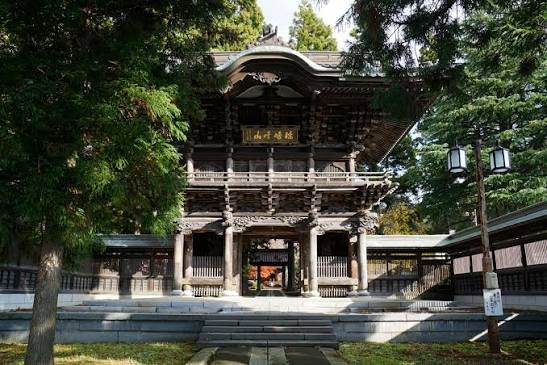
In 1869 a senior retainer committed seppuku at Hōonji temple in Morioka. Half a century later, at the same temple, a Morioka-born statesman declared that the Boshin War had been “nothing more than a difference of political views”. He was Hara Takashi, the “commoner prime minister” who refused every noble title. How did the town of the defeated send a man to the center of modern Japan?
After much hesitation, Morioka attacked Akita.
When the Boshin War began, the domains of northern Japan formed the Northern Alliance against the new government. Morioka joined, though opinion within the domain remained divided to the end. When neighboring Akita (Kubota) left the alliance and sided with the government, Morioka sent troops against it — commanded by the senior retainer Narayama Sado.
Narayama, who had observed events in Kyoto, is said to have deeply distrusted the Satsuma and Chōshū leaders. But the war had already turned in the government's favor, and Morioka soon surrendered. Branded a rebel domain, it was cut to 130,000 koku and ordered to move to Shiroishi, former Sendai territory.
Morioka was later allowed to return home on condition of paying the enormous sum of 700,000 ryō — a burden that broke its finances. In 1870, the domain surrendered its own status without waiting for the abolition of the domains the following year, one of the earliest “voluntary abolitions” in Japan.
The retainer took everything upon himself.
On the 23rd day of the sixth month of 1869, Narayama Sado committed seppuku at Hōonji in Morioka as the man responsible for the war. He was 39, and he died bearing the blame in place of his lord.
Flowers bloom, the willows bud / on a spring night — / what never changes / is the way of the warrior.Death poem attributed to Narayama Sado (English rendering)
The seasons turn and the flowers bloom, but the samurai's way does not change — a poem composed at the very moment the age stopped needing samurai.
At that time a boy born into a Morioka samurai family of senior-retainer rank was thirteen, watching his home domain's defeat. His name was Hara Kenjirō — later Hara Takashi. That a senior retainer of his home domain died bearing its guilt alone is often cited as leaving a deep impression on the young Hara.
Dramatic scenes such as the boy Hara watching Narayama's seppuku from near Hōonji spread through later biographies and fiction; whether any specific scene happened is unclear.
The man who took an insult as his name.
After the Boshin War, a phrase mocking the north spread: “Shirakawa ihoku hitoyama hyakumon” — north of the Shirakawa barrier, a whole mountain is worth only a hundred mon. In other words, Tōhoku was worthless land.
Hara Takashi took his pen name, Issan (“one mountain”), from this very phrase. Taking the insult hurled at him and wearing it openly — it is said to have expressed the defiance of a man from a “rebel” town, and a quiet resolve to prove them wrong.
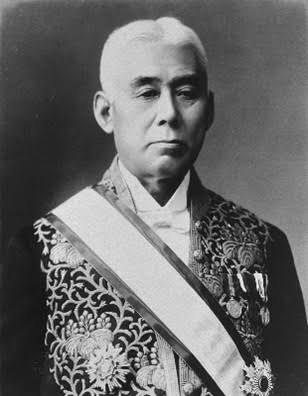
Hara set up his own household as a commoner, then worked as a journalist, diplomat and businessman before entering politics. In 1918 he became the first prime minister who sat in the House of Representatives without a noble title, and formed Japan's first full-fledged party cabinet, filling every post except the army, navy and foreign ministries with party members. Because he refused a peerage to the end, people called him the “commoner prime minister”.
Morioka people sometimes affectionately call him “Hara Kei” (the correct reading is Hara Takashi). At Motomiya in the city, part of his birthplace and a memorial museum remain, introducing his motto hōjaku — to serve others without seeking reward.
“The Boshin War was merely a difference of political views.”
In September 1917, a memorial service marking fifty years since the Boshin War dead was held at Hōonji. Its chief mourner was Hara Takashi himself, then president of the Seiyūkai and prime minister the following year. In the eulogy he read, he declared:
The Boshin War was merely a difference of political views.Hara Takashi, eulogy for the 50th memorial of the Boshin War dead (1917)
The war was not about who was right and who was a rebel — only a difference of political opinion.
Publicly rejecting the division between imperial army and rebels was Hara's way of consoling the people of his hometown, branded rebels for half a century — and Narayama Sado, who had died at Hōonji. At the temple of that seppuku, 48 years later. There could have been no better place.
The prime minister fell in a station designed by a Morioka man.
On 4 November 1921, Hara Takashi was stabbed to death by a young man at the Marunouchi south entrance of Tokyo Station — the assassination of a sitting prime minister. A marker still shows the spot.
Tokyo Station was designed by Tatsuno Kingo and Kasai Manji of the Tatsuno–Kasai office. Kasai was from Morioka, and in his hometown he left a bank headquarters by the same office, completed three years before Tokyo Station (today's Iwate Bank Red Brick Building). Morioka's prime minister fell in the station of Morioka's architect — an irony of history.
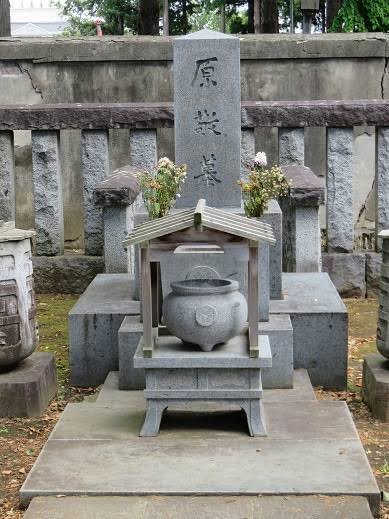
In his will, Hara asked that his grave bear no ranks or honors, only the three characters “Hara Takashi's grave”. His grave at Daijiji temple in Morioka is still strikingly simple, just as he wished.
Yoshimura Kan'ichirō of When the Last Sword Is Drawn.
Yoshimura Kan'ichirō, hero of Asada Jirō's novel Mibu Gishiden (filmed as When the Last Sword Is Drawn), is based on a real Shinsengumi member who left the Morioka domain. His image — a man wielding his sword to feed his family, torn between duty and survival — has moved countless readers.
Little is known about the historical Yoshimura, and much of the character is the author's invention. Still, the Morioka landscapes that recur in the story — Mt. Iwate, the Nakatsu River, the Nanbu dialect — have drawn many fans to visit the city.