
Just how many ramen shops are there in Japan?
A tally based on the "Economic Census" by the Ministry of Internal Affairs and Communications and others counted about 18,000 ramen shops nationwide as of 2016. But if you include Chinese restaurants where ramen is a main menu item, and food court stalls in stations and shopping centers, there are even more places to eat ramen. This chapter uses several statistics and surveys to look at ramen in numbers.
A Market That Grew 1.6 Times in a Decade
According to a survey by Teikoku Databank, a private credit research company (released July 2026), the market for ramen shops is expected to reach about 885.5 billion yen in fiscal 2025, a record high since fiscal 2010, the earliest year with comparable data. Compared with fiscal 2015 ten years earlier (541.8 billion yen), that is roughly a 1.6-fold increase.
The number of ramen chain shops run by the top 50 companies by sales reached 6,305 at the end of fiscal 2025, the most ever. After a temporary dip in fiscal 2020 due to the COVID-19 pandemic, the number has kept growing, led by the major chains.
Even so, the previous year's edition of the same survey (released July 2025) put the top three companies' share of sales at only about 25% (as of fiscal 2023). Unlike industries such as gyudon or hamburgers, where a handful of giants hold most of the market, ramen is still a business in which countless independent shops and small and midsize chains fight it out.
The "1,000-Yen Wall"
Even as the market grows, running a ramen shop is not easy.
Ramen's ingredients are wheat flour, pork bones and chicken carcasses, pork for chashu, green onions and nori, plus the gas and electricity to keep the broth boiling. Nearly all of them have gone up in price over the past few years. The "Ramen Cost Index" compiled by Teikoku Databank (tonkotsu ramen, Tokyo's 23 wards) rose to 141 in 2025, with 2020 set at 100, an increase of more than 40%.
Yet shops cannot raise ramen prices as much as they would like, because customers firmly feel that "ramen is something you eat for 1,000 yen or less a bowl." This psychological ceiling is called the "1,000-yen wall," and it has become a major challenge for the ramen industry. Ingredient costs rise, prices cannot follow, and profits are whittled away. It hits hardest at independent shops, which cannot buy ingredients cheaply in bulk the way the big chains do.
More Bankruptcies, a Polarizing Industry
By Teikoku Databank's count, ramen shop bankruptcies (legal liquidations with debts of 10 million yen or more) peaked at 75 in fiscal 2023, then fell for two straight years to 55 in fiscal 2025. However, most bankruptcies are at small or independent shops, and many closures are thought not to show up in the statistics. In Tokyo Shoko Research's tally (covering companies with debts of 10 million yen or more), ramen shop bankruptcies in calendar 2024 reached 57, the most since it began counting in 2009.
Meanwhile, 38.5% of ramen shops increased their profits in fiscal 2025, slightly more than the 34.8% whose profits fell. Popular shops whose customers accept price increases and large-scale chains are growing their profits, while others struggle. The ramen industry is said to be undergoing "polarization" into winners and losers.
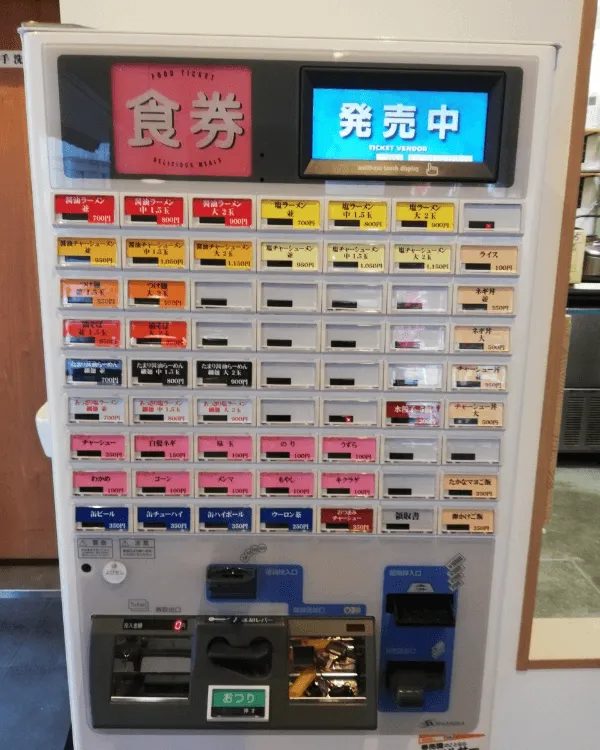
The Industries Behind a Bowl of Ramen
Behind every ramen shop stands a whole web of industries.
Noodle makers who make the noodles, meat suppliers who handle pork bones and chicken carcasses, soy sauce and miso breweries, companies that make menma, naruto and nori. Some manufacturers make concentrated broths and tare for commercial use, supporting chains and shops without the capacity to cook broth from scratch. Then there are companies that make bowls and other tableware, stockpots and dedicated noodle-boiling machines, and meal ticket vending machines. There are even ramen-specific job services and companies that help people open shops.
Add instant ramen, cup noodles, frozen ramen and the fresh and chilled noodles sold in supermarkets, and the ramen-related market spreads to many times the size of shop sales. Ramen is also a big "industry" centered on a single bowl.
Major Chains and Independent Shops
Ramen shops come in all sizes, from major chains with hundreds of shops across the country to tiny places run single-handedly by their owner.
Major chains make broth, tare and noodles at central factories and ship them to each shop, building systems that serve the same flavor at an affordable price at every location. They hold down costs by buying ingredients in bulk, and cope with labor shortages through meal ticket machines, tablet ordering and self-service. Recently, more chains are also focusing on opening shops overseas.
Independent shops, on the other hand, compete with the owner's carefully crafted flavor and a bowl you cannot get anywhere else. But when ingredient and utility costs rise, the burden squeezes their profits directly. The "polarization" Teikoku Databank points to can also be seen as a gap in staying power born of these differences in scale.
Where Is the "Ramen Town"?
Which town eats the most ramen? The Ministry of Internal Affairs and Communications' "Family Income and Expenditure Survey" includes an item for annual household spending on eating "chuka soba" out (households of two or more people, covering prefectural capitals and government-designated cities).
In the 2024 results, Yamagata City was first (22,389 yen), followed by Niigata City (16,292 yen), Sendai City (15,534 yen) and Toyama City (13,775 yen). Averaged over the three years from 2023 to 2025, Yamagata City spent 21,695 yen, well over twice the national average of 8,752 yen.
In Yamagata Prefecture, there is said to be a long-standing custom of ordering soba or ramen delivery to entertain visitors. The prefecture's lineup of distinctive ramen, including chilled "hiyashi ramen" in summer, Akayu's "spicy miso ramen" and Yonezawa's soy sauce ramen with thin, wavy noodles, also supports its status as a "ramen prefecture." Yamagata City and Niigata City are rivals that battle for first place almost every year.
At the other end, cities with low spending on eating ramen out include Kobe and Nagasaki. One likely reason is that they have many shops serving other noodle dishes or Chinese food, such as champon shops in Nagasaki and the restaurants of Chinatown in Kobe.
Ramen at Home
Apart from ramen eaten in shops, huge amounts of instant ramen are eaten at home. The World Instant Noodles Association estimates that Japan's demand for instant ramen in 2025 was 5.95 billion servings, fifth in the world by country and region (Chapter 3). Divided by Japan's population, that is about 48 servings per person a year, or nearly one a week.
Recently there has also been a rise in "frozen ramen," which delivers a popular shop's flavor frozen to your home, and in cup noodles supervised by famous shops. Ramen keeps expanding the ways it can be eaten: at a shop, made at home, or ordered in.
Behind the Numbers
Looking only at the numbers, ramen is a big and still-growing industry. But what it is made of is the accumulated work of individual owners who boil pork bones from before dawn every morning and keep boiling noodles until late at night. Some shops hesitate to raise prices yet hold on, determined to offer "this bowl, at this price," while others quietly take down their noren curtains for good.
Can ramen remain a "cheap and delicious national dish"? We will return to that question in Chapter 10.
What to Look For: The Top of the Ticket Machine
The top-left button of the ticket machine, the most prominent spot, usually holds the shop's signature dish. Is its price over 1,000 yen? How much do toppings cost? Are there signs of a recent price increase (price stickers that have been replaced)? The ticket machine is also a mirror of a shop's business philosophy and its struggle with soaring ingredient costs.
Sources and notes for this chapter
Facts
- Teikoku Databank survey (released July 2026): the ramen shop market is about 885.5 billion yen in fiscal 2025 (forecast), versus 541.8 billion yen in fiscal 2015. Chain shops of the top 50 companies numbered 6,305 at the end of fiscal 2025. Bankruptcies peaked at 75 in fiscal 2023 and fell to 55 in fiscal 2025. The share of shops with higher profits was 38.5%.
- Teikoku Databank's Ramen Cost Index (released January 2026) was 141 in 2025 (2020 = 100). The top three companies' share of about 25% (fiscal 2023) comes from the survey released in July 2025.
- Tokyo Shoko Research tally: ramen shop bankruptcies in 2024 numbered 57, the most since 2009.
- Ministry of Internal Affairs and Communications, "Family Income and Expenditure Survey," 2024: spending on chuka soba (eating out) was 22,389 yen in Yamagata City, 16,292 yen in Niigata City, 15,534 yen in Sendai City and 13,775 yen in Toyama City. The 2023–2025 average was 21,695 yen in Yamagata City, against a national average of 8,752 yen.
Other Theories and Notes
- Market size, shop counts and bankruptcy figures differ between research firms in scope and counting method, so the numbers do not match. Teikoku Databank figures for past fiscal years may be revised in newer surveys.
- The number of ramen shops nationwide (about 18,000 in 2016) is an approximate figure from news reports based on the Economic Census.
- Per-person instant ramen consumption is a rough estimate obtained by dividing the World Instant Noodles Association's estimate by Japan's total population (about 124 million).
- The reasons for high chuka soba spending in Yamagata Prefecture are based on explanations given locally.
Main References
- Teikoku Databank, market trend surveys of "ramen shops" (released July 2025 and July 2026) and the "Ramen Cost Index"
- Tokyo Shoko Research, "Bankruptcy Trends of Ramen Shops"
- Statistics Bureau, Ministry of Internal Affairs and Communications, "Family Income and Expenditure Survey" and "Economic Census"
- World Instant Noodles Association (WINA), "Global Demand for Instant Noodles"