
Walk through any big city in the world today and it is not hard to find a sign that says "RAMEN." In New York and London, in Paris and Sydney, lines form outside Japanese ramen shops. In Taipei, famous Japanese shops have opened one after another and draw crowds that surprise Japanese tourists.
How did Japanese ramen, born from Chinese noodle dishes, become a dish of the world?
Instant Noodles Crossed the Sea First
What the world got to know first was not shop ramen but instant ramen. In the 1970s, Japanese manufacturers built factories in the United States and began selling cup noodles and packaged noodles (Chapter 3). Cheap, quick to make and filling, instant noodles became a standard late-night snack for American students.
So for a long time, to many people in the West, "ramen" meant cheap instant noodles. Only much later did they come to know the ramen of Japan's specialty shops, a bowl made with painstaking care starting from the broth.
The Film Tampopo and New York
Juzo Itami's film "Tampopo," released in 1985, tells the story of a run-down ramen shop that, with the help of truck drivers, becomes the best in town. This "ramen western," modeled on the Western genre, was also released abroad to acclaim, and it impressed on many non-Japanese that Japanese ramen is "a dish craftsmen obsess over."
The big turning point came in New York in the 2000s. In 2004, Korean American chef David Chang opened "Momofuku Noodle Bar" in Manhattan's East Village. The name "Momofuku" is a tribute to Momofuku Ando, the inventor of instant ramen. His bowls, based on Japanese ramen, became a sensation among food lovers.
In 2008, Fukuoka-born "Ippudo" opened its first overseas shop in the same East Village. Its style, enjoying Hakata tonkotsu ramen in a bar-like setting with sake and cocktails, won over New Yorkers, and long lines formed. From here, famous Japanese ramen shops began expanding overseas in earnest.
Taiwan: "Japanese-Style Lamian" That Began with TV Dramas
In Asia, Taiwan became a major market for Japanese ramen.
From the 1990s, Taiwan had many young people known as "harizu," who admired Japanese TV dramas and music, laying the groundwork for embracing Japanese ramen. LikelyThe Shin-Yokohama Ramen Museum notes that scenes of people eating ramen in Japanese TV dramas caught young people's interest and were one trigger of ramen's popularity in Taiwan. Japanese ramen chains began entering Taiwan around 2000, and in the 2010s its popularity spread further. In Taiwan, Japanese-style ramen is called "rishi lamian" (Japanese-style lamian) and sells for considerably more than local noodle dishes.
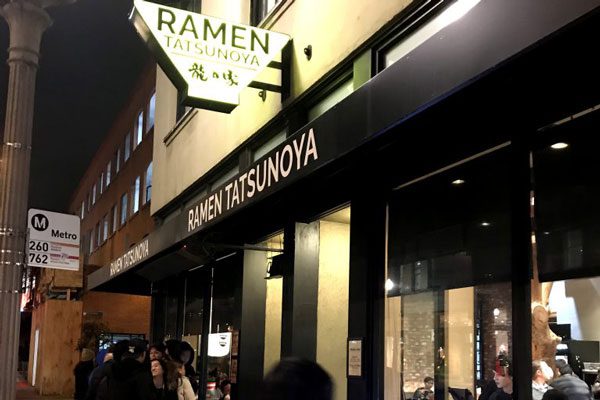
On June 15, 2017, Hakata's "Ichiran" opened its first Taiwan shop in Xinyi District, Taipei. After it opened, the line reportedly continued unbroken for 312 hours. For people in Taiwan, Japanese ramen is both "the real thing" to eat on trips to Japan and a familiar meal out that they can enjoy at home.
Taiwan and Japanese ramen are deeply connected. Momofuku Ando, who invented instant ramen, was born in Taiwan (Chapter 3), and before the war, the raw material for menma, an essential ramen topping, was shipped from Taiwan (Chapter 5). Nagoya even has a "Taiwan ramen" created by a chef of Taiwanese origin (Chapter 6).
Instant Noodles That Grew Up in Asia
Across Asia, instant ramen brought over from Japan took root as each country's own flavor.
In South Korea, Samyang Foods is said to have launched the country's first instant ramen in 1963 with technical cooperation from Japan's Myojo Foods. Korean instant ramen, "ramyeon," developed its own path centered on fiery chili-laced broths and is now one of the national dishes Koreans cannot do without.
In Indonesia, instant noodles from brands such as "Indomie" are eaten throughout the country, and the flavor of soupless, fried-noodle-style "mi goreng" is popular outside Indonesia too. In global instant ramen demand for 2025, Indonesia ranked second after China and Hong Kong (Chapter 3). Momofuku Ando's invention took on the local flavors of country after country in Asia.
Ramen's "Homecoming" to China
Japanese ramen, born from Chinese noodle dishes, has also made a "homecoming" to China. Kumamoto-born "Ajisen Ramen" opened its first shop in Hong Kong in 1996 and then spread across mainland China, introducing Japanese ramen to Chinese diners (Chapter 4). In big cities such as Shanghai and Beijing, shops serving Japanese tonkotsu and miso ramen line the streets, loved as "Japanese-style lamian."
China has always had many noodle dishes of its own, such as Lanzhou's "beef lamian," made by pulling the dough by hand. The interesting thing is that, although they are written with the same characters, "拉麺," Chinese lamian and Japanese ramen are perceived as entirely different dishes.
Ramen in Europe
Ramen has become a popular dish in Europe too. In London in the 1990s, a casual restaurant chain serving ramen and other noodle dishes, inspired by Japanese ramen shops and canteens, was born and spread across Britain. In Paris, Japanese ramen shops line the area around Rue Sainte-Anne in the Opera district, where Japanese restaurants cluster, and lines form at lunchtime.
In European cities, in addition to famous shops expanding from Japan, there are more and more shops opened by local chefs who learned ramen in Japan. Ramen is changing from a dish Japanese people make abroad into a dish chefs around the world make in their own way.
A Michelin Star
In the "Michelin Guide Tokyo 2016," announced in December 2015, the ramen shop "Japanese Soba Noodles Tsuta," then in Sugamo, Tokyo, earned one star. It was the first time anywhere in the world that a ramen shop had received a star in the Michelin Guide. After the announcement, long lines formed at the shop, known for its soy sauce ramen with truffle oil, causing such a stir that it began handing out numbered tickets.
Ramen had become both "cheap everyday food" and a subject of the world's fine-dining ratings. Since then, many ramen shops have been selected for the Michelin Guide's "Bib Gourmand," which recognizes restaurants serving high-quality food at reasonable prices.
Ramen Changing Around the World
According to a survey by the Ministry of Agriculture, Forestry and Fisheries, there were about 181,000 Japanese restaurants overseas in 2025. That was about 6,000 fewer than in the previous survey in 2023, but a big increase compared with ten or so years earlier. Among them, ramen shops have become, along with sushi, the face of Japanese food.
Ramen abroad is not just Japanese ramen brought over as is. Ramen with chicken or beef broth for Muslims who do not eat pork, vegan ramen without meat or fish, gluten-free noodles for people with wheat allergies: ramen adapted to local ingredients and tastes has sprung up one after another. In New York, the "ramen burger," which uses ramen noodles pan-fried into a firm patty in place of buns, even became a talking point.
Since 2013, the Shin-Yokohama Ramen Museum has also run a "reverse-import ramen" initiative, inviting ramen shops born and raised overseas to Japan. We are now in an age when ramen that evolved outside Japan comes back home to Japan.
Why Is the World Drawn to Ramen?
There are several possible reasons people abroad are drawn to ramen. It is an easy-to-grasp "complete dish," with meat, vegetables, noodles and broth all in one bowl. Every shop tastes different, so there is the fun of trying shop after shop. There is a story of craftsmen spending hours simmering broth. And for people who have traveled in Japan, ramen has become "the taste of Japan," tied to memories of their trip.
As the number of foreign visitors to Japan has grown, more ramen shops in Japan have added ticket machines and menus in foreign languages, pork-free ramen and the like. Japanese ramen, born from Chinese noodles, now travels back and forth between Japan and the world, continuing to create new forms.
What to Look For: The Sound of Slurping
In Japan, slurping ramen or soba noisily is a perfectly normal way to eat. Taking noodles into your mouth along with air is said to spread the aroma of the broth and cool the hot noodles as you eat. Abroad, however, many countries consider making noise while eating bad manners. In Japanese ramen shops, the sight of foreign travelers eating quietly without a sound, or boldly giving slurping a try, is a reminder of differences in food culture. Either way is fine, as long as you enjoy it.
Sources and notes for this chapter
Facts
- The film Tampopo (directed by Juzo Itami) was released in 1985.
- Momofuku Noodle Bar opened in 2004, and Ippudo's New York shop in 2008, both in the East Village.
- Ichiran's first Taiwan shop opened in June 2017 in Xinyi District, Taipei.
- Tsuta became the world's first ramen shop to earn one star, in the "Michelin Guide Tokyo 2016" (announced December 2015).
- According to a Ministry of Agriculture, Forestry and Fisheries survey, there were about 181,000 Japanese restaurants overseas in 2025.
Other Theories and Notes
- The explanation that a Japanese TV drama (Long Vacation, 1996) sparked ramen's popularity in Taiwan comes from the Shin-Yokohama Ramen Museum. Other reports say the entry of ramen chains from around 2000 spread its popularity.
- The "312-hour line" at Ichiran's Taiwan shop is based on news reports.
- The explanation that slurping spreads the aroma is a common saying and does not indicate a correct way to eat.
Main References
- Shin-Yokohama Ramen Museum, "Ramen Trivia" and "Reverse-Import Ramen"
- Ministry of Agriculture, Forestry and Fisheries, "Number of Japanese Restaurants Overseas" (2025)
- Official information from each shop; news reports including nippon.com