NAGASAKI
Japan's one window
on the world.
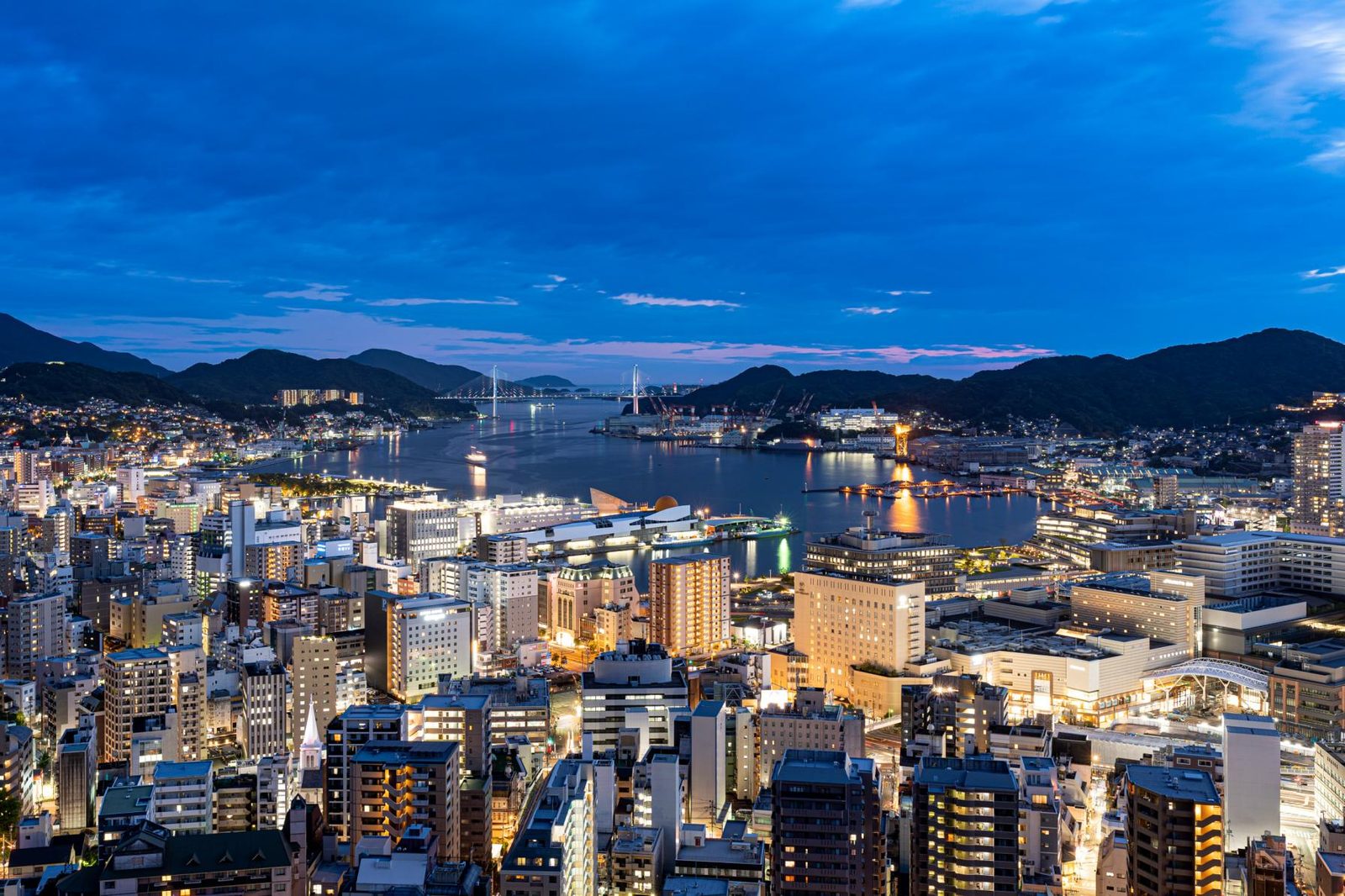
In 1571, Portuguese ships sailed into a long, narrow inlet with almost no flat land. Even after the country closed its doors, this one port stayed open to the Dutch and the Chinese. People who hid their prayers, young men who came to learn about the world, a coal-mining town out at sea, and 9 August 1945. This site traces the "whys" of Nagasaki that guidebooks leave out — marking clearly where history ends and legend begins.
FOUR KEYS
Four keys to understanding Nagasaki
Almost everything that happened in this city connects back to one of these four.
A port without flat land
A long, narrow inlet hemmed in by mountains on three sides. Its deep, calm waters were ideal for large foreign ships. With no flat land to spare, the town grew by climbing the slopes and filling in the sea.
The only window
In the Edo period, the only trade with Europe allowed was through the Dutch trading post on Dejima. Chinese ships, too, were restricted to Nagasaki. The world's goods and news entered Japan through this port.
Hidden prayers
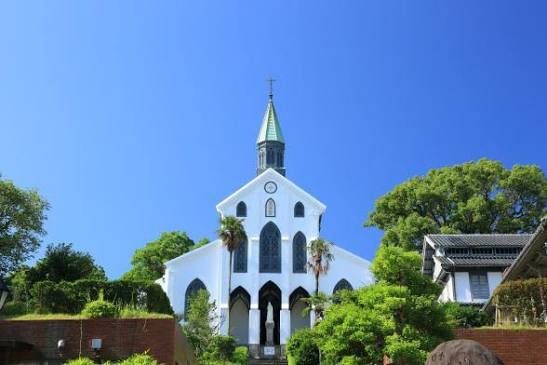
A Christian town said to have once been called "Little Rome." After Christianity was banned, the faith was secretly handed down for 250 years — until it re-emerged in 1865.
A city of prayer
On 9 August 1945, an atomic bomb exploded in the sky over Urakami. Nagasaki had not been the primary target. How did the city rise again from there?
WHY HERE?
Why this inlet?
Nagasaki harbour is a long, narrow inlet cutting northeast from the open sea. Its mouth is narrow and its reach is deep, so the water inside stays calm even when the open sea is rough. The water is deep, too, allowing large sailing ships to come in close to shore.
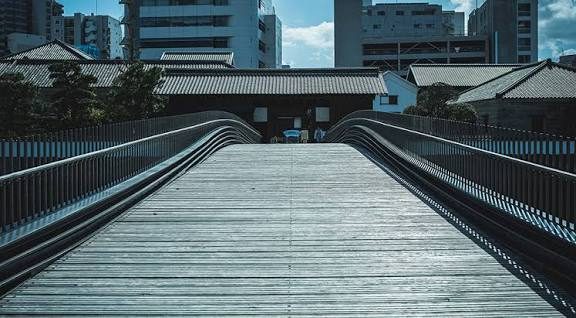
The trade-off is that the mountains crowd right up to the harbour, leaving almost no level ground. An ideal port for ships, a hard place for people to live. That is why the town built its houses on the slopes, filled in the sea, and even created an artificial island — Dejima. Nagasaki's identity as a "city of slopes" begins with this landscape.
BUTTERFLY EFFECT
Small events that shaped the city today
A single decision can ripple out in unexpected directions. Nagasaki has more than a few of these "butterfly effects."
13 ROOMS
Thirteen rooms into Nagasaki
Start wherever you like. Read from the top, and the rooms join into a single story: how an inlet harbour became a window on the world, and then a city of prayer.
A Harbour of Slopes
No flat land, so it became a port: the story of 1571.
Read →Dejima, the Fan-Shaped Island
For 218 years, Europe lived on an island the size of two football pitches.
Read →The Chinese Quarter
The Chinese far outnumbered the Dutch.
Read →Hidden Christians
They kept their prayers for 250 years, then stepped forward in 1865.
Read →Hirado and Koxinga
Taiwan's hero Koxinga was born in Hirado.
Read →Dutch Learning
Young people from all over Japan headed for Nagasaki.
Read →Nagasaki at the End of the Shogunate
Kameyama Shachu, Glover and a single photograph.
Read →Gunkanjima and Industrial Heritage
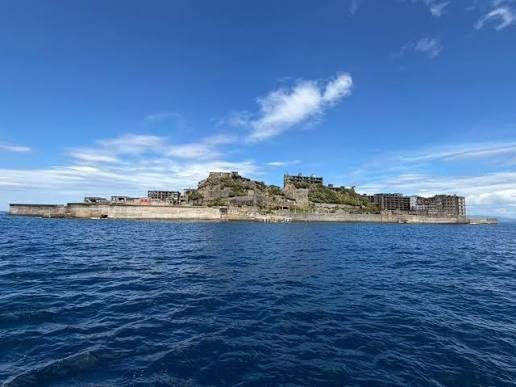
Japan's oldest concrete apartment block stands at sea.
Read →9 August 1945
11:02. Nagasaki was not the first target.
Read →Shippoku, Champon and Castella
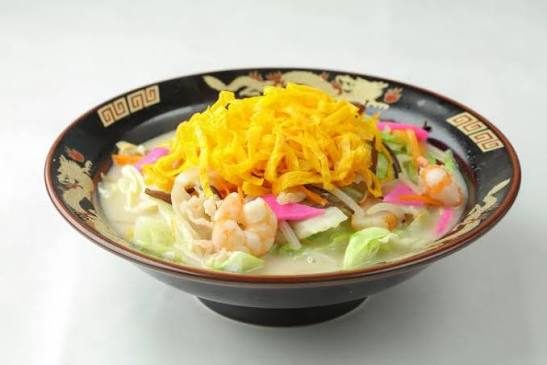
A dish invented for students, and a round table of three cultures.
Read →Legends and Urban Legends
The heart stone, the 'bridge of hesitation' and the fan shape.
Read →Walking Nagasaki
Slopes and streetcars to where the stories happened.
Read →Further Reading
From Silence to The Bells of Nagasaki.
Read →START HERE
Three places to begin
LOCAL COMMON SENSE
"Common sense" to Nagasaki locals
Things that surprise visitors a little, but that locals take completely for granted.
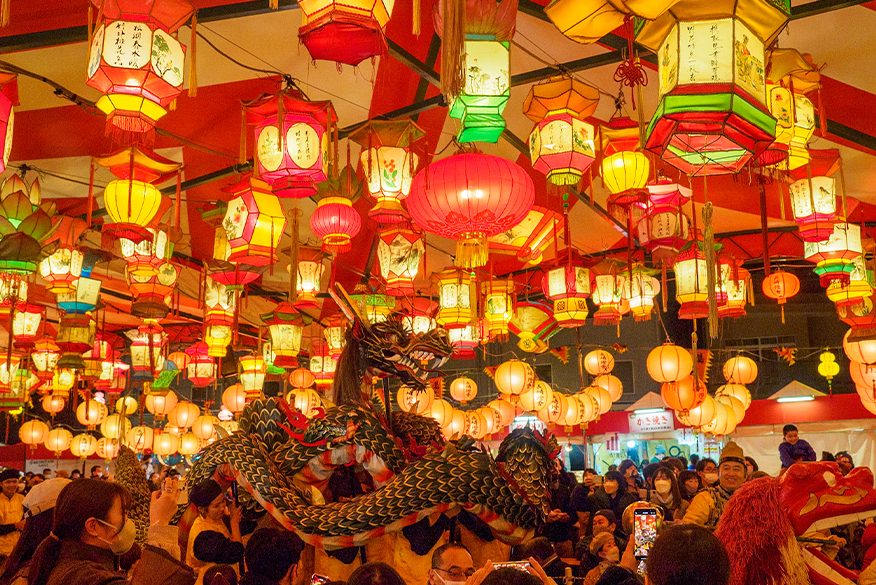
- No work gets done during KunchiNagasaki Kunchi, held 7–9 October, is the great autumn festival of Suwa Shrine. The chant of "Motte koi!" (Encore!) rings through the whole city.
- Shoro Nagashi is loudOn the nights of Obon, people pull spirit boats through the streets to send off the departed. The firecrackers are so loud you may need earplugs — a surprise if you imagine a solemn ceremony.
- Get around by tramThe streetcar is Nagasaki's everyday transport. In a city of slopes, the basic formula is tram plus walking plus stairs.
- "Saruku"Nagasaki dialect for "to stroll about." It has also become the name of the city's walking-tour programme.
- "Wakaran"A word — written wa-ka-ran, for Japanese, Chinese and Dutch — for Nagasaki's blended Japanese–Chinese–Dutch culture. You can still see it in shippoku cuisine and in the Kunchi performances.
- You don't see many bicyclesWith so many slopes and stairs, walking is sometimes faster than cycling. Many roads in the hillside neighbourhoods are too narrow even for cars.
TIMELINE
A timeline of Nagasaki
Portuguese ships reach Hirado
The era of nanban ("southern barbarian") trade begins in northwestern Kyushu.
Nagasaki opens as a port
Under Omura Sumitada, Nagasaki is opened and Portuguese ships enter. A new town is built on a cape facing the harbour.
Donated to the Jesuits
Omura Sumitada donates Nagasaki and Mogi to the Society of Jesus. Toyotomi Hideyoshi later places the town under his direct control.
The Twenty-Six Martyrs
Twenty-six people are executed on Nishizaka Hill.
Meganebashi and Kunchi
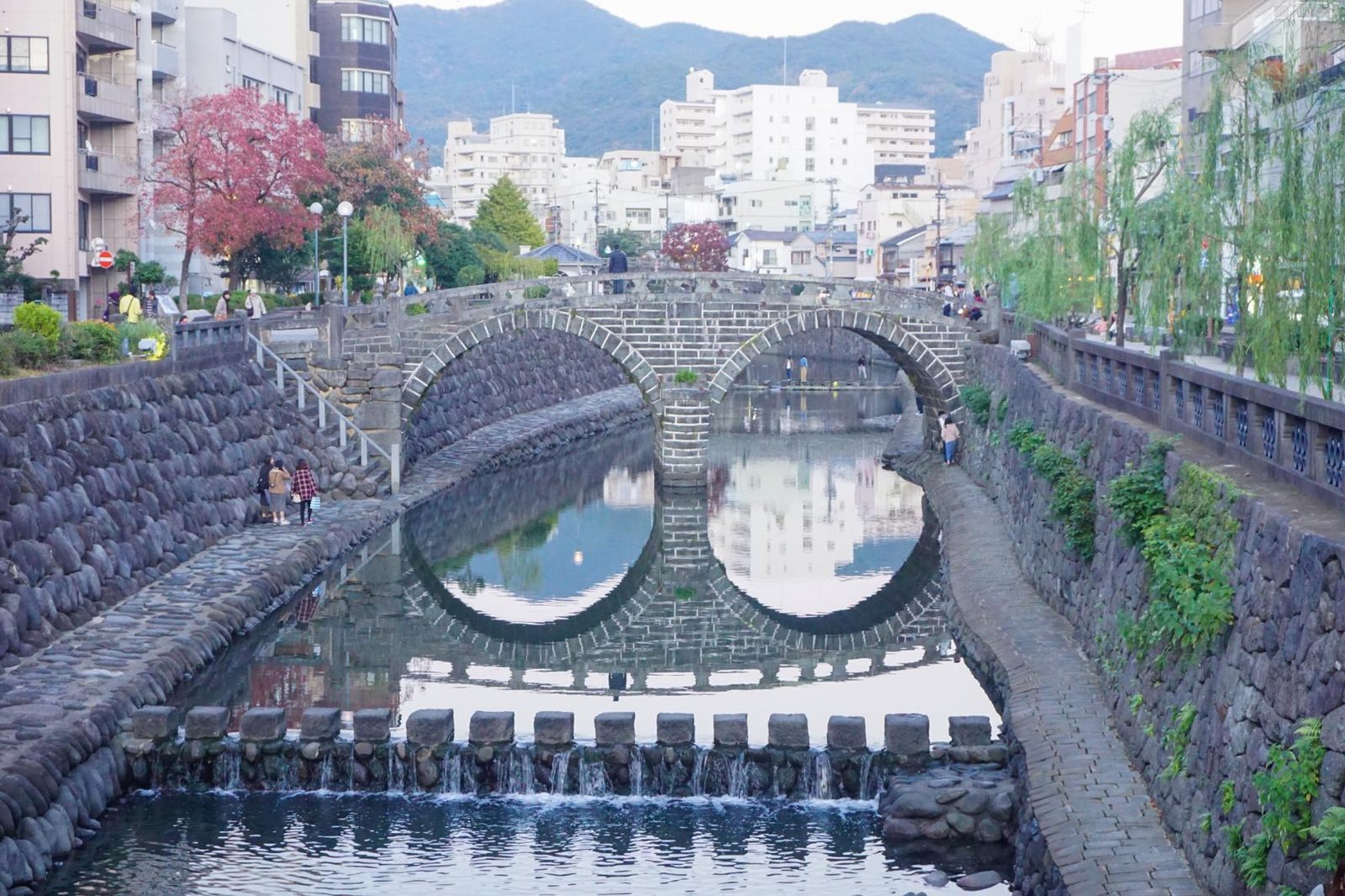
The year Mokusu Nyojo built Meganebashi, and the year Nagasaki Kunchi is said to have begun.
Dejima completed
In 1641, the Dutch trading post moves here from Hirado.
The Chinese Quarter completed
A residential quarter for the Chinese community is established south of the town.
Siebold arrives
The following year he opens his school, the Narutaki-juku.
The port opens, the Dutch post closes
Free trade begins, and foreign settlements take shape at Minamiyamate and Higashiyamate.
Hidden Christians come forward / Kameyama Shachu
Hidden Christians reveal themselves at Oura Church. In the same year, Sakamoto Ryoma and others found the Kameyama Shachu.
Japan's first reinforced-concrete apartment block on Hashima
A seven-storey apartment building rises on a coal-mining island out at sea.
9 August, 11:02 a.m.
An atomic bomb explodes in the sky over Urakami. About 74,000 people died by the end of that year.
Two World Heritage Sites
The "Sites of Japan's Meiji Industrial Revolution" and the "Hidden Christian Sites in the Nagasaki and Amakusa Region" are inscribed.
Labels: Factdocumented Likelysupported by most sources Legendoral tradition Urban legendlocal lore and rumour