OKINAWA
Islands joined by the sea,
a bridge of nations.
Here there was once a kingdom unlike either Japan or China: the Ryukyu Kingdom, which made its ships a "bridge between nations" and linked the ports of Asia. In time the kingdom became Okinawa Prefecture, then an island of land battle, and after a period of American rule it returned to Japan. This site traces the "whys" of Okinawa that guidebooks leave out — marking clearly where history ends and legend begins.
FOUR KEYS
Four keys to understanding Okinawa
Almost everything that happened on these islands connects back to one of these four.
Islands of coral reef
Some 160 islands, large and small, are scattered across about 1,000 km of ocean from east to west. Limestone ground, shallow blue inoo (reef lagoons), typhoons: daily life and prayer alike have been built on this natural setting.
A maritime trading nation
A small kingdom with few resources prospered through entrepôt trade, carrying goods from Japan, Korea and Southeast Asia, with tribute missions to China at its core. That exchange is inscribed in the red of Shuri Castle's buildings, in the sanshin and in awamori.
An era that kept changing
The age of the kingdom, the age of submission to Satsuma, the age of Okinawa Prefecture, Amerika-yu (the American era), and the return to Japan. In Okinawa, the passing of one era into the next is called yugawari ("change of the world"). Each time the rulers changed, so did people's lives.
Prayer and remembrance
Prayers at utaki (sacred groves) that venerate forests and rocks, and a way of life that honours the ancestors. And in 1945, a land battle that engulfed the local population took a great many lives. Every year on 23 June, the islands are wrapped in quiet prayer.
WHY HERE?
Why these islands?
Zoom out on the map a little and Okinawa's position becomes clear. From Naha it is about 650 km to Kagoshima and about 800 km to Fuzhou in Fujian Province. And from Yonaguni Island to Taiwan, it is just about 111 km.
Okinawa sat at the very centre of a crossroads of the sea linking Japan, China and Southeast Asia. Riding the monsoon winds and the Kuroshio Current, ships could head anywhere. It was this position that let islands with few resources flourish as a kingdom — and that later left them at the mercy of the great powers' ambitions.
BUTTERFLY EFFECT
Small events that shaped the islands today
A single event can ripple out in unexpected directions. Okinawa has more than a few of these "butterfly effects."
13 ROOMS
Thirteen rooms into Okinawa
Start wherever you like. Read from the top, and the rooms join into a single story — from the age of the gusuku to the kingdom, Okinawa Prefecture, the Battle of Okinawa, Amerika-yu and the return to Japan.
Islands and Gusuku Castles
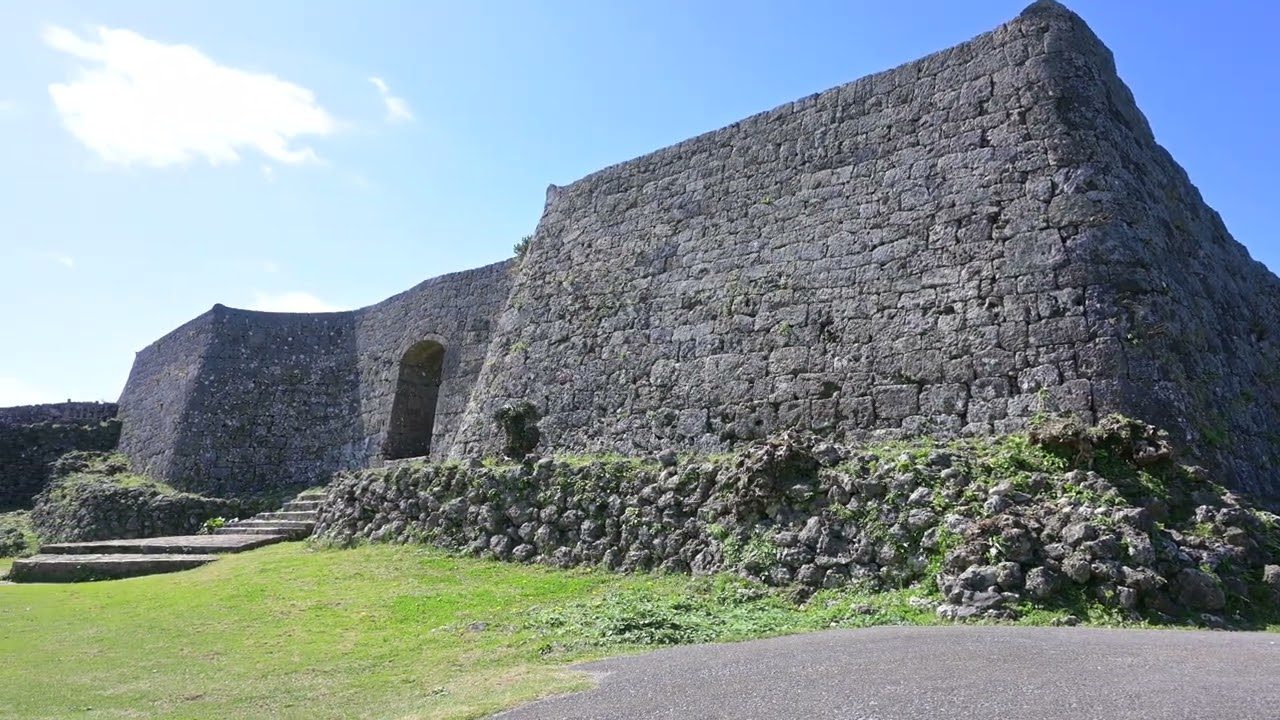
Why the stone walls curve: the age of the aji lords.
Read →Shuri Castle and the Ryukyu Kingdom
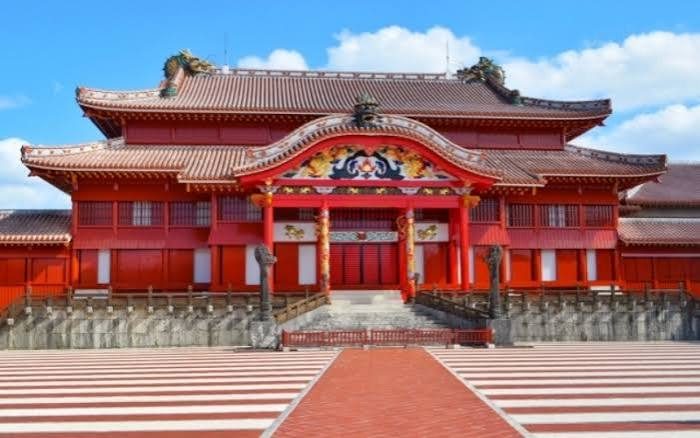
Burned five times, rebuilt again and again.
Read →Bridge of Nations: the Age of Trade
"We make our ships a bridge between all nations."
Read →Dual Loyalty and the Ryukyu Disposition
A kingdom loyal to both China and Japan becomes a prefecture.
Read →The Battle of Okinawa
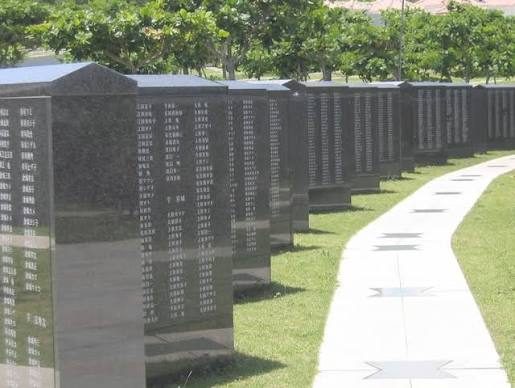
A ground war fought among civilians. What 23 June means.
Read →American Rule and Reversion
27 years of dollars and driving on the right.
Read →Utaki, Noro and Yuta
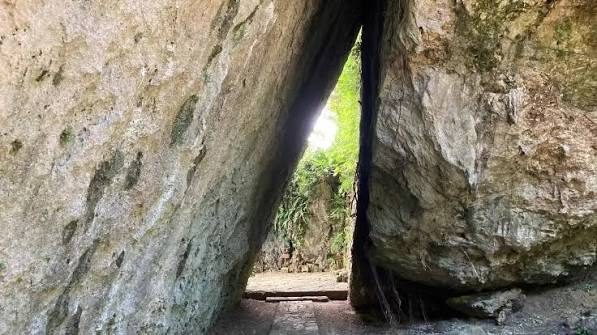
The emptiest places are the most sacred.
Read →Sanshin, Eisa and Karate
A snakeskin instrument and an empty-hand art that went global.
Read →Okinawa Soba, Champuru and Awamori
Soba made without buckwheat.
Read →Miyako, Yaeyama, Yonaguni and Taiwan
Yonaguni is 111 km from Taiwan, closer than Tokyo.
Read →Shisa and Island Lore
Lions on the roof, stones at T-junctions, spirits in banyans.
Read →Walking Okinawa
From Shuri's cobblestones to the southern memorials and the outer islands.
Read →Further Reading
From the Ryukyu Kingdom to postwar Okinawa.
Read →START HERE
Three places to begin
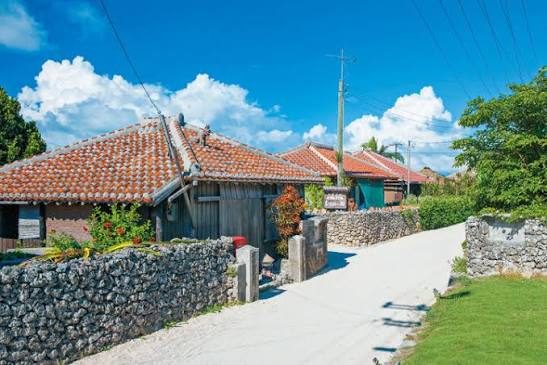
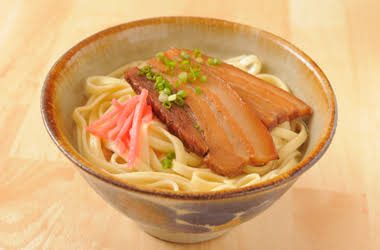
LOCAL COMMON SENSE
"Common sense" to Okinawans
Things that surprise visitors a little, but that locals take completely for granted.
- Festivals follow the lunar calendarLunar New Year, the lunar Obon, and Shimii (the Qingming festival): many of Okinawa's annual events follow the old lunar calendar, so their dates change every year. It is normal for calendars to show lunar dates too.
- Picnics in front of the tombAt Shimii, around April, relatives gather in front of the large turtleback tomb (kamekobaka), spread out a feast and share it with their ancestors.
- 23 June is "Irei no Hi" (Memorial Day)Regarded as the day organised fighting ended in the Battle of Okinawa, it is a holiday set by prefectural ordinance. At noon, moments of silent prayer are observed across the prefecture.
- The only railway is the monorailBefore the war there was a prefectural railway, but it was lost in the Battle of Okinawa. Today the only railway is the Okinawa Urban Monorail (Yui Rail), opened in 2003; cars and buses are the main way of getting around.
- "Moai"An old system in which a group of friends pool money and take turns receiving it. Today it often carries on as a social gathering that doubles as a night out drinking, and some people belong to several at once.
- "Soba" means Okinawa sobaThe noodles are made of wheat flour, not buckwheat, but in Okinawa "soba" means this. 17 October is "Okinawa Soba Day."
TIMELINE
A timeline of Okinawa
Minatogawa Man
Human remains found in Yaese Town in the south of the main island — among the best-preserved Palaeolithic human remains in Japan.
The Gusuku period
Farming spreads, and powerful figures known as aji (local lords) build gusuku across the islands.
Tribute to the Ming
Satto, King of Chuzan, sends envoys to the Ming, beginning Ryukyu's tributary relationship with China.
The Three Kingdoms unified
Sho Hashi brings Hokuzan, Chuzan and Nanzan together, and the Ryukyu Kingdom is established.
The Bankoku Shinryo Bell
A bell inscribed "with ships, we shall be a bridge between all nations" is hung in the Seiden of Shuri Castle.
The Satsuma invasion
The Shimazu clan of Satsuma invades Ryukyu, and the kingdom enters an era of "dual subordination" to both China and Japan.
Perry arrives
Before heading to Uraga, he calls at Naha and visits Shuri Castle.
Okinawa Prefecture established
With the "Ryukyu Disposition," the kingdom comes to an end, and King Sho Tai is moved to Tokyo.
The Battle of Okinawa
On 26 March, US forces land in the Kerama Islands. By the time organised fighting ends on 23 June, more than 200,000 people have died.
Reversion to Japan
On 15 May, 27 years of American rule come to an end, and Okinawa Prefecture is born again.
730 (Nana-san-maru)
On 30 July, traffic switches all at once from driving on the right to driving on the left.
World Heritage inscription
The "Gusuku Sites and Related Properties of the Kingdom of Ryukyu" are inscribed. A 2,000-yen note featuring the Shureimon Gate is also issued.
Shuri Castle burns and is rebuilt
A fire on 31 October destroys seven buildings, including the Seiden. Reconstruction of the Seiden is under way, and it has been announced that it will open to the public from 23 November 2026.
Labels: Factdocumented Likelysupported by most sources Legendoral tradition Urban legendlocal lore and rumour