
Kanazawa, Ishikawa · History Portal
A castle town that chose
gold leaf over the sword.
The outside lord the Tokugawa feared most survived by not fighting. One lord grew his nose hair to look like a fool, the domain's wealth went into crafts, scholarship and tea rather than weapons, and 400 years ago an engineer pushed mountain water uphill into the castle with an inverted siphon. In the 20th century the city escaped large-scale air raids, and its castle-town layout survives almost intact. Here is the “why” of Kanazawa that guidebooks leave out.
Four keys to Kanazawa
Why did this town “survive”?
In the Edo period (1603–1868), Kanazawa was one of the largest castle towns in Japan after the three great cities of Edo, Osaka and Kyoto. In the early Meiji era it is said to have been the fifth-largest city in the country, after Tokyo, Osaka, Kyoto and Nagoya. Today it draws visitors as a place where the old townscape still stands. Four reasons overlap.
First, a strategy of not fighting: the Maeda, the largest of the “outside” lords, steered their wealth from arms to culture to avoid the shogunate's suspicion. Second, water: canals dug after a great fire spread into every corner of the town. Third, craftsmanship: skills nurtured by the domain outlived the domain itself. And fourth, being “left behind” by modernisation: as industry shifted to the Pacific coast, railways, factories and war industry never fully arrived, and that, in the end, protected the castle town.
This site follows these four threads through twelve rooms.
Kanazawa's butterfly effects
One fire shaped the landscape four centuries later.
Trace Kanazawa's everyday habits back far enough and you arrive at unexpected events. Small causes, working over hundreds of years, decided the shape of the town. Here are two chains.
Fire → Canals → “City of water”
- 1631The Kan'ei fire burns the castleA great fire said to have destroyed much of the town. The castle had no water to fight it.
- 1632The Tatsumi Canal, finished in under a yearAbout 11 km from the upper Sai River; the last stretch used an inverted siphon to push water up into the castle.
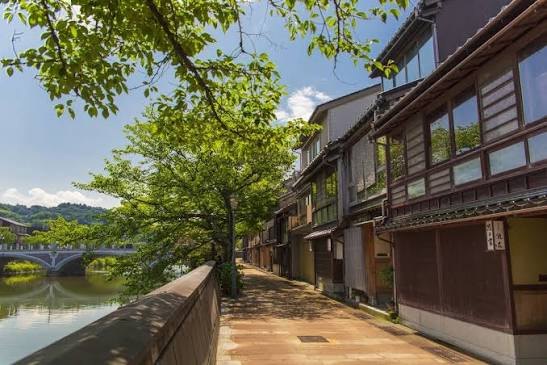
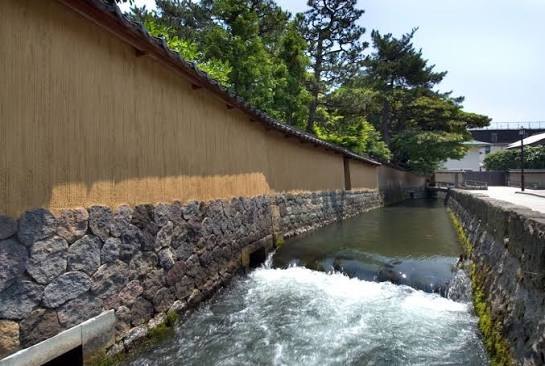
- EdoCanals spread across the townFor firefighting, daily life, gardens and dyeing. 55 canals still flow through the city.
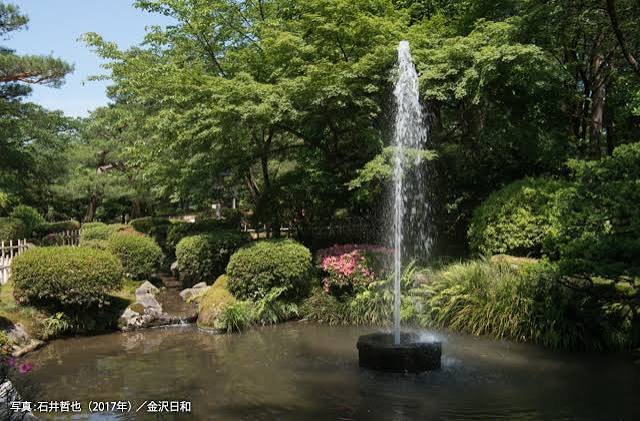
- 1860s“Japan's oldest fountain” in KenrokuenNo pump — only the height difference from the pond.
- NowStreets that spray water in winterSnow-melting sprinklers use abundant groundwater. Wet shoes for visitors — a distant descendant of a 400-year-old fire.
Uprising → Faith → Gold leaf
- 1488The Ikko-ikki overthrows the governorFor about a century Kaga was called “a province held by peasants”.
- 1546Oyama Gobo temple is builtA stronghold of Jodo Shinshu Buddhism, on the site that later became Kanazawa Castle.
- EdoA “Shinshu kingdom” takes rootEvery household aims to keep a fine Buddhist altar.
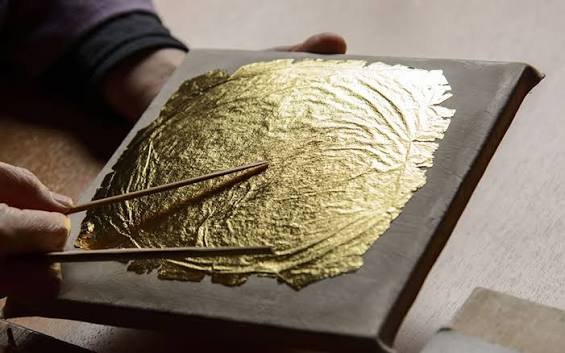
- ModernGilded altars and crafts keep demanding gold leafGold-beating skills that survived shogunate controls are sustained by that demand.
- NowAlmost all of Japan's gold leaf comes from KanazawaThe city puts its share of national production at over 98%. Long before gold-leaf ice cream, this is why.
Walk the site
Twelve rooms
Each page stands on its own. Start wherever your curiosity leads.
A Province Held by Peasants
For a century, religious commoners ruled Kaga. Then Maeda Toshiie arrived. Plus the legend behind the name “Kanazawa”.
Read →The Maeda Survival Strategy
Nose hair, an abacus and a hostage: how the largest outside lord survived the Edo period.
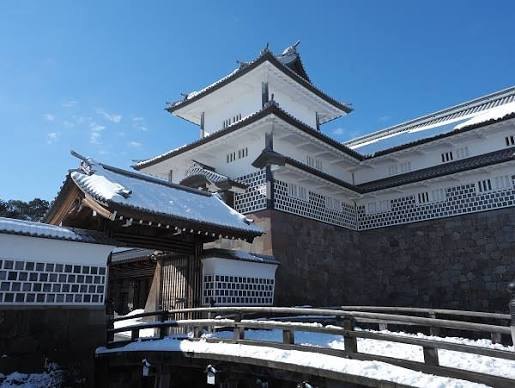
Read →Kanazawa Castle & Moats
A museum of stone walls, roofs of lead, and a moat dug in 27 days by a Christian lord.
Read →City of Canals
A 400-year-old inverted siphon and Japan's oldest fountain, which runs without any power.
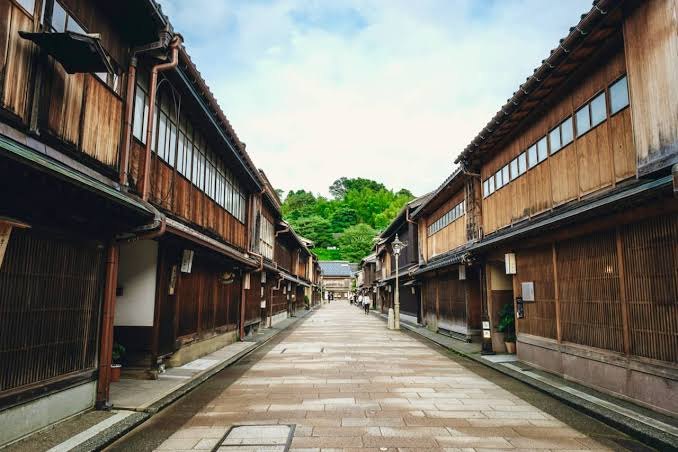
Read →Streets & Teahouse Districts
Maze-like lanes, Japan's first revived historic place name, and a slope named by a novelist.
Read →Gold Leaf & Crafts
Gold beating that survived shogunate bans, and a town where Noh chants “fell from the sky”.
Read →Kaga Food & Sweets
Yellowtail thunder, crab shells in oden, and why Kanazawa eats more wagashi than anywhere.
Read →Three Writers & a City of Learning
Kyoka, Shusei and Saisei — and the ‘three Taros’ of the Fourth Higher School.
Read →Kanazawa People Abroad
A dam in Taiwan, cherry trees in Washington, Zen for the world.
Read →Legends & Urban Legends
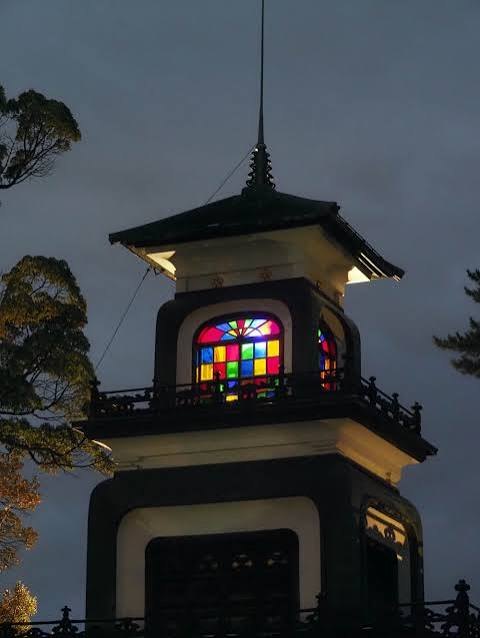
A ninja temple with no ninja, a statue pigeons avoid, a shrine gate that was a lighthouse.
Read →Kanazawa Dialect
“Kinodokuna” means thank you. Local words and the temperament behind them.
Read →Further Reading
Novels, biographies and essays: ten books to read Kanazawa more deeply.
Read →Start here
The lord who grew his nose hair on purpose.
Maeda Toshitsune, third lord of the Kaga domain, ruled more than a million koku of rice lands — which alone made him a threat in the shogunate's eyes. In 1631 he was indeed suspected of rebellion and had to hurry to Edo to clear his name.
A famous story is told about him. He let his nose hair grow wild, and when a retainer discreetly held up a mirror, he replied: “This nose hair protects the three provinces of Kaga, Noto and Etchu, and lets all of you live in peace.” Tradition The tale comes from Edo-period fiction such as Ihara Saikaku's writings and cannot be called history. Yet it is still told in Kanazawa because it captures so well the path the Maeda chose: look harmless, and invest in culture.
In pictures
A few Kanazawa scenes
Some things words can't carry. Each photo links to the related page.
Local common sense
Things every Kanazawa local knows
You won't find these in guidebooks, but live here for a while and they become second nature.
“Forget your lunch, not your umbrella”
Hokuriku skies can turn to rain at any moment. Locals keep a folding umbrella in their bag all year round.
Water sprays from the middle of the street
Snow-melting sprinklers use groundwater. At winter crossings, locals know how to dodge the spray.
Winter thunder means yellowtail
In November and December, the winter thunder typical of the Sea of Japan coast — called “buri-okoshi” — announces the yellowtail season.
Omicho Market is “Omicho”
A market dating from 1721. Locals call it “O-mi-cho”, with the stress on the “O”.
The day for Himuro manju
Recalling the domain's gift of stored winter ice to the shogun, locals eat red, white and green buns to wish for good health through summer.
“Kinodokuna” means thank you
In standard Japanese it means “what a pity”, but older Kanazawa people say it when someone does them a favour.
Overview
Kanazawa at a glance
The full stories are in each room. This is just the outline.
The Ikko-ikki defeats the provincial governor Togashi Masachika
A century of self-rule by Buddhist believers begins — “a province held by peasants”.
Oyama Gobo (Kanazawa Mido) is founded
A Jodo Shinshu stronghold on the site of the future castle.
Maeda Toshiie enters Kanazawa Castle
After the Battle of Shizugatake, he moves his base from Noto. The Kaga domain begins.
Takayama Ukon digs the inner moat in 27 days
As tension with Tokugawa Ieyasu rises, a Christian lord encircles the town with a moat.
The Tatsumi Canal is completed
After the previous year's fire, Itaya Heishiro builds an 11 km canal in under a year.
The Higashi and Nishi teahouse districts are licensed
Scattered teahouses are gathered into two official districts.
“Kanazawa Prefecture” becomes “Ishikawa Prefecture”
The prefectural office moves briefly to Mikawa in Ishikawa District; when it returns a year later, the name stays.
The Fourth Higher Middle School (later the Fourth Higher School) opens
The academic heart of Hokuriku, alma mater of Nishida Kitaro and D.T. Suzuki.
The war ends without large-scale air raids
The castle-town layout and many townhouses survive.
The Hokuriku Shinkansen reaches Kanazawa
Tokyo is now about two and a half hours away. The townscape that was “left behind” becomes a draw for visitors from everywhere.