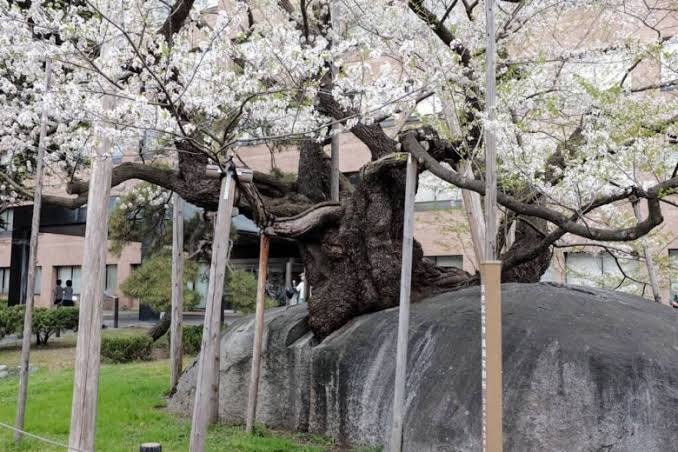
The demon left, the Minamoto came,
and a northern capital was born.
The Kitakami, the Nakatsu and the Shizukuishi: Morioka stands where three rivers meet, and for more than a thousand years it has been Japan's northern borderland. The imperial court built its northernmost fort here. Two wars — the Former Nine Years' War and the Ōshū campaign — reached their final act here. And a clan of Minamoto descent founded a castle town here. Beyond wanko soba and the rock-splitting cherry tree lie the stories of why Morioka is the way it is.
Why here, where the rivers meet?
Many prefectural capitals in Tōhoku have long histories, but few have layered as many memories of being a border as Morioka.
First, the border between the Emishi and the imperial court. In the early Heian period, Sakanoue no Tamuramaro built Shiwa Fort here — the northernmost outpost of the ancient Japanese state.
Second, the memory of Minamoto victories. Kuriyagawa, the stockade where the Abe clan made their last stand in the Former Nine Years' War, and the place where Minamoto no Yoritomo camped after destroying the Northern Fujiwara, both lie within today's city.
Third, Nanbu versus Tsugaru, and the stigma of the “rebel” domain. The Nanbu clan moved their castle south after losing the northern half of their lands, and at the end of the Edo period were branded rebels. Fifty years later, Morioka produced the prime minister of Japan's first true party cabinet.
And fourth, literature and craft — the town where Ishikawa Takuboku and Miyazawa Kenji spent their youth, and where iron, wool and purple dye still color everyday life. This site follows these four threads through twelve rooms.
Twelve rooms
Each can be read on its own. Start wherever you like.
Kozukata: How Morioka Began
A demon's handprint, an ancient frontier fort and a poem that renamed a city.
Read →Yoshitsune and the Minamoto
An eight-inch nail and a lotus seed: where two northern stories ended.
Read →The Nanbu Domain's Pride
The last battle of unification, a feud with Tsugaru and 16,000 marchers.
Read →From Rebels to Prime Minister
A ritual suicide at Hōonji, and the eulogy read there fifty years later.
Read →People of Morioka
Prime ministers, a bridge across the Pacific, a poet and a linguist.
Read →Reading the Castle Town
Kōji and chō, 400-year-old bridge finials and Tokyo Station's big brother.
Read →Takuboku and Kenji
A fifteen-year-old heart and a fairy-tale book nobody ordered.
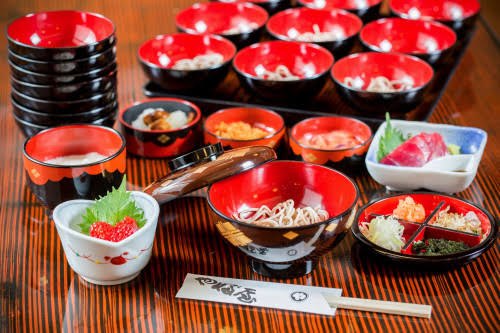
Read →Three Noodles and More
Wanko soba, jajamen, reimen — and a bakery founded by Kenji's pupil.
Read →Iron, Wool and Purple
Nanbu ironware, handspun homespun and gromwell-root dyeing.
Read →Legends and Urban Legends
A love triangle of mountains, the crying bridge and Marco Polo in a temple.
Read →Places to Walk
From the castle ruins to the northern temple quarter, with context.
Read →Books on Morioka
Kunohe Masazane, Yoshimura Kan'ichirō, the Northern Fujiwara.
Read →Four surprising figures
Numbers you rarely find in tourist brochures.
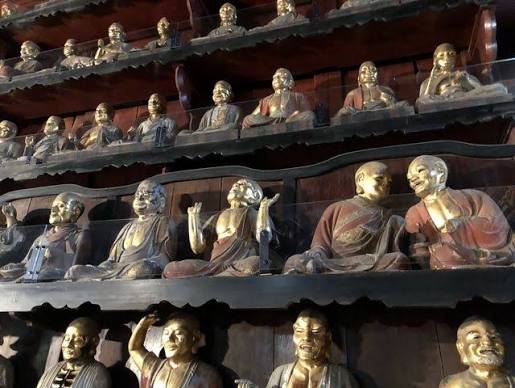
A few Morioka scenes
Some things words can't carry. Each photo also links to a related page.
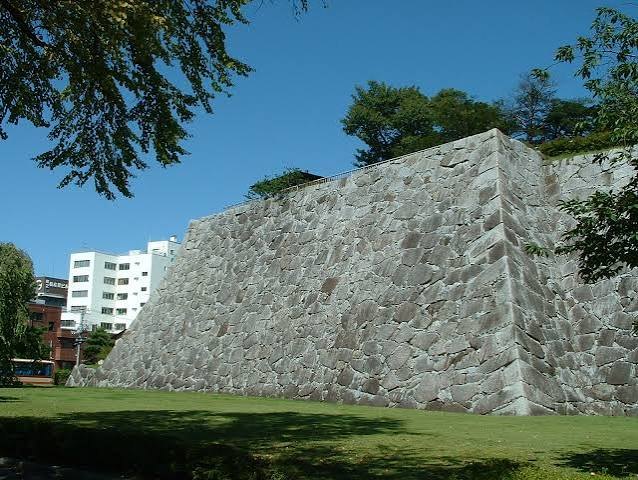
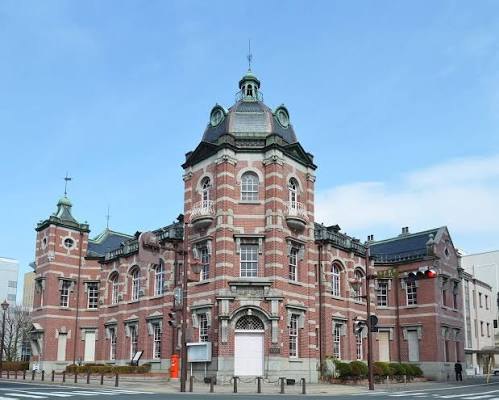
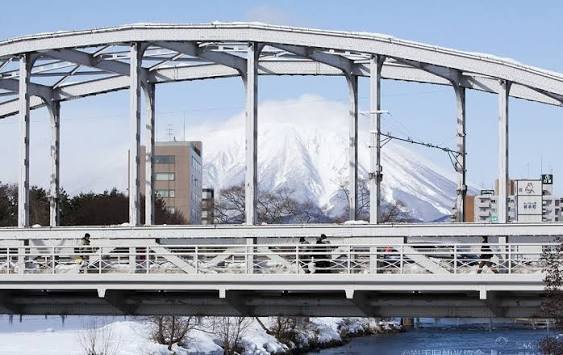
A quick timeline of Morioka
The full stories are on each page; here is the big picture.
Sakanoue no Tamuramaro builds Shiwa Fort
The northernmost fort of the ancient state, its outer wall about 840 m on each side — comparable to Taga Castle. Floods of the Shizukuishi River later forced it south.
Kuriyagawa falls in the Former Nine Years' War
Minamoto no Yoriyoshi and Yoshiie defeat Abe no Sadatō, whose head is nailed up with an eight-sun (about 24 cm) iron nail.
Yoritomo enters Kuriyagawa
After destroying the Northern Fujiwara, Yoritomo re-enacts the 127-year-old precedent with the head of Fujiwara no Yasuhira, then settles the surrender at Kuriyagawa.
The Kunohe Masazane Rebellion
Toyotomi Hideyoshi's great army marches into the far north for the last battle of national unification. Afterwards Nanbu Nobunao decides to move his base south.
Castle construction begins at Kozukata
Work started in 1597 or 1598. Plagued by floods, the castle did not become the lord's permanent residence until 1633.
The name “Morioka” is fixed
Tradition says the characters 盛岡 — “a flourishing hill” — came from a linked-verse exchange between lord Nanbu Shigenobu and a priest of Eifukuji.
The Sanhei Uprising
About 16,000 farmers cross into Sendai territory to petition against the domain — one of the largest peasant uprisings in Japanese history.
Narayama Sado commits seppuku at Hōonji
The senior retainer who took sole responsibility for the domain's role in the Boshin War. He was 39.
Hara Takashi becomes prime minister
Morioka-born Hara, holding no noble title, forms Japan's first full-fledged party cabinet as the “commoner prime minister”.
The Restaurant of Many Orders is published
By Kōgensha in Morioka — a publisher named by Miyazawa Kenji himself.