
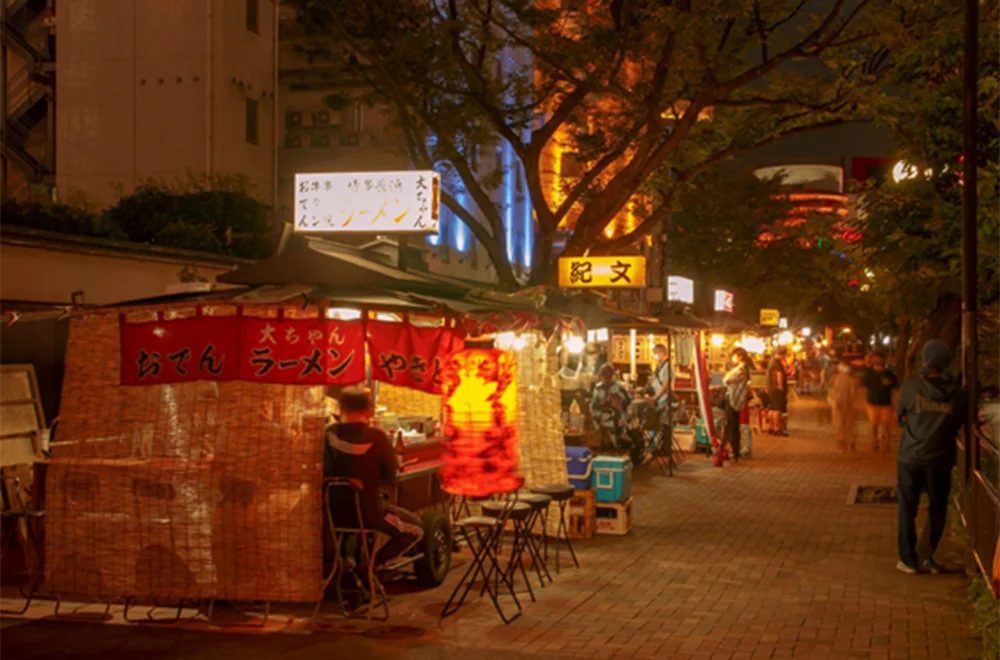
When the war ended in August 1945, many of Japan's cities lay in ashes. Rations alone were not enough to live on, and people survived by buying food outside official channels at the "yamiichi," the black markets that sprang up in front of train stations and elsewhere.
During the war, the state controlled rice and wheat, and many ramen shops had closed because they could not get ingredients. Now Shina soba began to steam again at black market stalls. The postwar history of ramen started at these stalls.
A Bowl from the Black Market
The noodle soup sold at black market stalls was anything but luxurious. Noodles were made from whatever flour could be had; broth was simmered from chicken carcasses, pork bones and vegetable scraps, and seasoned with soy sauce. Sometimes there were hardly any toppings at all. Even so, hot broth and filling noodles were the finest treat imaginable for people working in the ruins.
At the time, rice, the staple food, was in short supply, and the government did not allow it to be sold freely. In 1947, against the backdrop of food shortages, an emergency ordinance restricting restaurant business was also issued. Slipping through the gaps in these regulations, ramen from stalls and small shops kept city dwellers fed.
Wheat from America
Behind ramen's spread in postwar Japan lies wheat.
During the food crisis right after the war, the United States sent wheat and flour to Japan as aid for occupied areas (including the GARIOA fund). In 1954, Japan and the United States signed an agreement on the purchase of surplus agricultural products, and American wheat began arriving in even greater quantities. The introduction of bread into school lunches was also closely tied to the wheat policies of this era.
LikelyA shortage of rice and relatively easy access to wheat are thought to have given a tailwind to ramen made with Chinese-style noodles, alongside bread and udon. National policy at the time encouraged "funshoku," flour-based foods, to improve nutrition without relying on rice alone. Ramen fit neatly into that trend.
People Returning from the Continent
When the war ended, more than 6 million soldiers and civilians returned to Japan from the former Manchuria (northeast China), the Korean Peninsula, Taiwan and elsewhere.
Many of the returnees had grown fond of Chinese noodle dishes and gyoza (dumplings) while abroad. For people who had lost their jobs and had no capital, a street stall was a business they could start with little money. Stories of people who opened ramen stalls or gyoza shops, relying on flavors they had learned on the continent, come up again and again in the founding tales of ramen shops around the country.
LikelyHowever, there is no record showing in numbers how much the returnees influenced ramen's spread. The prewar Shina soba tradition, easily obtained wheat, the low barrier of running a stall, and people who knew the flavors of the continent: many conditions overlapped as postwar ramen spread across the country.
From "Shina Soba" to "Chuka Soba"
After the war, the word "Shina" came to be regarded as a demeaning term for China and fell out of public use. Accordingly, Shina soba began to be called "chuka soba" (Chinese-style soba). The many shops that still call their old-fashioned soy sauce ramen "chuka soba" carry a trace of this era.
Several well-known shops still in business today were born in the late 1940s and early 1950s. In Ogikubo, Tokyo, shops that opened soon after the war won a reputation for clear chuka soba made with niboshi (dried sardines) and soy sauce, later known as "Ogikubo ramen." In Kurume, Fukuoka Prefecture, the stall Sankyu served a cloudy white pork bone broth in 1947, which became the source of Kyushu's tonkotsu ramen (Chapter 4). In Sapporo in 1951, "Ramen Yokocho," an alley gathering many stalls, was born.
Yonaki Soba and the Charumera
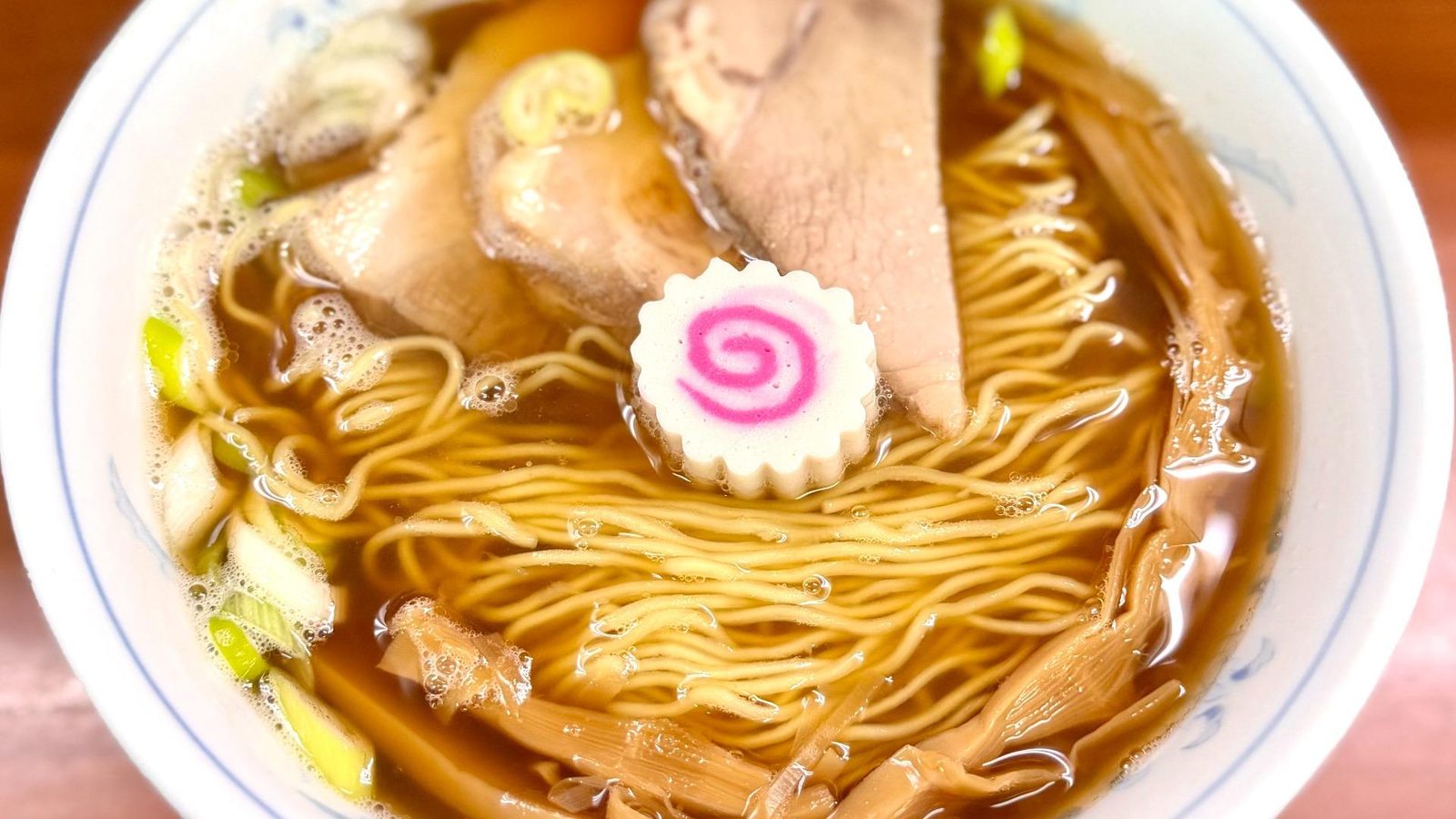
Into the late 1950s and early 1960s, ramen stalls were still part of the nighttime cityscape. A stall was loaded onto a bicycle cart and pulled through residential streets, its owner blowing the charumera horn to call customers. People working late and students cramming for exams would hear it and step outside. Noodles sold at night are called "yonaki soba" ("crying-in-the-night soba"), a name inherited from the night-time soba sellers of the Edo period.
As traffic and hygiene rules tightened, ramen stalls gradually disappeared. Many of those who had honed their skills at stalls opened small shops and became owners of "chuka soba-ya." The neighborhood chuka soba shop and Chinese restaurant multiplied across the country as everyday eateries serving ramen, fried rice and gyoza. In 1966, Myojo Foods launched an instant noodle named "Charumera," after the stall's very signal. The memory of the stalls lives on in the name of an instant noodle.
The Okamochi and Home Delivery
Another pillar of the postwar chuka soba shop was demae, home delivery. When a phone order came in, a staff member would put the ramen bowl into a carrying box called an "okamochi" and deliver it by bicycle or scooter to a home or office. In the towns of the Showa era, it was an utterly ordinary sight.
Delivery ramen came with its own tricks: noodles boiled a little firm so they would not go soggy, plastic wrap over the bowl so the broth would not spill. When you finished eating, you left the bowl outside the front door for the shop to collect later, a custom that spread along with delivery culture. In some towns, such as Yamagata City, introduced in Chapter 7, the custom of ordering soba or ramen delivery to entertain visitors is said to have nurtured the region's love of ramen.
A Place Called "Machi Chuka"
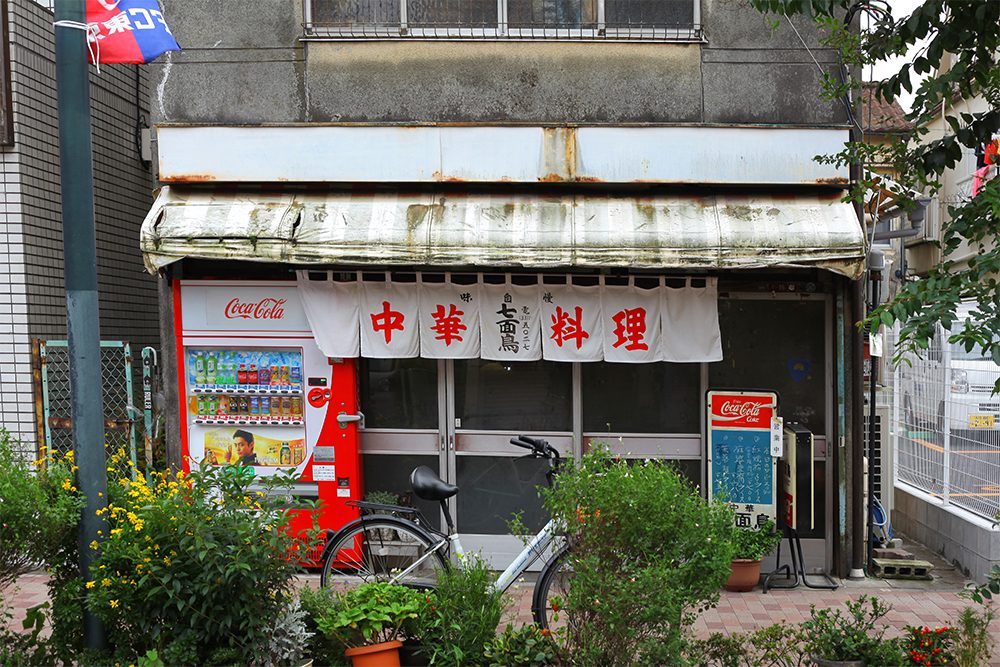
In time, chuka soba shops grew into neighborhood diners serving not only ramen but fried rice, gyoza, stir-fried vegetables, liver and garlic chives, even katsudon and omurice. In recent years these places have been dubbed "machi chuka" (neighborhood Chinese) and are drawing new attention as spots that preserve the atmosphere of the Showa era.
Machi chuka ramen is a little different from ramen at specialty shops. A light soy sauce broth made from chicken carcasses and vegetables. Toppings of chashu, menma, green onions and naruto fish cake. A bowl made quickly in the same kitchen as everything else. These shops seldom draw lines like specialty shops do, but as places neighbors visit almost daily, they have sustained everyday life in postwar towns.
But most machi chuka are family-run shops that opened soon after the war or during the high-growth era. As owners age and no successors step forward, closures have followed one after another across the country over the past ten-plus years (Chapter 10).
Was Ramen Once "Expensive"?
In the years right after the war, ramen was food for ordinary people, yet it was by no means cheap. In an age when rice was scarce and meat even more precious, a bowl with several slices of chashu was a feast. For working people, a bowl of ramen at a stall was also a small luxury at the end of the day.
Then came ramen that could be eaten at home with nothing more than hot water: "Chicken Ramen," born in 1958 in a small research shed in Ikeda, Osaka. Here the history of ramen leaps out of the shop, into the home, and on to the world.
What to Look For: Noren Curtains That Say "Chuka Soba"
On the noren curtains and signs of long-established shops, you may still see "chuka soba" or "Shina soba" instead of "ramen." Check the year a shop was founded and it will often overlap with the era when that word was in use. Lately, more new shops aiming for an old-fashioned flavor are choosing to call themselves "chuka soba" on purpose.
Sources and notes for this chapter
Facts
- Right after the war, noodle soup was sold at stalls in black markets around the country.
- The United States sent wheat to Japan through aid such as the GARIOA fund, and in 1954 an agreement on the purchase of surplus agricultural products (an agreement related to the MSA Agreement) was signed.
- After the war, more than 6 million people returned to Japan from overseas.
- The cloudy tonkotsu broth of Sankyu in Kurume dates to 1947, and Sapporo's Ramen Yokocho to 1951 (Shin-Yokohama Ramen Museum timeline).
- Myojo Foods launched "Charumera" in 1966.
Other Theories and Notes
- How much wheat aid, the promotion of flour-based foods and the returnees influenced the spread of ramen has not been shown in numbers.
- The founding years of Ogikubo ramen shops vary from shop to shop.
Main References
- Shin-Yokohama Ramen Museum, "The History of Ramen in Japan"
- Published materials from the Ministry of Agriculture, Forestry and Fisheries and the Ministry of Health, Labour and Welfare on postwar food and nutrition policy