The Sound of Hammers
Summer, 1873. Toranomon, Tokyo.
In front of the new building of the Kogakuryo, Yamao Yozo stood waiting to greet a party just arrived from Britain.
A young engineer had been invited from Glasgow to serve as the school's principal. He was only 24. At that age, he was to be entrusted with an entire nation's school of engineering.
A carriage stopped, and a tall young man stepped down.
Seeing Yozo, he stopped short. Then he stared hard at Yozo's face.
"You're..."
Yozo stared back. It was a face he had seen somewhere. Under a lamp. The smell of oil and soot. Diagrams of machines on a blackboard.
"The evening classes. At the Andersonian College."
The young man's face lit up.
"It is you. You always sat next to me, writing in your notebook in Chinese characters."
Henry Dyer gripped Yozo's hand in both of his.
"Back then you said there were no schools like that in Japan yet. That someday you would build one."
Yozo nodded without a word. Then he turned to look at the building behind him.
"I built it."
Dyer laughed out loud.
The Kogakuryo was later renamed the Imperial College of Engineering.
Young men gathered from all over the country filled its classrooms. Civil engineering, mechanical engineering, telegraphy, architecture, chemistry, mining, metallurgy. Dyer brought to the school a way of learning not only in the classroom but with one's hands, in factories and on site. It was the same way Yozo had learned in Glasgow, working in the shipyard by day and going to evening classes by night.
Now and then Yozo went to look in on a classroom.
A young student, stuck on a calculation, raised his hand.
"Sir, is this answer correct?"
Yozo shook his head.
"Don't ask for the answer. Check with your own hands why it came out to that number."
From this school, in time, engineers would go out one after another to build Japan's bridges, put up its stations, string its telegraph lines and run its factories.
There was one more school that Yozo was determined to build.
Not for one day had he forgotten the workman in the Glasgow shipyard who could not hear.
In 1871, Yozo submitted a proposal to the government calling for a school for those who could not see or hear. At the time, no one paid it any mind. In a country that had not even built up its industry, how could money be spent on such a thing?
Even so, Yozo did not give up. He joined a society of like-minded people, gathered donations, and after many years a school for blind children at last opened at Tsukiji in Tokyo. In time, deaf children came to learn there too.
One day, Yozo visited a classroom at that school.
The children were moving their fingers and palms quickly, conveying things to one another.
It looked much like the movement of that workman's hands in Glasgow.
Clang, clang, clang.
Deep in Yozo's ears, the hammers of the Clyde rang on without end.
The Sound of Coins
At the Osaka Mint, Endo Kinsuke ran into a wall every day.
Kinder, the head of the mint, was a capable man. But he did not trust the Japanese.
Melting gold and silver, fixing the proportions of the alloy, making the weights uniform: Kinder kept the most essential skills of coinmaking in the hands of the British engineers alone. The Japanese workmen were only made to do set tasks in the set way.
"The Japanese aren't up to this work yet."
Kinder said it openly, without hesitation.
Kinsuke pressed him again and again. Teach the Japanese too. Even after the British are gone, let the Japanese be able to make coins on their own. That was why we crossed the sea, he said.
Kinder would not listen.
One evening, Kinsuke noticed a light burning in a corner of the workshop.
He looked in and found a young Japanese workman sitting in front of the balance after the British engineers had gone home. The notebook at his elbow was packed with figures he had copied down from stolen glimpses of the engineers' procedures.
The workman noticed Kinsuke, turned pale, and stood up.
"Forgive me. I had no right."
Kinsuke picked up the notebook without a word. The figures were wrong here and there. Even so, there were traces of a desperate effort to follow which weights went on in what order, and where to read the needle.
Kinsuke pointed out the mistakes in the notebook one by one with his finger.
"This goes like this. The weights go on heaviest first."
The workman looked at Kinsuke with wide eyes.
"Don't tell anyone about this."
Kinsuke handed the notebook back.
"Someday the day will come when you people do all of this work. Until then, keep it in your head."
The conflict between the British head and the Japanese officers deepened day by day. And in the end, it was Kinsuke who had to leave the mint.
On the day he left Osaka, Kinsuke turned and looked back from the gate of the mint.
White smoke was rising from the chimney.
Kinsuke was thinking of the winter nights in London, holding back his cough. I haven't got anything to take back yet. He had said that then. And what he had surely brought back, he still could not plant in this country's soil.
"I'll be back. I swear it."
Kinsuke said it softly.
It was many years later, in 1881, that Kinsuke returned to Osaka as director of the Mint.
Kinder was gone.
The first thing Kinsuke did was gather the Japanese workmen.
"From today, you do this work."
The workmen looked at one another.
Kinsuke had a balance carried out from the back of the workshop. An exquisite balance in a glass case.
"Money is a nation's credit. If the weight of a single coin is off by the slightest bit, people start to doubt money. And then they doubt the nation itself. A little carelessness can bring a country down."
With tweezers, Kinsuke placed a small weight on the pan to show them. The needle trembled ever so slightly, and stopped.
It was the same gesture Professor Williamson had made in front of the five of them in the laboratory in London.
"Start by weighing."
After that Kinsuke served as director for 11 years, building a system in which Japanese alone made Japan's money.
In the grounds of the Mint there was a row of cherry trees.
The trees had been taken over from the storehouse residence of a daimyo that had once stood on the land, and every spring they bloomed splendidly along the river. But only those who worked inside the Mint could see the blossoms.
Spring, 1883. Kinsuke spoke to his staff.
"Let's show these cherry blossoms to the people of the town too."
The staff could not believe their ears. This was the office that made the nation's money. Gold and silver were piled up here like mountains. And he meant to let anyone walk in?
"We open the gates and let them walk the whole avenue of cherry trees in the grounds, from one end to the other. Just for the few days the blossoms are out."
Kinsuke looked at the cherry trees outside the window.
"I said money is a nation's credit, didn't I? Credit isn't born from hiding things away. This office looks at the same flowers as the people of the town, and enjoys the same spring. That's where trust in money comes from, and trust in the nation too."
That spring, the gates of the Mint opened.
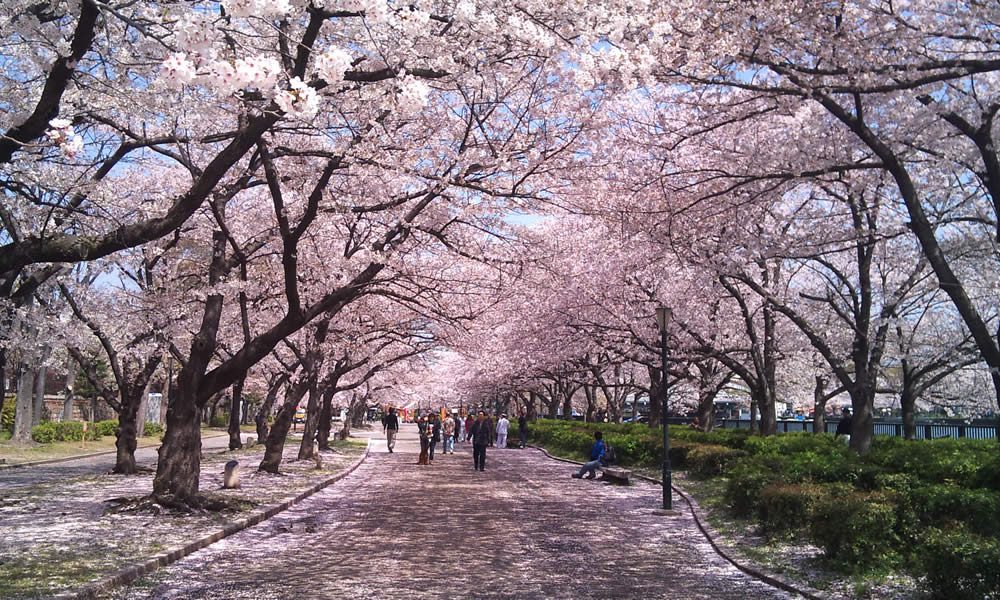
The people of Osaka passed timidly through the gates and walked beneath the cherry trees. Children ran, old people stopped to gaze up at the blossoms, young women laughed and chattered.
Standing amid the crowd, Kinsuke took a worn Mexican silver dollar from inside his kimono.
He flicked it with his fingertip.
The clear note melted at once into the murmur of spring and was gone.
The Whistle
Between Kyoto and Otsu stood a mountain called Osakayama.
To extend the railway east, a tunnel had to be dug through it.
"Let's bring in British engineers."
His subordinates said it with one voice. The Japanese had never once dug a tunnel through a mountain on their own.
Inoue Masaru shook his head.
"We dig it with Japanese alone."
In Osaka, Masaru had set up a place to train Japanese engineers. There were young men who, while working under British engineers, had had surveying, design and construction drilled into them from the ground up. And when it came to digging through mountains, Japan had long had miners hardened in its mines.
"Under London, trains were running. Human hands dug that too. If foreigners can do it, there's no reason Japanese can't."
In 1878, the work began.
The miners dug in from both sides of the mountain. Masaru went to the site again and again, going deep into the shafts. In the lamplight rang the sound of hammers breaking rock and the shouts of the miners.
When the shafts dug from either side met exactly inside the mountain, the miners raised a cheer, their faces covered in mud.
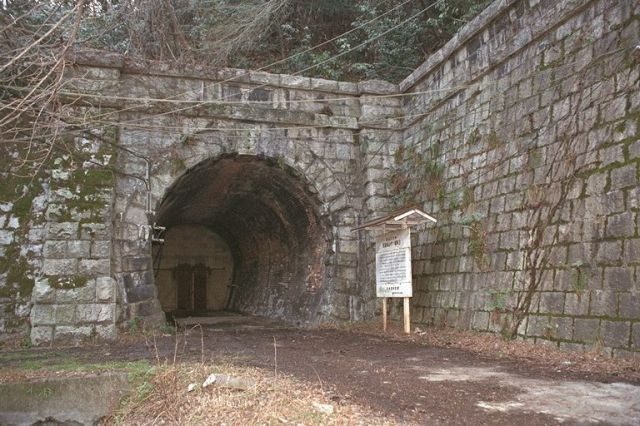
1880. The Osakayama Tunnel was finished. It was the first railway tunnel dug through by Japanese hands alone.
Nine years after that.
In the summer of 1889, the Tokaido line from Shimbashi in Tokyo to Kobe was joined into one.
Through mountains, across rivers, along the shore. A journey that daimyo processions had once taken many days to walk, a train now ran in a single day and night.
Masaru rode the first train.
Japan's mountains flowed past the window. Among them, the train's smoke trailed white.
It was the scene he had pictured on the bank of the Thames in London.
But as he gazed out the window, there was something mixed into Masaru's heart besides pride.
How many fields had he destroyed to lay the track? Beautiful rice paddies tilled over generations, he had cut through with embankments and shaved away with cuttings. The trains had bound this country into one. But in exchange, things had been lost.
A few years later, Masaru bought a stretch of wasteland at the foot of Mount Iwate and opened a large farm. On thin volcanic-ash soil no one had cared to look at, he planted trees, grew pasture and set cattle loose.
His partners Ono Gishin and Iwasaki Yanosuke, and himself. Taking one character from each of the three surnames, the farm was named Koiwai.
As some small amends for the fields the railways had destroyed. That, it is said, was how Masaru spoke of it.
The Sound of a Pen
The 11th of February in that same year, 1889.
In a hall of the palace in Tokyo, a single volume passed from the hands of the Emperor into those of Prime Minister Kuroda Kiyotaka.
The Constitution of the Empire of Japan. Japan's first modern constitution.
The man who had spent years writing its draft was Ito Hirobumi.
Ito had gone to Europe and learned about constitutions and the workings of the state from scholars in Germany and Austria. After returning, he shut himself away on a small island off Yokosuka and, with a few of his subordinates, worked over the articles one by one.
Late at night in his study, Ito's pen raced.
The only sound was the scratch of the nib on paper.
Suddenly he stopped.
Gazing at the dark sea outside the window, Ito remembered the Parliament building in London. That building stretching long beside the Thames, its tall clock tower soaring. Inside it, men who were neither lords nor shoguns debated and made the rules of their country.
Then he remembered those back alleys. Tenements the sun never reached. Barefoot children begging. Not everything in a strong country was strong.
What were this country's rules meant to protect?
Ito put his hand inside his kimono.
There it was, the fragment of glass, melted and clouded so that it reflected nothing. He had picked it up in the ashes at Gotenyama, and for more than 20 years now he had never let it out of his keeping.
Destroying is easy.
Building is this hard.
Ito set the glass at the edge of the desk and took up his pen again.
In 1885, Ito had become Japan's first Prime Minister.
A boy born to a poor farming family in Suo, who had only barely clung on to the lowest rung of the samurai, now stood at the summit of his country's government.
But Ito did not boast of his position.
At a banquet once, someone praised Ito's rise to the skies. Ito gave a wry smile and waved it away.
"I'm just an interpreter who got lucky. I've come this far because I could speak English, that's all."
The ones who had taught Ito that English were a ship's boy on the Pegasus, and Mrs. Williamson in the sitting room in London.
The Sound of the Sword
Autumn, 1883. Hibiya, Tokyo.
Music was playing inside a white-walled Western-style building.
The Rokumeikan. A hall for society that the government had built to entertain foreign guests. Under the chandeliers, men in tailcoats and ladies in wide-skirted gowns danced to a waltz.
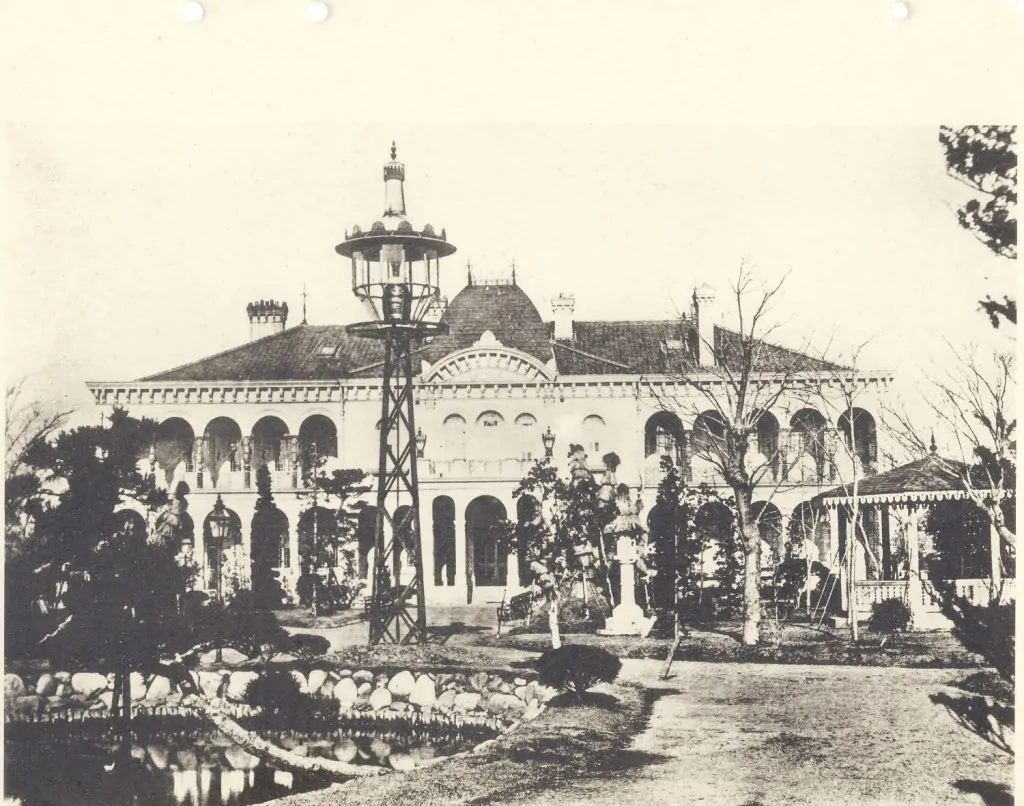
In the middle of the floor, one man was dancing, holding the hand of a foreign minister's wife.
Inoue Kaoru. Head of foreign affairs.
A thick scar ran from his cheek to his lip. With every step, it caught the light of the chandeliers and stood out white.
This was the man who had once set fire to a foreigner's house. The man who had cried out to drive the barbarians away, with a sword in his hand. And now that man was dancing a waltz, hand in hand with a foreign lady.
There was something Inoue was determined to accomplish.
The treaties the shogunate had concluded with the foreign powers were unfavorable to Japan. Japan could not try foreigners who committed crimes in Japan under Japanese law. Japan could not even set its own duties on goods coming in from abroad. Burned into Inoue's eyes was the sight he had seen in Shanghai: a Chinese laborer struck by foreign soldiers, with no one able to stop it.
These treaties had to be revised. And for that, the foreign powers had to be made to recognize Japan as a nation that stood shoulder to shoulder with the West.
That was why he danced.
The public laughed at the Rokumeikan. Monkey see, monkey do, they said, frivolous, a national disgrace. The treaty revision talks Inoue had pressed met fierce opposition at home and at last ran aground. Inoue left the post of head of foreign affairs.
Even so, Inoue made no excuses.
"Anyone who wants to laugh can laugh."
Inoue traced his scar with a finger and grinned.
"I'm a man who died once already, on a night road in Yamaguchi. Nothing they say can hurt me."
1887. On the night it was decided that, with the treaty revision talks at a dead end, he would step down as Foreign Minister, Inoue called at Ito's residence.
The two of them drank together until late. Ito was Prime Minister, and Inoue was Foreign Minister in his cabinet. Two men under fire from the whole country, sharing a drink: from outside, it must have looked strange indeed.
"Monta-san."
When the two of them were alone, Ito still called him by his old name.
"Do you remember that rope on the Pegasus?"
"How could I forget? While you were hanging your backside over the rail, I thought my wrists would be torn off."
Ito laughed out loud.
"This time it's my turn to hold the rope."
Inoue stopped with his cup in hand and looked at Ito.
"However hard they beat you, Monta-san, I won't let you fall. I'll haul you up with these hands."
Inoue was silent for a while. Then, twisting his scarred cheek, he laughed.
"You've got cheeky, Shunsuke."
It was many years after that, on soil where Inoue had sown the seeds, that Japan was at last able to conclude treaties with the foreign powers as an equal.
The sound of hammers. The sound of coins. The whistle. The sound of a pen. And, hidden beneath the strains of the waltz, the sound of the sword.
Five sounds, each ringing separately in its own place.
But had someone listened closely from far away, they might have heard them as one great swell. Just as, in the Glasgow shipyard, hundreds of hammers had somewhere become one.
The school raised engineers, the engineers laid railways, the Mint upheld the credit of the nation's money, and the constitution and diplomacy stood that nation up in the world.
Had any one of those sounds been missing, this country's modern age would never have rung out.
History and fiction in this chapter
Historical facts
- In 1873, the 24-year-old Henry Dyer was invited from Glasgow to serve as principal of the Kogakuryo. In 1877 the Kogakuryo became the Imperial College of Engineering, which trained many engineers through an education combining classroom learning with practical training on site.
- Yamao proposed the establishment of a school for the blind and deaf in 1871. In 1875, Furukawa Masao, Tsuda Sen and others founded the Rakuzenkai, which Yamao later joined. In 1880 the Kunmoin school for the blind opened at Tsukiji in Tokyo, and deaf children soon came to study there as well.
- At the Osaka Mint, the head, Kinder, came into conflict with the Japanese officials, and Endo left the Mint for a time. Endo returned in 1881 as director of the Mint and devoted about 11 years to establishing coinmaking techniques run by Japanese.
- In 1883, Endo opened the avenue of cherry trees in the grounds to the public. This was the origin of the "cherry blossom walk-through" that continues today.
- Inoue Masaru set up a training institute for Japanese engineers in Osaka, and in 1880 completed the Osakayama Tunnel with Japanese hands alone.
- In the 7th month of 1889, the Tokaido line (Shimbashi to Kobe) was completed along its entire length.
- In 1891, Inoue Masaru, together with Ono Gishin and Iwasaki Yanosuke, opened the Koiwai Farm at the foot of Mount Iwate. The name comes from the first characters of the three men's surnames.
- From 1882 Ito studied constitutions in Europe, and after returning drafted the constitution on Natsushima off Yokosuka and elsewhere. He became the first Prime Minister of Japan in 1885, and the Constitution of the Empire of Japan was promulgated on the 11th of February, 1889 (at the promulgation ceremony, the constitution was received from the Emperor by the Prime Minister of the time, Kuroda Kiyotaka).
- As Lord of Foreign Affairs and then Foreign Minister, Inoue Kaoru worked on treaty revision, opening the Rokumeikan in 1883 and pursuing a policy of Westernization, but the negotiations met opposition and ran aground, and he resigned in 1887.
Tradition
- It is handed down that Masaru opened the Koiwai Farm out of a wish to make amends for the many fine rice fields destroyed by railway construction.
Fiction
- The reunion scene in which Dyer recognizes Yamao and their conversation, and the scene of Yamao visiting the Kunmoin.
- The exchanges between Kinsuke and Kinder, his words to the workmen, and the conversation in the scene deciding on the walk-through.
- Masaru's words at the Osakayama site, and the scene of Masaru riding the first train on the Tokaido line.
- The scene of Ito setting the glass on his desk, and his words at the banquet.
- The scene of Kinsuke teaching a young workman the balance in the workshop at night.
- The scene in 1887 of Ito and Inoue drinking together and remembering the rope on the Pegasus.
- The scene of Inoue Kaoru dancing with a minister's wife, and words such as "Anyone who wants to laugh can laugh."