
Japanese ramen shops have a few "unwritten rules" that can puzzle first-timers: the ticket machine by the door, the question "How firm do you want your noodles?", the customers silently slurping away, the unfamiliar condiments on the counter. But there is nothing to worry about. Ramen shops have always been casual, everyday places that anyone can walk into. Most of the rules are simply ways for the shop to serve a great bowl quickly and for customers to enjoy it comfortably.
This guide follows the flow of a visit, from before you go in until you finish, explaining how to eat ramen and what is useful to know along the way. At the end, we have also gathered some short Japanese phrases you can use in the shop. Keep in mind that what is written here is a general guide, and every shop has its own policies. When in doubt, follow the shop's signs and the staff's directions.
1 Before You Go In
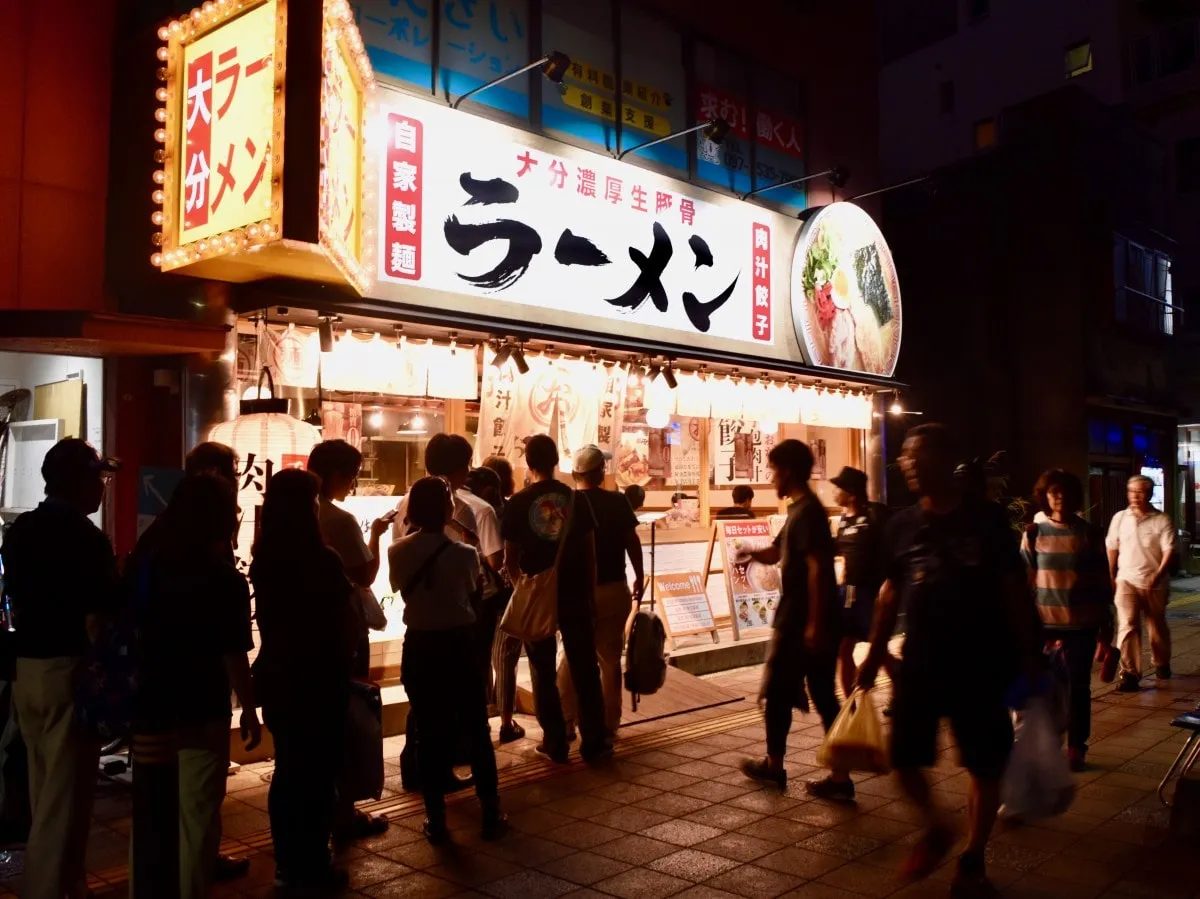
Rules for lining up. Popular shops have lines. The place to wait is often set along the wall in front of the shop or a little way off, marked with signs or lines on the ground. To avoid bothering the neighbors, do not block the street or line up in front of the shop next door. Also, at most shops the rule is that your whole group lines up together. Having one person hold a place while the rest join later easily leads to trouble with the people behind you, so quite a few shops do not allow it.
Some shops have you buy a ticket before you go in. At some shops, you will be asked to buy your meal ticket while you are still in line. Staff may call out, "Please buy your ticket first," or there may be a ticket machine beside the line. Watching how the people ahead of you do it will put you at ease.
Opening hours and "out of soup." Shops that make a fixed amount of broth each day may close as soon as the broth runs out. A "closed for today" sign can go up even during posted hours, so it is best to visit popular shops early. On weekdays, the busiest times are around noon and from evening into the night.
Some shops take cash only. Cashless payment is spreading, but family-run shops and shops with older ticket machines may still accept only cash. It is a good idea to carry a few 1,000-yen bills. Some ticket machines cannot take the new banknotes or 10,000-yen bills.
2 Buying a Meal Ticket from the Machine
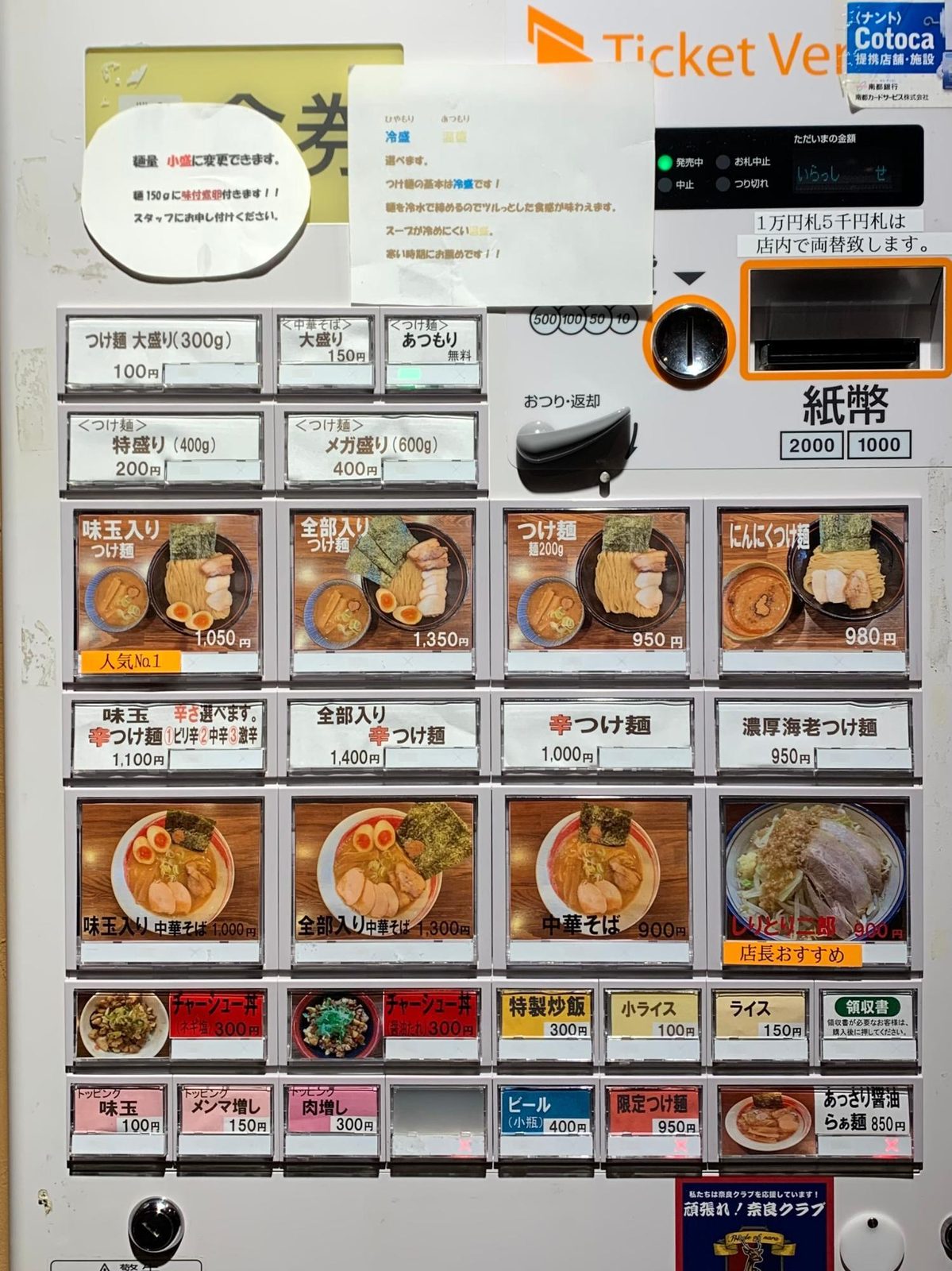
At many ramen shops, you buy a meal ticket first from the ticket machine near the entrance. Even for Japanese people, it is something of a symbol of the ramen shop.
- Put your money in first. Once you insert money, the buttons for the items you can buy light up.
- Press a button. The top-left button or the biggest button is often the shop's signature dish.
- Toppings have their own buttons. Nitamago (a soft-boiled marinated egg), extra chashu, a large portion, rice and so on each need a separate ticket.
- Don't forget your change. Finally, press the change lever or button.
- Hand your ticket to the staff. Once you are seated, place the ticket on the counter or hand it to a staff member. This is when you may be asked how you like your noodles and so on.
More and more ticket machines can now switch to English, Chinese or Korean, and touch-screen machines with photos are increasingly common. If there is a button you cannot read, just show your ticket to the staff and point to check. At shops without a ticket machine, you usually order out loud after you sit down and pay when you finish eating.
3 Telling Them How You Like It
Quite a few ramen shops let customers say how they like their bowl. Here are the most common options.
Noodle firmness. At Kyushu tonkotsu ramen shops, Hakata ramen shops in particular, you will be asked how firm you want your noodles. From softest to firmest: "yawa," "futsu," "kata," "barikata," "harigane," "konaotoshi" and so on. For your first time, "futsu" (regular) or "kata" (firm) is a good choice. Ultra-thin noodles go soggy quickly, so ordering them a little firm keeps them tasty to the last bite (Chapter 6).
Flavor strength and oil (iekei). At Yokohama-style iekei ramen shops, you can combine noodle firmness, flavor strength and the amount of chiyu (chicken fat), as in "katame, koime, oome" (firm, strong, extra oil). If you say nothing, it comes "futsu" (regular).
The Jiro-kei "call." At Jiro-kei shops, just before your ramen is ready, staff will ask, "Ninniku iremasu ka?" ("Want garlic?"). This is when you say which free extras you want and how strong you want the flavor (the words and rules differ from shop to shop): "yasai" (more bean sprouts and cabbage), "ninniku" (garlic), "abura" (back fat), "karame" (stronger seasoning). If you don't want anything added, just answer "sono mama de" ("as it is"). Portions at these shops are huge, so for your first time, choosing the "small" size is the safe bet.
Shops with order forms. Some shops, such as the Fukuoka-born chain "Ichiran," have you circle your choices on an order form: flavor strength, richness, garlic, green onions, chashu, the spiciness of the secret sauce and noodle firmness. Some shops have forms in many languages.
4 Once You're Seated
Seating at ramen shops is mostly at a counter around the kitchen. Plenty of customers come alone, so there is no reason at all to feel awkward eating by yourself.
- Water is often self-service. Look for a water dispenser or pitcher on the counter or at the back of the shop.
- Paper bibs and hair ties. Shops whose ramen tends to splash sometimes provide paper bibs. Some also keep hair ties on hand for people with long hair.
- Keep your bags compact. Many shops are cramped, so put large bags at your feet or in the designated spot. Some shops do not allow suitcases inside.
- One bowl per person is the norm. Many shops ask each customer to order a bowl. If you want to share, check with the shop.
5 Eating: Broth, Noodles, Toppings
When your ramen arrives, start eating as soon as you can. Ramen is at its best the moment it is made. The noodles in particular soak up broth as time passes, turn soft and go soggy. If you want photos, a quick one or two shots is the greatest courtesy you can show the person who made your bowl.
There is no set order, but a popular way to enjoy it is to start with a sip of broth from the renge spoon, taking in the aroma of the flavored oil and the taste of the stock. Then the noodles, then the toppings. Some people sink their chashu into the broth for a while to warm it before eating it.
Chopsticks and renge. Lift the noodles with your chopsticks and drink the broth with the renge (a ceramic spoon). If you are not used to chopsticks, try placing a few noodles on the renge and bringing them to your mouth with some broth and toppings as a "mini ramen." Some shops also have forks.
6 Is Slurping Bad Manners?
In Japan, slurping ramen or soba noisily is a perfectly normal way to eat, not bad manners. In fact, eating with gusto and plenty of noise is sometimes taken as a sign that you think it is delicious.
There are said to be reasons for slurping. Drawing hot noodles into your mouth along with air cools them as you eat. The broth clings to the noodles and comes along with them. And pulling in air carries the aroma of the stock up through your nose. Japan has had a culture of slurping soba since the Edo period, and ramen inherited that way of eating (see "Why So Many Branches?" in the Field Guide).
That said, it is no problem at all if you can't slurp. Eating quietly is a perfectly correct way to eat too. What matters is eating it hot and enjoying it. And when you do slurp, the trick is to lift only a few noodles at a time so the broth doesn't spray around you.
7 Changing the Flavor with Table Condiments
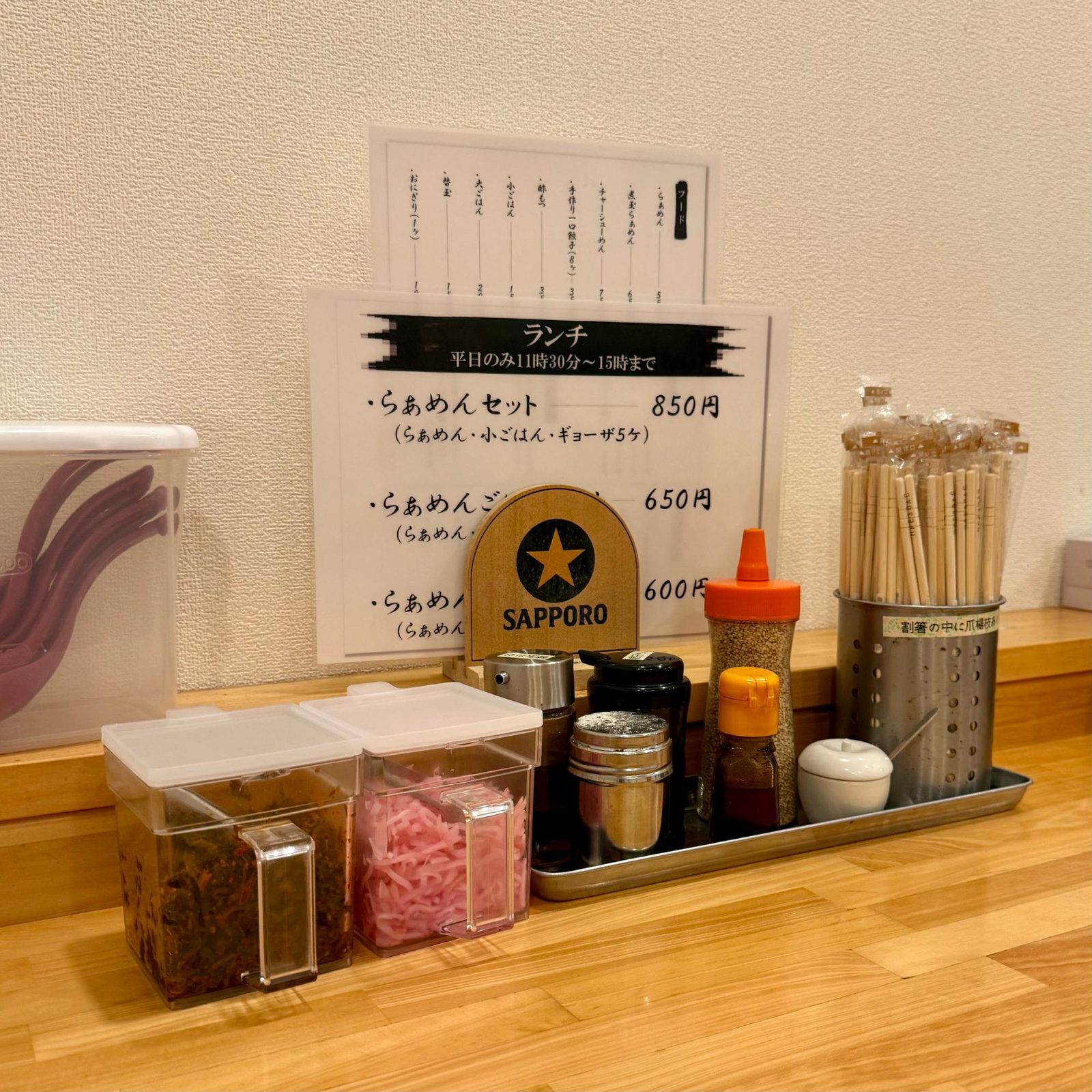
You will find all sorts of condiments on the counter or table. Changing the flavor partway through is called "ajihen," and it is one of the pleasures of ramen. We recommend enjoying the bowl as it comes first, then adding a little at a time once you are about halfway through.
| Condiment | What it adds | Goes well with |
|---|---|---|
| Pepper | Aroma and mild heat | Soy sauce, salt, miso |
| Vinegar | Acidity for a cleaner finish | Abura soba, mazesoba, rich and heavy bowls |
| Chili oil, ichimi chili powder | Heat | Miso, abura soba, tantanmen |
| Grated garlic | Strong aroma and punch | Tonkotsu, iekei, Jiro-kei |
| Doubanjiang (chili bean paste) | Heat and depth | Iekei, miso |
| Red pickled ginger | A refreshing tang | Tonkotsu (Kyushu) |
| Karashi takana | Spicy stir-fried pickled mustard greens | Tonkotsu (Kyushu) |
| Ground sesame | Toasty aroma | Tonkotsu, miso |
Karashi takana can be much spicier than it looks. Start with just a little. And when you are done with the tongs or spoon, put them back in their container.
8 Kaedama: A Refill of Noodles
At Kyushu tonkotsu ramen shops, such as Hakata ramen shops, you can order "kaedama," an extra serving of noodles alone (Chapter 6).
- Save your broth. If you plan to order kaedama, don't drink all the broth as you finish your first noodles; leave it in the bowl.
- How to order. Buy a kaedama ticket from the machine, or say "Kaedama kudasai" while you still have a few noodles left. Some shops let you choose the firmness. Some also offer "hantama" (a half portion).
- Top up the flavor. Kaedama dilutes the broth, so some shops keep "ramen tare" (seasoning sauce) on the table for adding a little.
9 How to Eat Tsukemen and Mazesoba
Tsukemen. Pick up a mouthful of noodles with your chopsticks, dip them about halfway into the dipping broth and eat. Be careful not to drop all the noodles into the dipping broth at once, or it will cool down and get watered down. When you finish, you can ask for "soup-wari" (adding stock to the leftover dipping broth to make it drinkable). Set the bowl up on the counter and say "Supu wari onegai shimasu," or follow the shop's own system. Some shops will reheat dipping broth that has cooled by dropping in a hot stone.
Mazesoba and abura soba. With soupless noodles, mix the tare and toppings at the bottom of the bowl thoroughly with the noodles, from the bottom up, before you eat. Adding vinegar or chili oil partway through is standard. Some shops offer "oi-meshi," a small serving of rice to add to the leftover tare and toppings once you have finished the noodles.
10 Should You Drink All the Broth?
Whether you drink all the broth is up to you. Leaving it is not rude. Ramen broth contains a lot of salt, so for your health, leaving some is actually recommended (Chapter 9). On the other hand, some devoted fans treat "kan'in," drinking every last drop, as a mark of respect for the shop. The choice is yours.
11 When You've Finished
- Don't linger. At shops with a line, it is considered good manners to leave your seat soon after you finish. Save the chatting for outside.
- Put your bowl up on the counter. Some shops have you return your bowl to the raised ledge of the counter. If the customers around you are doing it, follow their lead.
- Give the counter a quick wipe. If there is a cloth or tissues, lightly wiping up spilled broth is appreciated.
- "Gochisosama deshita." Saying this as you leave ("Thank you for the meal") lets the people who made your bowl know how you feel.
- No tipping. As a rule, there is no custom of tipping at restaurants in Japan. At ticket-machine shops, you have already paid, too.
12 If There Are Things You Can't Eat
Ramen broth is almost always made with pork bone, chicken or seafood stock. A shop may be able to leave the pork off the top, but in many cases it cannot take the pork out of the broth, so be careful.
For vegetarians, vegans and people who do not eat pork or consume alcohol, a growing number of shops, mainly in cities, serve ramen in vegetable-only broth or Muslim-friendly ramen (Chapters 6 and 8). If you have food allergies, keep in mind that restaurants are not required to label allergens, so ask the staff directly or show an allergy card written in Japanese. Broth and cooking utensils are often shared, so allergens cannot always be fully avoided (Chapter 9).
Handy Japanese for the Ramen Shop
| Japanese | Pronunciation | Meaning |
|---|---|---|
| すみません | sumimasen | Excuse me (to get someone's attention) |
| これをください | kore o kudasai | This one, please |
| 麺かためで | men katame de | Firm noodles, please |
| ふつうで | futsū de | Regular, please |
| 替え玉ください | kaedama kudasai | A refill of noodles, please |
| にんにく抜きで | ninniku nuki de | No garlic, please |
| スープ割りお願いします | sūpu wari onegai shimasu | Please add stock to my dipping broth |
| 豚肉が食べられません | butaniku ga taberaremasen | I can't eat pork |
| 現金だけですか? | genkin dake desu ka? | Is it cash only? |
| ごちそうさまでした | gochisōsama deshita | Thank you for the meal (said after eating) |
Behind the Etiquette
Every one of a ramen shop's "unwritten rules" grew out of the needs of the shop and its customers. Meal tickets are a way to run the shop with a small staff and cut down on handling payments. Not lingering is about getting a hot bowl to the people waiting in line at shops with only a few counter seats. Asking about noodle firmness is about serving thin noodles, which go soggy fast, at just the point each customer likes. And closing when the broth runs out is about refusing to make it in advance and caring about that day's broth.
Once you know the reasons, a ramen shop is no place to feel nervous. Watching the owner silently lift noodles from the pot through the steam as you slurp a hot bowl: that is a chance to taste the most everyday food culture of Japan's towns, on the same footing as the locals.
What to Look For: The Signs on the Wall
The walls of ramen shops are often covered with handwritten signs. "Choose your noodle firmness." "Order kaedama while you still have noodles left." "Water is self-service." "Please line up toward ____." The signs are the best clue to a shop's rules and its owner's way of thinking. Even if you can't read Japanese, the camera feature of a translation app on your smartphone will usually tell you what they mean on the spot.
Sources and notes for this chapter
Notes
- This guide summarizes general customs seen at many ramen shops. Rules and policies differ from shop to shop.
- The reasons given for slurping (cooling the noodles, spreading the aroma and so on) are commonly offered explanations.
- The terms for noodle firmness, the words used in the Jiro-kei call and the way of ordering at iekei shops differ from shop to shop.
- Restaurants in Japan are not required to label allergens the way processed foods are (the Food Labeling Act covers packaged processed foods and the like).
Main References
- Shin-Yokohama Ramen Museum, "Ramen Encyclopedia"
- Official information from ramen shops and chains, and various ramen information sites
- Consumer Affairs Agency, "Information on Food Allergy Labeling"