A whistle sounded.
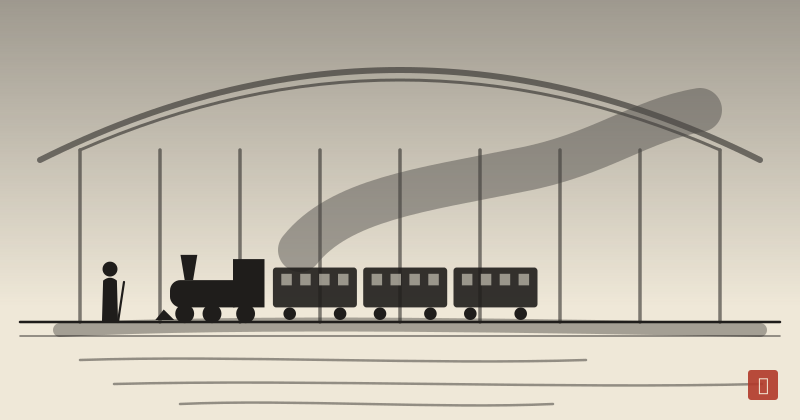
It struck the great iron-ribbed roof and came back, layer upon layer, settling down onto the platform.
The 43rd year of Meiji: in the Western calendar, the summer of 1910. London.
Inoue Masaru stood leaning on his walking stick and did not move for some time.
He was 66 now. A heavy, dull ache had taken up residence deep in his lower back. Before he left Tokyo, his doctor had told him, "In your condition, Europe is out of the question." Masaru had laughed and let it pass. In the very year of the Japan-British Exhibition, was he to die without seeing the country of railways? He had said as much, and boarded the ship.
Before him, a locomotive slid slowly into the station. Polished brass gleamed; the pistons breathed in steady rhythm. Without quite meaning to, Masaru was gauging the size of the driving wheels with his eye, counting the intervals as they clicked over the rail joints. For more than 40 years, that was how he had lived.
"Your Excellency, how are you feeling?"
The young engineer traveling with him leaned in, anxious. He had been assigned by the Railway Board, and his English was fluent. What Masaru had craved so badly as a young man, this fellow had picked up at school as a matter of course.
"I'm fine."
Masaru answered shortly.
"More to the point, there's somewhere I'd like you to take me."
"Where to, sir?"
"Gower Street."
The street was a jumble of carriages and motorcars.
Forty-seven years ago, when he first arrived in this city, the cobbles had been crowded with nothing but horses and carriages. At the start of that year, a railway running beneath the ground had just opened, and steam engines puffed smoke through its tunnels. Masaru, who still went by the name Nomura Yakichi then, had gone to peer down one of the vents where the smoke escaped, and came back to his lodgings with his face black with soot. His friends had laughed till they held their sides.
The car stopped.
The columned portico shone white in the summer sun. University College London.
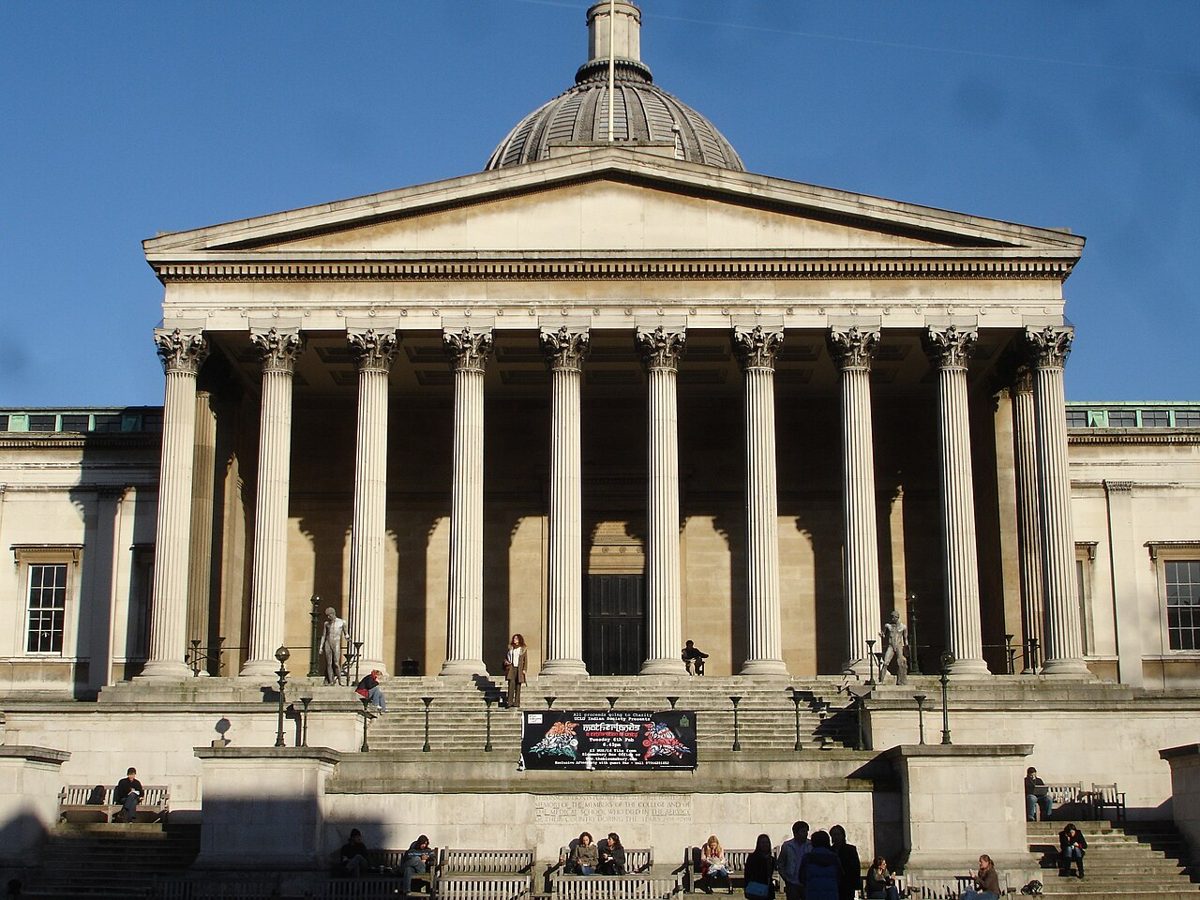
Masaru got out of the car and looked up at the pillars.
Nothing had changed. The stone had darkened a little, but it looked down on the young at the same angle as on that day, in the same way.
On that day, the five of them had stood here.
Their hair, where they had cut off their topknots in Yokohama, was still ragged, and the Western clothes they had hurriedly put together had sleeves too long for their arms. Not one of the five could speak proper English.
Five.
Masaru called up their faces, one by one.
Endo Kinsuke was gone. The man who, at the Osaka Mint, had thrown open the gates in cherry blossom season to let the townspeople in had died 17 years ago.
Ito Shunsuke, Ito Hirobumi, had been shot last autumn at the station in Harbin. A station. Of all places, on a railway platform.
Inoue Monta and Yamao Yozo were both growing old in Japan.
And he himself was here. Standing once more, at the last, in the place where he had first come.
All at once, he thought he caught the smell of the sea.
In the middle of London, that could not be. And yet, deep in Masaru's nose, the smell of the Sagami coast had unmistakably come back.
The early years of Ansei. On the Sagami shore, which the Choshu domain had been ordered to guard, Yakichi, 12 or 13 years old, stood beside a boy a little older than himself, looking out to sea. A thin boy, with eyes that glittered fiercely. His name was Risuke. He would later be Ito Hirobumi.
Out at sea, a foreign ship passed across their view. Its sails furled, belching black smoke.
"Hey, Yakichi."
Risuke said it standing right at the water's edge.
"It's got no sails up. How does it move? What on earth have they got inside it?"
Yakichi couldn't answer. None of the grown men around them could answer either. Some put on knowing faces, but no one really knew.
Risuke bit his lip in frustration and went on glaring out to sea for a long, long time.
I've spent 50 years hunting for that answer, more or less.
Masaru tightened his grip on his stick.
He knew the answer now. Boil water in a boiler, let the steam drive the piston, turn the motion into rotation with a crank. From Shimbashi to Yokohama, from Tokyo to Kobe, he had laid that answer down all across Japan.
But he had a feeling that, at the bottom of Risuke's question that day, another question had lain sunk. That one, he had not yet fully answered.
"Your Excellency."
The engineer spoke up, hesitantly.
"Forgive me, but may I ask you something?"
"What is it?"
"Why did you and the others go to England? I've heard that in those days, leaving the country meant death. And besides..."
The young man faltered.
"Besides, Choshu was the very home of 'expel the barbarians,' wasn't it? Cut down the foreigners, drive them out. So why would anyone from Choshu go to England?"
Masaru was silent for a while.
Then he gave a small laugh, low in his throat.
"We came here to become machines."
"Machines, sir?"
"Before we left, we left a letter for the domain's senior officials. Think of it as having bought yourselves living machines, we told them."
All five of them had called themselves machines. Set aside being human for the time being, cram in every foreign skill they could, and carry it home: nothing more than machines. Unless they thought of it that way, they could never have crossed that sea.
"But that's not really what you want to know, is it?"
Masaru said, still looking up at the columns.
"Why we came to bow our heads to a country we'd tried to burn. That's it, isn't it?"
The young man looked startled.
"About half a year before we left for England, our friends set fire to the British legation in Edo. Shunsuke was there, and Monta, and Yozo."
"Surely not... Prince Ito?"
"I wasn't there myself. But I heard about that night many times afterwards. Every time Monta had a drink in him."
Again a whistle sounded, from some distant station.
Masaru narrowed his eyes. He felt as if the smoke of 47 years ago was still drifting somewhere in this city.
"It's a long story."
"I don't mind."
"Then let's begin with the fire."
History and fiction in this chapter
Historical facts
- In May 1910, Inoue Masaru traveled to Europe to take part in the Japan-British Exhibition and to inspect European railways. He died of illness in London on August 2 of that year.
- 1863, the year the five arrived in London, was the year the world's first underground railway (the Metropolitan Railway) opened. Masaru studied at University College London (UCL).
- Ito Hirobumi was shot and killed at Harbin Station in October 1909. Endo Kinsuke died in 1893. Inoue Kaoru and Yamao Yozo were still alive in 1910.
- Masaru is said to have met Ito (then commonly called Risuke) as a boy, during the period when he joined the Choshu domain's guard duty in Sagami.
- Before sailing, the five left a letter for the domain's senior officials to the effect of "please think of it as having bought living machines."
Fiction
- The accompanying engineer, the scenes at the station and UCL, and the conversation between the two men are all fiction.
- The "It's got no sails up..." exchange on the Sagami shore is fiction built around a line from the original draft.