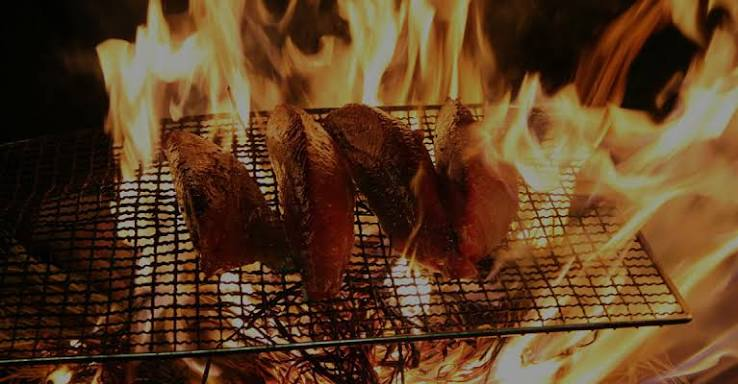
Katsuo no tataki: why straw, specifically
The classic method sears bonito fillets over a fast, very hot straw fire — straw burns hotter and faster than
charcoal, searing the surface in seconds while leaving the inside raw, and imparting a faint smoky aroma that's
part of the dish's identity. It's traditionally credited to Sakamoto Ryoma's era, though the specific straw
technique as practiced today is more likely a 20th-century refinement of older raw-fish customs.
Sara-bachi: built for company
A sara-bachi spread piles sashimi, katsuo, and other dishes onto one very large shared platter, meant to be
passed around a table rather than portioned per guest — a format that mirrors Tosa's famously hard-drinking,
convivial banquet culture, including drinking games played with cups shaped so they can't be set down until
emptied.
Not everything is bonito. Kochi's food culture runs well beyond its signature fish —
freshwater dishes from the Shimanto River, citrus like yuzu grown in the mountain village of Umaji, and a strong
local sake culture all deserve equal billing but rarely make it past "eat the bonito" in outside coverage.